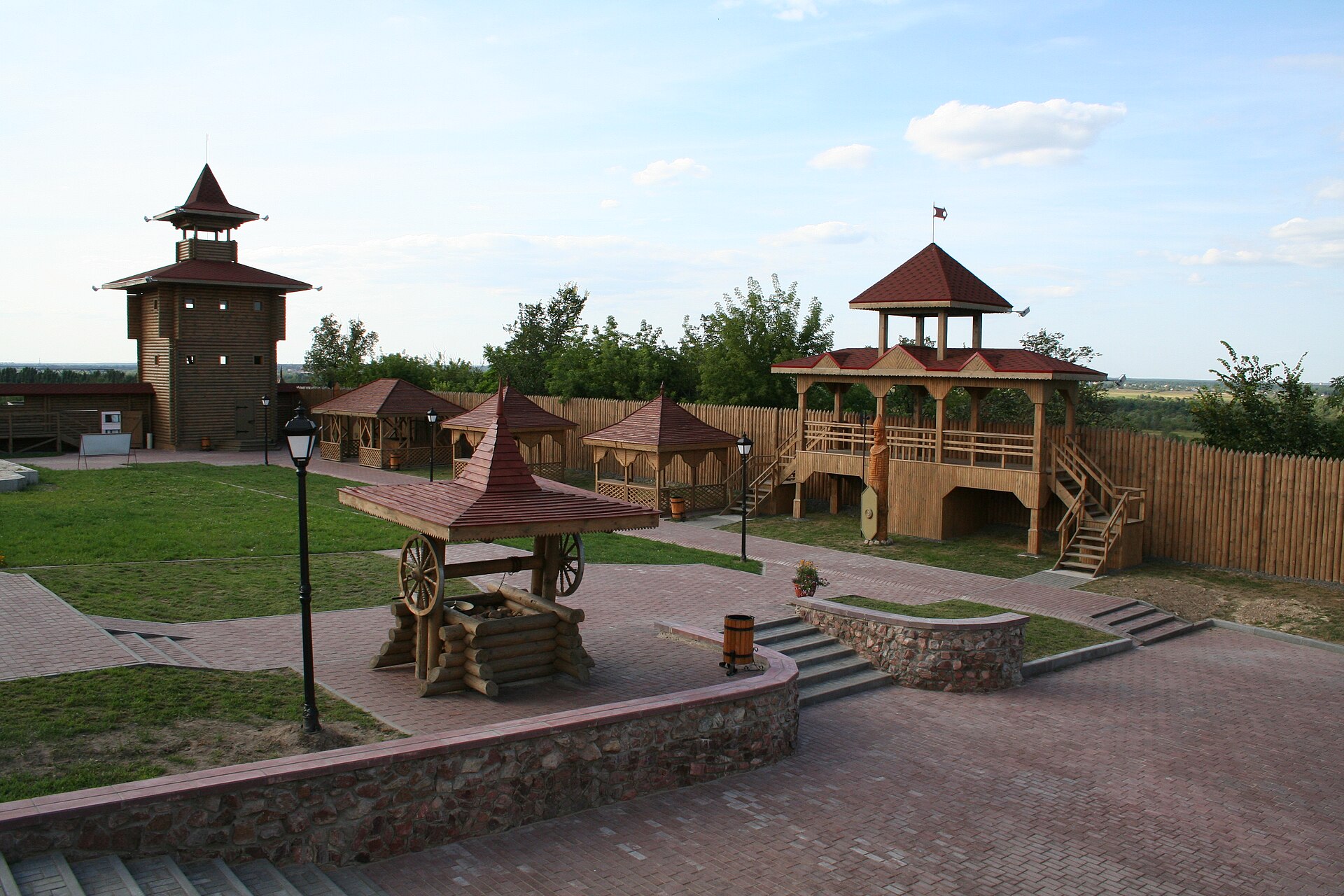
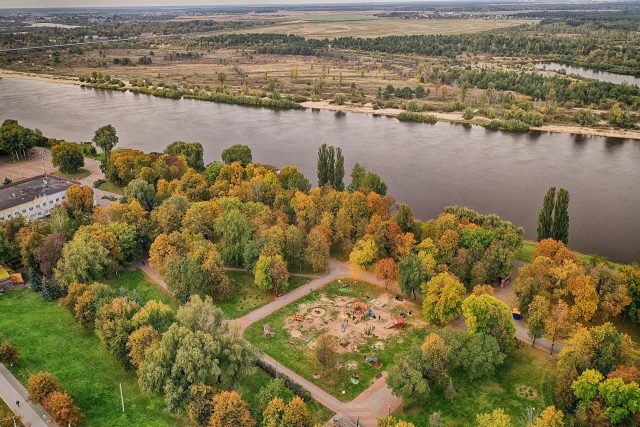
Perched on a steep hill overlooking the winding Pripyat River, the site of Mozyr Castle is one of those quiet places where history lingers in the air. Today, little remains of the fortress itself—just grassy embankments and a shallow ditch tracing the outline of what was once a formidable stronghold. Yet standing here, it’s easy to imagine why this spot was chosen centuries ago. The hill commands a sweeping view of the river’s bend, where trade routes once threaded through the dense forests of Polesia, a region that has always carried a sense of timelessness. The land itself seems to whisper stories of the past, even if the stones and timber that once stood here have long since faded into the earth.
The first written records of Mozyr Castle date back to the mid-16th century, though archaeological evidence suggests the hill was inhabited much earlier. Like most fortifications in this part of Europe, the original structure was built of wood, a material both practical and abundant. Despite its modest construction, the castle played a crucial role in defending the southern borders of the Grand Duchy of Lithuania. During the frequent conflicts with the Grand Duchy of Moscow and the raids of Crimean Tatars, Mozyr often found itself in the crosshairs. The fortress bore the brunt of these attacks, its walls witnessing sieges and skirmishes that shaped the region’s fate. By the 17th century, the wooden defenses were replaced with stone, but the castle’s decline was already underway. Shifting borders and the rise of new trade routes diminished its strategic importance, and by the 18th century, it had fallen into disrepair.
What remains today is more an impression than a monument—a gentle rise in the landscape where the contours of the past are still visible. The earthworks, now softened by time and overgrown with wildflowers and shrubs, offer a quiet testament to the fortress’s former might. Archaeological excavations have uncovered fragments of wooden beams, household items, and weapons, but most of these artifacts now reside in museums. The site itself has become a place for reflection, where visitors can walk the same paths once trodden by soldiers, merchants, and craftsmen. There are no grand reconstructions or interpretive signs, just the land as it is, holding onto its memories.
Mozyr itself is a city with a layered history, and the castle stands as a symbol of its resilience. In the Middle Ages, it was a thriving hub of trade and craftsmanship, a crossroads where goods from Europe flowed eastward and raw materials traveled in the opposite direction. The Pripyat River connected Mozyr to Kyiv, while overland routes led to Poland and Lithuania. The castle wasn’t just a military outpost; it was also an economic center, where tolls were collected from passing merchants. When the city later came under Russian rule, its significance waned, but the echoes of its past endured in local legends, street names, and the very ground beneath the feet of its inhabitants.
Visiting the castle site is less about ticking off a tourist attraction and more about stepping into a slower, quieter rhythm. There are no crowds here, no guided tours with loudspeakers—just the rustle of leaves, the murmur of the river below, and the sense that time moves differently in this place. Locals sometimes bring their children to explore the earthworks, pointing out where the walls once stood or simply enjoying a walk along the hill’s slopes. On clear days, the view stretches across the Pripyat’s meandering course, a reminder of how closely the land and its people have always been intertwined.
The castle’s story is inseparable from that of Polesia, a region where cultures have long intersected. Over the centuries, Slavic, Baltic, and later Jewish communities shaped the area’s identity. Mozyr was once home to a large Jewish population, known for its synagogues and skilled artisans. The castle, meanwhile, stood as a symbol of authority, though life within its walls—and beyond them—was far from static. Markets buzzed with activity, workshops hummed with craftsmanship, and the rhythms of daily life unfolded against a backdrop of political and social change. Today, only fragments of that past remain, but they offer glimpses into a world that was once vibrant and complex.
For those who visit, the castle site offers more than just history—it’s a place to experience the landscape itself. In spring and summer, the hillside bursts into green, while autumn paints the trees in fiery hues. Winter transforms the scene into something stark and solemn, the bare branches and frozen ground evoking the fortress’s original purpose. Nearby, an old Jewish cemetery holds weathered gravestones with inscriptions in Hebrew, a quiet reminder of the city’s multicultural past. In Mozyr itself, a few 19th-century buildings still stand, their facades hinting at the time when the city served as a provincial center under the Russian Empire.
Mozyr Castle isn’t a grand monument, nor does it boast the opulence of more famous ruins. Its charm lies in its understated presence, in the way it blends into the land rather than dominating it. Here, history feels tangible—not through reconstructed walls or polished exhibits, but through the earth, the river, and the sky. It’s a place to pause and consider how people once lived in this corner of the world, why they chose this hill to build their fortress, and how the land has endured while empires rose and fell. In an age where everything seems to move at a relentless pace, such places offer a rare sense of continuity. The river still flows, the wind still whispers through the trees, and the ground beneath your feet holds the stories of those who came before.