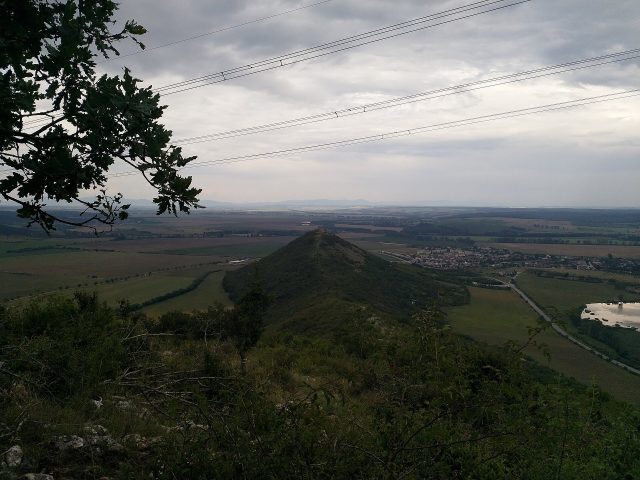
The hill called Hradok rises above the town. From its summit, the landscape spreads out—hills, forests, and the Bodva River winding below. Moldava nad Bodvou lies in the valley, its rooftops and church spires visible between the trees. On clear days, the horizon merges with the mountains along the Hungarian border, a divide that has shaped the region for centuries. The view has changed little since the Middle Ages, when this land was a crossroads of cultures and shifting borders.
Hradok isn’t tall, but its position makes it a good place to look out from. The slopes are gentle, covered in grass and wildflowers in warmer months. A narrow path leads up through the trees, steep enough to make you catch your breath but not so hard that it keeps people away. There are no paved walkways or handrails, just the earth underfoot and the sound of leaves in the wind. At the top, a wooden bench and an information board are the only signs anyone has been here. No crowds, no noise—just the quiet of the countryside.
In the 13th and 14th centuries, when this area was often fought over, a small fortress stood on Hradok. Now, only faint traces of earthworks and ditches remain. Back then, the hill was a lookout for approaching armies. As borders settled and conflicts ended, the fortress lost its purpose. The stones were likely used for local buildings, and nature took over. Today, the name Hradok—a form of *hrad*, meaning "castle"—is the only hint of its past.
Sunset changes the hill. The light softens, and the valley turns golden. Shadows stretch across the fields, and the town seems smaller in the distance. If the weather is right, mist rises from the river. It’s not hard to picture this scene hundreds of years ago, when the only lights came from village homes.
For locals, Hradok is part of life. Families walk here on weekends. Schoolchildren learn about the town’s history on its slopes. Older residents remember playing here as children. The path has been improved, and a few benches added, but the hill hasn’t changed much. There are no souvenir stands or cafes, no signs telling you to move on. Just the quiet and the view.
Winter covers the hill in snow. The path disappears under a faint line through the white. The town below looks small, its streets dusted with frost. On clear days, you can see villages across the Hungarian border. Even in the cold, there’s a peace to standing here, watching steam rise from chimneys in the valley.
Hradok doesn’t attract crowds. There are no grand monuments or guided tours. That’s why it feels different. It’s a place to stop, look around, and feel the weight of the past in the landscape. The same hills, the same river, the same fields—people have stood here for generations, seeing what you see now. The only difference is that they lived without cars, electricity, or modern noise. Standing here, you wonder what they thought when they looked out over this valley.