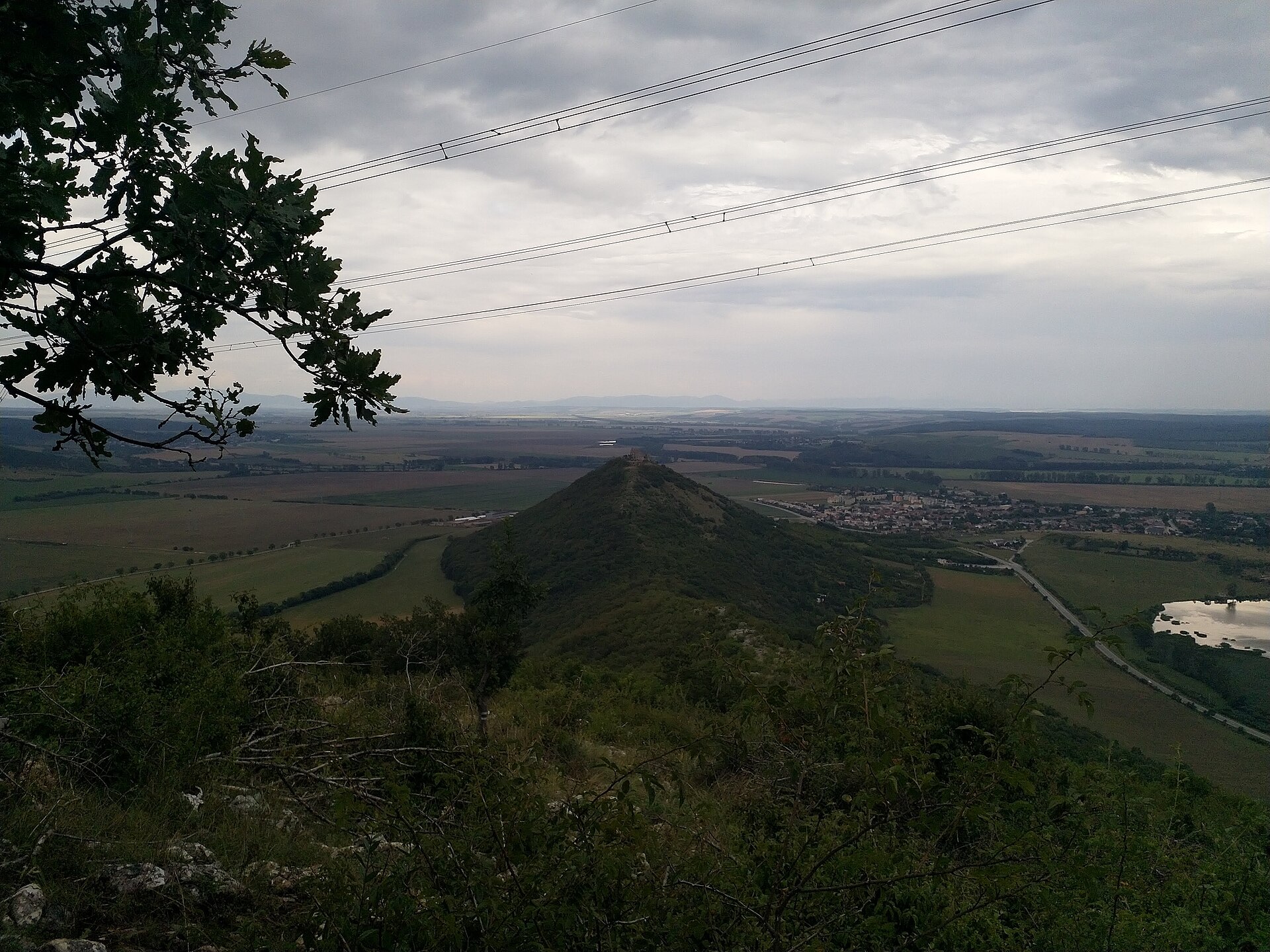
Perched on a gentle hill overlooking the Bodva River valley, Turniansky Castle is one of those quiet places where history doesn’t just linger in the air—it clings to the stones themselves. Unlike the more famous fortresses of Slovakia, this one has escaped the crowds, leaving its ruins to stand in peaceful solitude. There are no grand restorations here, no polished tourist paths, just the raw remains of a medieval stronghold that once guarded the eastern borders of the Hungarian Kingdom. The silence makes it easier to imagine the clatter of hooves on cobblestones, the murmur of soldiers on watch, the distant echo of a horn signaling danger.
The castle first appears in historical records in the 13th century, built not for luxury but for defense. Its location was chosen with purpose: from this hill, the surrounding roads and river valley lay exposed, making it a critical lookout against invasions from the east. Over the centuries, it changed hands between noble families, but its role never wavered—it was always a fortress first, a home second. By the 16th century, the threat of Ottoman raids prompted reinforcements: thicker walls, deeper moats, and angular bastions designed to deflect cannon fire. Yet by the 1700s, the castle had already begun its slow surrender to time. No dramatic siege brought it down; it simply became obsolete, left to the mercy of wind and rain.
What remains today are fragments—a few crumbling walls, the skeletal outline of towers, the arched remnants of a gate. The most striking feature is the keep, the last refuge during sieges, its stones still defiant despite centuries of neglect. Climbing the hill, you can trace the perimeter of the ruins, running your fingers over the rough masonry that has weathered storms and seasons. The view from the top is worth the effort: rolling green hills, the winding Bodva River below, and the patchwork of villages dotting the landscape. It’s easy to see why this spot was chosen—strategic, commanding, and remote.
The architecture here is unadorned, stripped of the flourishes that define later castles. There are no soaring Gothic arches or Renaissance frescoes, just the stark functionality of a military outpost. The walls are thick, the windows narrow slits for archers, the interiors likely cramped and dim. Every detail served a single purpose: survival. What’s fascinating is that the castle wasn’t destroyed in battle. It was abandoned when its time passed, left to decay naturally. Yet even now, you can piece together its layout—the great hall where lords held court, the storerooms packed with grain and weapons, the barracks where soldiers slept in shifts.
Visiting Turniansky Castle feels less like a typical tourist stop and more like stepping into a living history book. There are no informational plaques, no gift shops, no guided tours—just the ruins, the grass, and the wind. You might bring a book on medieval fortifications, find a flat stone to sit on, and lose yourself in the past. Imagine the flicker of torchlight on the walls at night, the creak of the gate as a supply wagon rolled in, the shouts of sentries warning of approaching danger. The absence of modern distractions makes it easier to fill in the gaps with your own imagination.
The surrounding valley is just as compelling as the castle itself. The Bodva River carves a gentle path through the landscape, lined with traditional wooden houses, old watermills, and small churches that seem untouched by time. The villages here still operate at a slower pace, with locals tending to fields and livestock much as they have for generations. The forests around the castle are home to deer, foxes, and the occasional wild boar, and the network of footpaths leads to forgotten roads once traveled by merchants and knights. It’s a place where the past isn’t just remembered—it’s still visible in the land.
This isn’t a destination for those seeking excitement or Instagram-worthy moments. Turniansky Castle is for travelers who appreciate solitude, history, and the quiet thrill of discovery. There’s no rush here, no need to follow a schedule. You can arrive in the morning, climb the hill, and spend hours wandering the ruins without another soul in sight. Sit on a fallen wall, listen to the wind, and think about the countless lives that intersected with this place—the soldiers who stood guard, the nobles who ruled from its halls, the peasants who sought shelter within its walls. In a way, visiting feels less like observing history and more like touching it.