The Church of the Holy Spirit in Moldava nad Bodvou is the kind of place that doesn’t demand attention but lingers in memory long after you’ve left. Perched on a gentle hill in the town’s center, it blends quietly into the surroundings—low-slung houses with terracotta roofs, narrow streets, and the unhurried rhythm of everyday life. There’s nothing grand about its facade, no soaring spires or gilded domes like those of more famous cathedrals. Instead, its charm lies in its understated presence, a place where simplicity feels intentional, where the absence of ornamentation leaves room for something deeper: a sense of stillness, warmth, and authenticity.
The church’s history is woven into the fabric of Moldava nad Bodvou itself. This small town in eastern Slovakia, not far from the Hungarian border, has long been a crossroads of cultures. First mentioned in records from the 13th century, the settlement grew under the influence of Hungarian kings, and the church likely dates back to the 14th century. In those days, it wasn’t just a place of worship but a communal hub where townspeople gathered to discuss matters that shaped their lives. Over the centuries, fires, wars, and the slow passage of time took their toll, leaving little of the original structure intact.
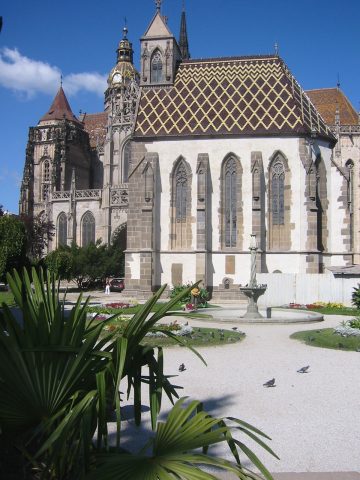
What stands today took shape in the 18th century, when the church was rebuilt in the Baroque style. This was a period of relative prosperity for the region, as Moldava nad Bodvou thrived on trade and craftsmanship. The Baroque here is subdued, far from the extravagance of Vienna or Prague, but it carries a distinct local character. The lines are soft, the stucco work modest, and the facade’s warm hues complement the town’s earthy palette. A simple portal frames the entrance, above which rises a small bell tower. Inside, the church continues the theme of quiet elegance—whitewashed walls, wooden pews, and an unadorned altar that doesn’t compete for attention but instead invites reflection.
The most striking feature inside is the altar area, where 18th-century frescoes depict scenes from the lives of Christ and the saints. The colors have faded with time, but the brushwork remains clear, revealing the hand of an artist who may not have been formally trained but understood how to convey emotion. Nearby, a wooden pulpit carved with folk motifs stands as another testament to the region’s craftsmanship. Unlike the rigid symmetry of grand cathedrals, these details feel personal, almost intimate, as if the artistry grew from the same soil as the town itself.
The Church of the Holy Spirit isn’t a tourist attraction in the conventional sense. There are no guided tours, no crowds, and few visitors who come to Moldava nad Bodvou specifically to see it. Yet this is precisely what makes it feel alive. On Sundays, the pews fill with locals—elderly women in headscarves, families with children, men who stop by briefly to light a candle. Services are held in both Slovak and Hungarian, a nod to the town’s dual heritage. Occasionally, the sound of the organ fills the space, its notes rich and resonant despite the instrument’s age. The music doesn’t overwhelm; it lingers, as if woven into the very air of the church.
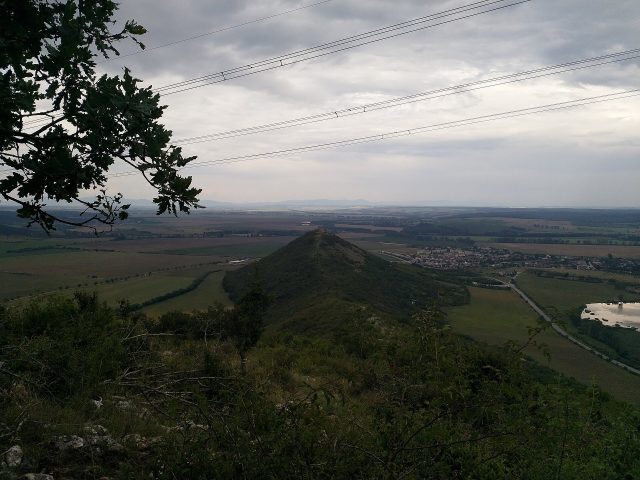
Surrounding the church is a small park where townspeople often gather in the warmer months. There are no bustling cafes or souvenir stalls here, just benches beneath old linden trees and a view of the Bodva River winding through the valley. The park is at its loveliest in spring and autumn—chestnut blossoms in May, golden and crimson leaves in October. On such days, the church seems to merge with the landscape, its quiet presence as natural as the changing seasons.
Moldava nad Bodvou isn’t a place that caters to tourists. There are no crowds, no long lines, no sense of urgency. The town moves at its own pace, and the Church of the Holy Spirit is very much a part of that rhythm. It doesn’t try to impress or dazzle; it simply exists, offering a space to sit in silence, to think, or to soak in the atmosphere. In a world that often equates beauty with spectacle, places like this remind us that some of the most meaningful experiences are found in the unassuming corners of life.