The Evangelical Church in Moldava nad Bodvou is one of those quiet places that doesn’t demand attention but lingers in the mind long after you’ve left. Tucked away on a gentle rise in the town center, surrounded by low-slung houses with terracotta roofs, it could easily be mistaken for just another parish church if you didn’t know to look for it. Yet behind its unassuming facade lies a story woven into the lives of the people here and the broader cultural currents of Slovakia.
Built in the mid-18th century, the church emerged during a complicated period for Protestantism in this part of Europe. The Treaty of Vienna in 1606 had granted evangelical communities the right to exist, but with strict conditions: no towers, no bells, and no entrances facing the main street. These restrictions shaped the architecture of the time, giving rise to churches that were modest to the point of near-invisibility. The church in Moldava nad Bodvou fits this pattern—its design is simple, almost austere, but that restraint gives it a quiet dignity.
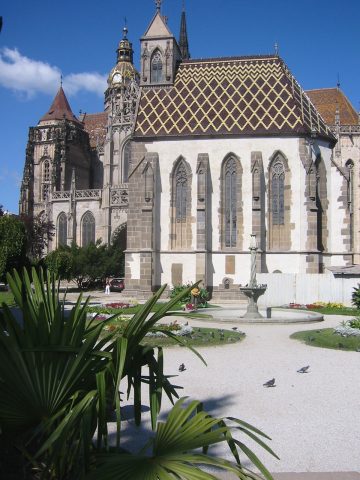
The building is constructed from pale stone that has mellowed over the centuries into a warm, golden hue. The front is marked only by a small portal topped with a semicircular window, while narrow, arched windows along the sides let in a soft, diffused light. The roof is covered in traditional tiles, and instead of a tower, there’s just a slender wooden spire rising slightly above the ridge. The effect is understated, almost domestic, as if the church isn’t so much imposing itself on the town as settling comfortably into its rhythm.
Inside, the space feels surprisingly open and uncluttered. Wooden pews are arranged in a semicircle around the altar, and the walls are nearly bare, save for a few old chandeliers and faint ceiling frescoes that hint at the sermons and hymns once sung here. The most striking feature is the pulpit, carved from dark wood and adorned with intricate patterns. Unlike in Catholic churches, where the pulpit often takes center stage, here it’s placed to the side—a reflection of the Protestant emphasis on the sermon over ritual. The arrangement underscores the belief that the word, not ceremony, is what truly matters.
The church’s history is deeply entwined with the life of Moldava nad Bodvou. This has always been a small town where everyone knows one another, and the church served as more than just a place of worship. It was a gathering spot for the community, a venue for celebrations, and a refuge in difficult times. During World War II, the building suffered damage, but locals restored it, carefully preserving its original character. Today, it remains an active church, though the congregation is smaller than it once was. Still, it endures as a living piece of the town’s heritage, not just a relic of the past.
Around the church, a small park with ancient linden trees and benches offers a place to sit in the shade. In summer, the air is quiet, broken only by the occasional laughter of children or the hum of a passing car. In winter, when snow blankets the ground, the scene takes on a hushed stillness, as if time itself has slowed. Locals don’t often come here on purpose, but for those who stumble upon it, the church can feel like a quiet revelation.
This isn’t the kind of place that impresses with grandeur or ornate decoration. It doesn’t draw crowds of tourists or feature on must-see lists. But that’s precisely what makes it special. There’s nothing performative about it—just silence, history, and the sense of being part of something enduring. Perhaps that’s why it still stands, not as a museum piece, but as a place where people continue to come together, to pray, and simply to exist side by side.