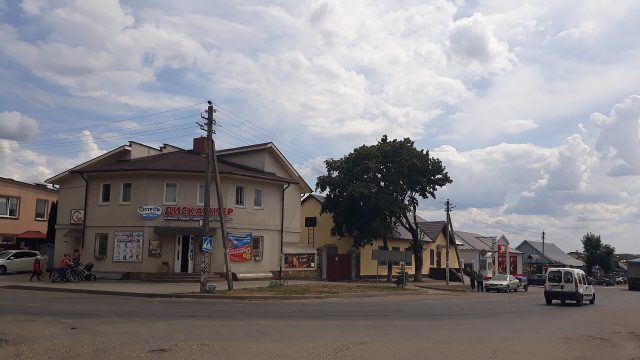
Smilavichy Market isn’t the kind of place that announces itself with fanfare. Tucked away in a small town of the same name, about an hour’s drive from Minsk, it has quietly served as both a trading hub and a social gathering spot for decades. There’s no grand architecture or tourist crowds here—just the unhurried rhythm of daily life, where time seems to move at its own pace. For those who stumble upon it, the market feels like a step back into a Belarus that exists beyond postcards and guidebooks, where commerce and community are still intertwined.
The market’s roots stretch back to a time when Smilavichy was little more than a settlement built around craftsmanship and trade. During the Soviet era, it became a typical collective farm market, where everything from fresh vegetables to handmade felt boots could be found. Today, little has changed. The same easy conversations between vendors, the scent of freshly baked bread and smoked meats, the stalls piled with honey, cheese, and pickled vegetables from nearby villages—all of it persists, untouched by modern trends. The market’s charm lies in its refusal to evolve too much. It remains a place where buying and selling are inseparable from the fabric of everyday existence.
The architecture is simple and practical, almost utilitarian. A few rows of covered pavilions, wooden stalls under awnings, old-fashioned scales with iron weights—it all looks as though it’s been frozen in time. There are no sleek shopping centers or flashy signs, just the raw, unpolished reality of a working market. Even on rainy days, when mud squelches underfoot and shoppers huddle in raincoats, the place doesn’t lose its appeal. It was never designed to be pretty or convenient by urban standards, and that’s precisely what makes it special.
What draws people here, above all, is the food. This is where you’ll find things that have all but disappeared from supermarkets: fresh milk sold in glass bottles, cottage cheese scooped straight from wooden tubs, smoked fish prepared using old family recipes, mushrooms and berries foraged from the surrounding forests. The meat stalls are particularly famous—sausages, lard, and poultry, all made the traditional way, without preservatives or artificial flavors. Many visitors come specifically to stock up, filling their bags with enough provisions to last weeks. The quality is so reliable that some drive from Minsk just for a single item, knowing they won’t find its equal elsewhere.
But the market isn’t just about food. You’ll also find goods that reflect the region’s way of life: handmade clay pottery, knitted socks, wooden spoons, honey stored in birch bark containers. Everything is crafted by hand, often using techniques passed down through generations. The vendors are usually happy to explain how they grow their vegetables, smoke their fish, or weave their baskets. These conversations are part of the market’s atmosphere, turning a simple transaction into something more meaningful. It’s not just about buying—it’s about connecting with the people and traditions behind the products.
The market doesn’t operate every day, and that’s part of its character. Trade is busiest on weekends, when locals and visitors from Minsk and other towns converge here. On weekdays, the place is quieter, sometimes nearly empty, though you might still find a vendor preparing their goods or stopping by for a chat. In those moments, the market feels especially intimate, like a private space governed by its own unspoken rules. There’s no schedule or rush—just the slow, steady pulse of a place that exists for its own sake.
For first-time visitors, the market can be an unexpected discovery. There are no souvenir shops or guided tours, just the chance to see Belarus as it really is—not the polished version meant for outsiders, but the everyday reality of a small town. It’s a place where you can feel the rhythm of local life, where shopping is as much about conversation as it is about commerce, and where a trip to buy groceries becomes a small adventure. Whether you come with a shopping list or just to wander, the market leaves an impression of something authentic and alive.
In recent years, a few small cafés and snack stalls have sprung up around the market, offering simple meals made from local ingredients. You can try draniki with mushrooms, borscht with sour cream, or pancakes stuffed with cottage cheese—all of it prepared with the same care as the goods on the stalls. Even if you’re not hungry, it’s worth sitting down for a while, watching the ebb and flow of customers, listening to the haggling and the gossip. The food is good, but the real draw is the atmosphere.
Smilavichy Market is more than just a place to buy and sell. It’s a living piece of the town’s history, culture, and traditions. Everything about it feels rooted in the past, yet it remains relevant today. Perhaps that’s why it hasn’t lost its appeal—in a world that changes too quickly, places like this remind us that some things are worth preserving. It doesn’t try to be anything other than what it is, and that’s exactly why it endures.