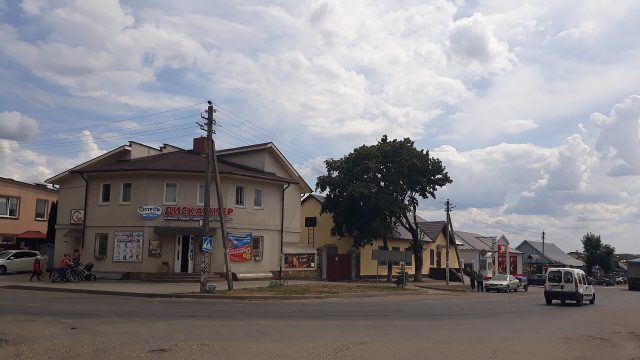
Smilavichy is one of those quiet Belarusian towns that rarely appear on tourist maps. There are no grand boulevards or famous landmarks here, just the kind of unhurried pace that lets you feel the weight of history in the air. The town sits in the Minsk region, where the past isn’t preserved in monuments but in the details of everyday life—old wooden houses, weathered fences, and the occasional church bell ringing over empty streets.
The Smilavichy Local History Museum occupies a house built in the early 1900s, once owned by local merchants. The building itself is a good example of the architecture you’d find in small Belarusian towns of that era—high ceilings, heavy wooden doors, and staircases with worn banisters that creak underfoot. Inside, the original tiled stoves, window frames, and parquet floors have survived, giving visitors a sense of what life was like a century ago. The house doesn’t feel like a museum at first; it feels like someone just stepped out for a moment and might return any minute.
The exhibits cover daily life from the 19th to the mid-20th century. There are clay pots, spinning wheels, coins, and faded photographs, but the real focus is on local crafts. Smilavichy was known for its pottery, weaving, and flax processing, and the museum has tools and finished pieces that show how these traditions worked. One of the more unusual items is a church bell, its surface darkened by time, and postcards from the early 1900s showing what the town looked like back then. The postcards are especially interesting because they capture streets and buildings that have since changed or disappeared.
A separate room is dedicated to World War II. The displays here are more personal than what you’d find in larger museums—frontline letters, photographs of destroyed buildings, and everyday objects that belonged to partisans. Some of the documents tell stories of ordinary people who helped the resistance, not always in dramatic ways. There are accounts of families hiding neighbors, of children carrying messages, of small acts of defiance that kept communities alive. It’s not the kind of history that makes headlines, but it’s the kind that shapes a place.
The museum isn’t stuck in the past, though. It also serves as a space for contemporary artists and craftspeople. Local painters, ceramicists, and woodworkers exhibit their work here, and the museum hosts workshops where visitors can try traditional skills like basket weaving or painting clay toys. For children, these sessions are often their first introduction to crafts that were once common in every household.
What makes the museum special isn’t just the exhibits but the people who run it. The staff are local historians and enthusiasts who know the stories behind the photographs—the names of the people in them, the families they belonged to, the events that shaped their lives. Their knowledge comes from years of talking to older residents, collecting oral histories, and piecing together fragments of the past. When they speak, it doesn’t sound like a lecture; it sounds like a conversation, the kind you’d have with a neighbor who remembers how things used to be.
Smilavichy isn’t a place you visit for Instagram-worthy sights. There are no crowds, no souvenir stalls, no grand entrances. What you’ll find instead is a quiet corner of Belarus where history isn’t just something you read about but something you can almost touch. The museum doesn’t tell the story of kings or battles; it tells the story of ordinary people—how they lived, worked, and survived. Spend an hour or two here, and you’ll leave with a sense of how the past lingers in the present, not in grand monuments, but in the small, everyday things that most people overlook.