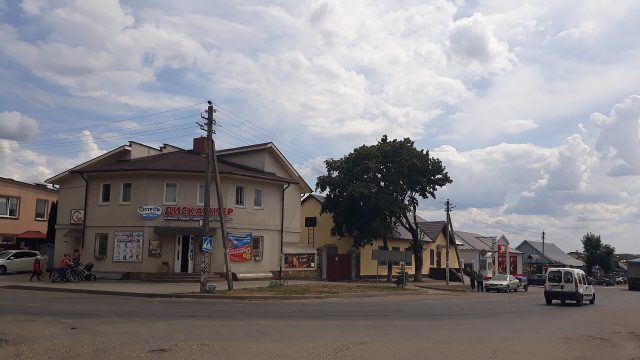
Smilavichy is one of those quiet Belarusian towns where time seems to move at its own unhurried pace. Nestled in the countryside, it doesn’t draw crowds of visitors or boast grand monuments, but it holds a certain understated charm—one that reveals itself slowly to those who take the time to look. At the heart of this small settlement stands the Church of the Holy Trinity, a building that has witnessed centuries of local life while remaining largely unchanged. Perched on a gentle hill in the center of town, it overlooks the modest streets with a quiet dignity, its whitewashed walls and simple silhouette blending seamlessly into the landscape.
The church was built in the mid-18th century, a period when Smilavichy was already an established trading and craft hub in the region. Like many towns of its size, it passed through the hands of different noble families over the years, each leaving their mark on its character. The church, however, remained a constant—a place where people gathered not just for worship, but for community. It served as a meeting point for merchants, farmers, and artisans, a space where disputes were settled, news was shared, and comfort was sought in difficult times. In the 19th century, when the Tyshkevich family took over the town, the church underwent renovations that softened its original baroque features with the cleaner lines of neoclassicism. Yet despite these changes, its essence remained intact, preserving the spirit of its early years.
Stepping inside, the first thing that strikes you is the sense of space. The high vaulted ceilings create an airy atmosphere, while the wooden iconostasis and faded frescoes speak of generations of devotion. There’s no overwhelming opulence here—just a quiet reverence in the details. The central icon of the Holy Trinity, said to have been painted by a local craftsman, is the focal point of the interior. Over the years, it has become a symbol of the church’s enduring presence in the lives of the townspeople. Stories about its supposed miraculous properties have been passed down through families, though whether one believes them or not, the icon undeniably carries a weight of history and faith.
The church is still very much a living part of Smilavichy. It hosts the rituals that mark the milestones of life—baptisms, weddings, funerals—binding the community together in ways that go beyond mere tradition. On ordinary days, the building stands in quiet solitude, but during religious festivals, it comes alive with the sound of hymns and the scent of incense. The most significant celebration is Trinity Sunday, when pilgrims from across Belarus make their way to Smilavichy. For a brief moment, the town becomes a hub of spiritual reflection, a place where strangers and locals alike find common ground in shared beliefs.
What makes the Church of the Holy Trinity special is its lack of pretension. Unlike some historic churches that feel more like museums, this one has never lost its purpose. It hasn’t been polished into something pristine or roped off behind barriers. The worn wooden floors, the slightly uneven walls, the faint traces of candle smoke on the ceiling—all these imperfections tell a story of real lives lived within its walls. There’s a warmth here, a sense that the building has been cared for not out of obligation, but out of genuine affection.
Smilavichy itself is the kind of place most travelers pass by without a second thought. There are no grand hotels or bustling markets, no Instagram-worthy landmarks clamoring for attention. The town exists on its own terms, content in its quiet rhythm. Yet for those who do stop, the church offers something rare—a connection to the past that feels immediate and unfiltered. It doesn’t demand admiration; it simply exists, as it has for centuries, a silent witness to the ebb and flow of life in this corner of Belarus.
If you find yourself in Smilavichy, take a moment to walk up the hill and step inside. There’s no need to rush. Stand in the middle of the nave, listen to the silence, and let the space settle around you. You won’t find anything flashy or extraordinary here, but you might just sense something deeper—a thread that ties the present to the past, a reminder that some things endure long after the world around them has changed. In an age where everything seems designed for quick consumption, places like this offer a different kind of experience: one that lingers long after you’ve left.