Smilavichy Palace, once the estate of the Chreptovich family, stands quietly in a small town not far from Minsk, as if suspended in another era. Unlike the more famous palaces of Belarus, it doesn’t draw crowds or offer polished tourist experiences. Instead, it offers something rarer: a sense of stillness, the rustle of leaves in an old park, and the faint but unmistakable presence of history lingering in the air.
The palace was built in the late 18th century for the Chreptoviches, one of the most powerful noble families of the Grand Duchy of Lithuania. Joachim Chreptovich, a statesman and patron of the arts, chose Smilavichy deliberately. The town sat at the crossroads of trade routes, and its scenic surroundings made it an ideal spot for a country retreat. The architecture reflects the tastes of the time, blending neoclassical symmetry with baroque flourishes—tall windows, graceful columns, and delicate stucco work that still hint at the elegance of its past.
Inside, the palace no longer retains its original furnishings, but traces of its former grandeur remain. Fragments of frescoes, ornate fireplaces, and intricately patterned parquet floors suggest the refined lifestyle of its inhabitants. The library, once renowned across the region, was said to house rare manuscripts and scholarly works collected by Chreptovich, turning Smilavichy into a cultural hub. Much of the collection was lost to wars and revolutions, but the memory of it endures in the quiet rooms where books once lined the walls.
The surrounding park was designed as an extension of the palace, a place where nature and architecture harmonized. Winding paths, ponds, and classical sculptures once created an atmosphere of seclusion, a retreat from the world. Today, the park feels slightly overgrown, but that only adds to its charm. Old lime trees cast shifting shadows over the paths, and the stillness of the water in the ponds invites reflection. Time moves differently here, as if the outside world has faded into the background.
Like many Belarusian estates, the palace has had a turbulent history. After the revolution, it became state property, housing various institutions. During World War II, it suffered significant damage, and though it was partially restored afterward, it never regained its former splendor. Yet even in its current state, the palace remains a testament to the past—a reminder of the ideas, tastes, and lives that shaped this land.
Today, the palace is more than just a museum. It hosts cultural events—exhibitions, classical concerts, and literary evenings—where modern voices sometimes echo through the same halls that once heard the conversations of nobles and scholars. For locals, it’s a symbol of their heritage, while for visitors, it offers a glimpse into Belarusian history that isn’t always visible in guidebooks.
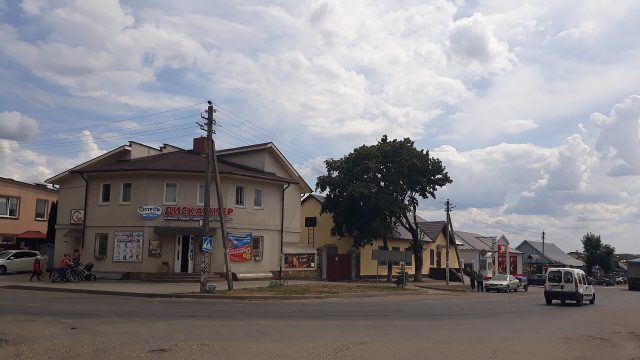
Smilavichy itself is a quiet town, far from the usual tourist routes. Its narrow streets, wooden houses, and a church perched on a hill give it a timeless feel. Life here moves at its own unhurried pace, and the locals are welcoming without being intrusive. A visit to the palace can easily include a stop at a small café or shop, where you might try fresh bread, homemade cheese, or traditional Belarusian dishes.
What makes Smilavichy Palace special isn’t its grandeur or fame, but its quiet persistence. It doesn’t demand attention; it simply exists, offering a space to step away from the noise of the present. For those who appreciate history without fanfare, architecture without pretension, and the chance to connect with the past on its own terms, this place is worth seeking out. If you ever find yourself in this part of Belarus, take the time to visit—it’s a detour that lingers in the memory long after you’ve left.