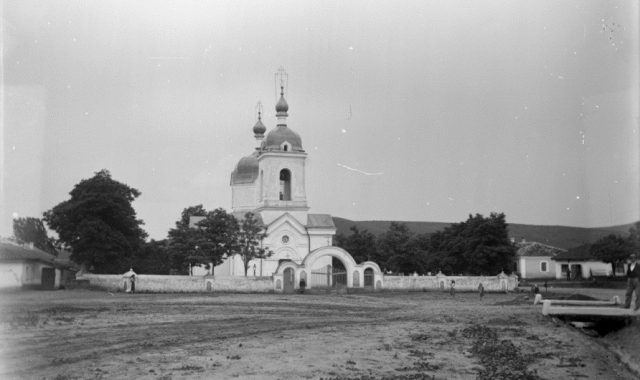
Zuya’s Pushkin Square is one of those quiet places that doesn’t demand attention at first glance but slowly reveals its understated charm. Tucked in the heart of this small Crimean town, where life moves at an unhurried pace, the square feels like a natural part of the landscape—less a tourist attraction and more a living space where locals go about their day. There are no crowds here, no souvenir stalls or guided tours, just the easy rhythm of provincial life, the rustle of leaves, and the occasional laughter of children playing nearby.
The square took shape in the mid-20th century, when Zuya was still a modest Soviet settlement. Like many towns across the country, it needed a green space—a place for rest, strolls, and chance encounters. The name Pushkin wasn’t chosen by accident. Though the poet never set foot in Zuya, his legacy looms large over Crimea, where he traveled and found inspiration. Naming the square after him was a way to anchor the town in a broader cultural narrative, to remind people that literature and history belong not just to grand cities but to ordinary places too.
The design of the square is simple, almost utilitarian, reflecting the practical aesthetics of its time. A paved central walkway cuts through the middle, flanked by neat lawns, flowerbeds that change with the seasons, and benches shaded by mature trees. At the center stands a bust of Pushkin—nothing extraordinary, just a standard monument you might find in any Russian town. It’s not a masterpiece, but it serves its purpose, a quiet nod to the idea that culture isn’t confined to museums or capital cities.
The square changes with the seasons. In winter, it feels stark and a little lonely, the bare branches of the trees silhouetted against a gray sky, the flowerbeds empty. But come spring, everything comes alive. Locals bring their children here, elderly men and women feed the pigeons, and teenagers sometimes sprawl on the grass, talking or listening to music. Summer evenings are the best time to visit, when the air is thick with the scent of blooming linden trees and the light softens into something almost golden. Time seems to slow down here, as if the square exists in its own gentle rhythm, untouched by the rush of bigger cities.
This isn’t the kind of place people travel across the country to see. Most visitors stumble upon it by accident, perhaps while exploring Zuya or passing through on the way to Simferopol. The town itself doesn’t have many landmarks, but it has a charm of its own—low-slung houses with tiled roofs, narrow streets, and the sense that here, Crimea feels less like a tourist destination and more like a place where people actually live. The square is part of that authenticity, a small pocket of calm where you can sit for a while and watch the world go by.
In recent years, the square has become a venue for small community events. Occasionally, local musicians perform here, or someone organizes a poetry reading. There might be a holiday celebration for the children, with games and sweets. Nothing elaborate, but for Zuya, these gatherings matter. On those days, the square buzzes with life—music drifting through the air, the smell of fresh pastries from a nearby stall, kids darting around the monument, oblivious to its historical weight. For a few hours, it becomes the heart of the town.
Around the square, you’ll find a handful of cafes and small shops. They’re not fancy, but they have their own appeal—simple, home-style food, reasonable prices, and owners who remember their regulars. If you’re lucky, you might try a Crimean cheese pastry or a cup of herbal tea made from plants gathered in the nearby hills. It’s the kind of place where you can linger over a coffee without feeling rushed, watching the comings and goings of the town.
Pushkin Square isn’t a grand monument or a must-see attraction. It’s something quieter, more personal—a slice of everyday life in a small Crimean town. There’s no grand architecture or dramatic history here, just the steady, unassuming presence of a place that has seen generations come and go. What it offers instead is something rare in popular tourist spots: a sense of realness. Here, you can feel the pulse of Zuya, where people know each other by name and time is measured not in minutes but in seasons. If you ever find yourself in this part of Crimea, it’s worth stopping by, even just for a little while. Not to check something off a list, but to understand what it means to live in a place where the sea and the mountains are always nearby, and the past isn’t just preserved in museums but woven into the fabric of daily life.