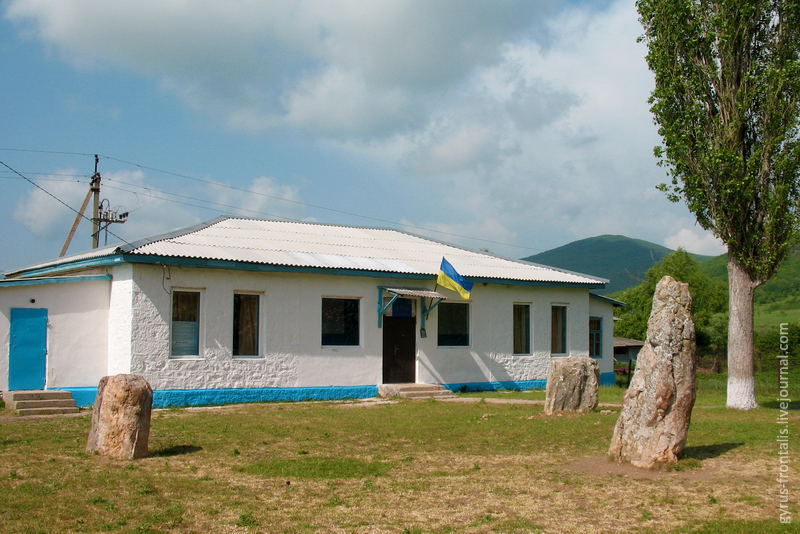
The Skelsky Menhirs stand as one of those rare places that make you pause and wonder how little we truly know about the past. Tucked away on the outskirts of Rodnikovskoye, a quiet village in Crimea, these ancient stone pillars rise from the earth like silent sentinels of a forgotten time. Far from the well-trodden tourist paths, they exist in a world of their own, where the wind carries whispers of centuries gone by. Their origins remain a mystery, debated by scholars who can’t quite agree on whether they belong to a megalithic culture or a later era. Yet their enigmatic presence is undeniable, drawing those who seek more than just scenery—they come for the questions these stones leave unanswered.
The menhirs are scattered across a gentle slope, surrounded by low hills and sparse trees that dot the landscape. There are about twenty of them, though the exact number is hard to pin down—some have sunk partially into the earth, while others have weathered away with time. The tallest reach nearly three meters, their surfaces etched with lichen and fine cracks that seem to tell the story of each stone. Their shapes vary: some resemble rough obelisks, others jagged spires, their forms shaped by nature as much as by human hands. Locals have long called them "stone women," though they bear no resemblance to the traditional Polovtsian statues found elsewhere in the region.
The area around the Skelsky Menhirs is as intriguing as the stones themselves. Here, where the foothills meet the Crimean steppe, the landscape shifts dramatically—rolling grasslands give way to shallow ravines and patches of shrubbery. On clear days, the view stretches across a valley that once served as a crossroads for ancient trade routes. It’s easy to imagine why these stones were placed here, whether as markers, symbols, or something more sacred. Archaeologists have uncovered traces of settlements from different eras, spanning the Bronze Age to the Middle Ages, but no direct evidence links the menhirs to any specific culture. They remain an open question, a puzzle without a clear solution.
Visiting the Skelsky Menhirs is less about sightseeing and more about stepping into a space of quiet reflection. There are no crowds, no souvenir stalls, no guided tours—just the rustle of grass in the wind and the occasional call of a bird. The stones stand in their natural setting, their arrangement feeling organic rather than deliberate. Some researchers suggest they might have been part of an ancient sanctuary or an astronomical site, but these theories remain unproven. Even without a definitive explanation, the place carries a certain weight, an energy that’s hard to ignore. It’s the kind of spot where time seems to slow, where the past feels closer than it does elsewhere.
The study of the Skelsky Menhirs is a relatively recent endeavor. The first written records of them appeared in the late 19th century, when Crimea began attracting archaeologists and travelers. But serious research didn’t begin until the Soviet era, when expeditions from the Institute of Archaeology took an interest. Scientists tried to determine the stones’ age, purpose, and cultural ties, but their findings were inconclusive. Radiocarbon dating suggested some may have been erected around four thousand years ago, though the results were far from definitive. It’s possible the menhirs were created at different times by different peoples, their current arrangement the result of chance rather than design.
Today, the Skelsky Menhirs attract those who seek solitude or a connection to something beyond the ordinary. Photographers, artists, and history enthusiasts often make the journey, spending hours in quiet contemplation. The road here isn’t easy—the pavement ends long before Rodnikovskoye, and the last stretch is a rough dirt track. But that remoteness is part of the appeal. There’s no rush, no noise, just the stones, the earth, and the sky. It’s a place where you can sit and listen, where the weight of history feels tangible.
Over time, the menhirs have inspired their share of legends. Some locals believe the stones possess healing powers, that touching them at certain times of the year can cure ailments. Others say they’re warriors or spirits frozen in time, guarding the land. There’s no scientific basis for these stories, but they add to the mystique. In the end, it doesn’t really matter who placed them or why—they’ve stood here for millennia, outlasting empires and civilizations. Their endurance is what makes them remarkable.
A visit to the Skelsky Menhirs offers a different perspective on Crimea. This isn’t the crowded beaches or bustling cities, but a quiet corner where history lingers in the air. There are no signs, no plaques, no guides—just you and the stones, holding their secrets close. That’s perhaps their greatest value: they don’t provide answers, only questions. They invite you to wonder, to imagine, to feel the weight of time. If you ever find yourself in this part of the world, take a moment to stop. Listen to the silence. Let the stones speak in their own way.