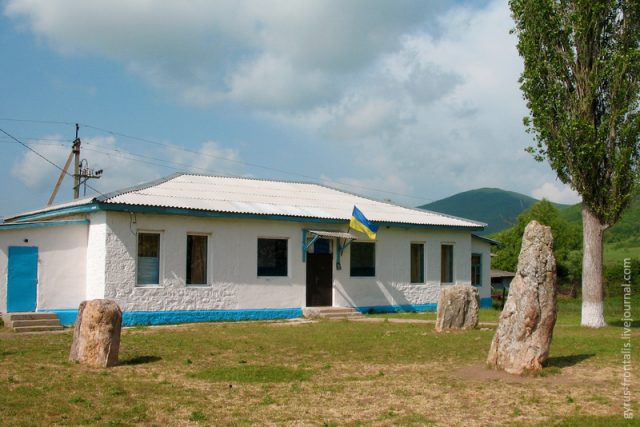
Spring Lake’s Church of the Nativity of the Holy Virgin feels like a place where time has gently paused, leaving behind the quiet dignity of old Russian architecture. Built in the mid-19th century, it stands on a low hill, its white stone walls rising above the surrounding fields and groves as if the landscape itself chose to frame its presence. The five domes, arranged in the traditional style, give the church a sense of balance and restraint—no unnecessary flourishes, just the clean lines and proportions that defined provincial religious buildings of the era.
The church’s story is woven into the history of Spring Lake itself. The village, known since the 18th century, was once a district center, and the church served as both a spiritual and communal heart. Like many religious sites in the Soviet years, it was closed and repurposed, its interiors used for storage. Yet even then, it survived without destruction, and by the late 20th century, restoration began. Today, services are held again, though the work is ongoing. The building has found new life, even if some of its former glory remains hidden beneath layers of time.
Architecturally, the church is a fine example of rural Russian design. The main structure follows the classic pattern of a square base transitioning into an octagonal drum, a shape that gives the building a sense of lightness and upward movement. The bell tower, added later, blends into the composition, though its proportions are more modest. Inside, the original frescoes have mostly faded, leaving only fragments that hint at what once was. Now, the walls are adorned with icons, many painted by local artists, their simple craftsmanship adding to the church’s unassuming charm.
There’s no grandeur in the interior, and that’s part of its appeal. The wooden floors creak underfoot, the old candlesticks bear the marks of decades, and the iconostasis is a patchwork of different eras. The carved lectern holding the Gospel is particularly striking—its age is evident in every worn detail. Together, these elements create a space where the outside world’s noise fades, replaced by a quiet that feels almost tangible.
This church has witnessed generations of village life. It has seen baptisms, weddings, and funerals, and in wartime, it offered shelter. Locals still tell stories of how, during World War II, people took refuge in its basement during air raids. These memories linger in the air, especially when standing beneath the vaulted ceilings, the scent of incense and aged wood filling the space. It’s a place where history isn’t just recorded—it’s felt.
The surrounding countryside is just as worth exploring. Spring Lake is an unassuming village, but its landscapes have a quiet beauty. Fields stretch out in all directions, golden in autumn, swaying with rye in summer. A small river winds nearby, its banks once home to mills whose stone foundations are all that remain. Walking these paths after visiting the church offers a glimpse of the Russia often described in literature—unhurried, rooted in the land, where every footpath seems to lead somewhere meaningful.
What makes this church special isn’t just its architecture or history, but the stillness it holds. Unlike crowded tourist sites, it offers a chance to simply be—to listen, to reflect, to step away from the rush of modern life. In summer, the thick walls keep the interior cool; in winter, the warmth of the stove seeps into the corners, making the space feel intimate. Services are infrequent, but if you’re lucky enough to attend one, you might hear the same ancient chants that have echoed here for over a century.
For those drawn to the history of Orthodoxy or the character of rural Russia, this church is a rare find. There are no souvenir stalls, no guided tours, no crowds—just silence, time, and the weight of memory. That’s why it attracts not only pilgrims but also travelers who may not be religious but are searching for something authentic. In the end, places like this aren’t just about faith. They’re about connection—to the past, to the land, and to the quiet parts of ourselves that we sometimes forget.