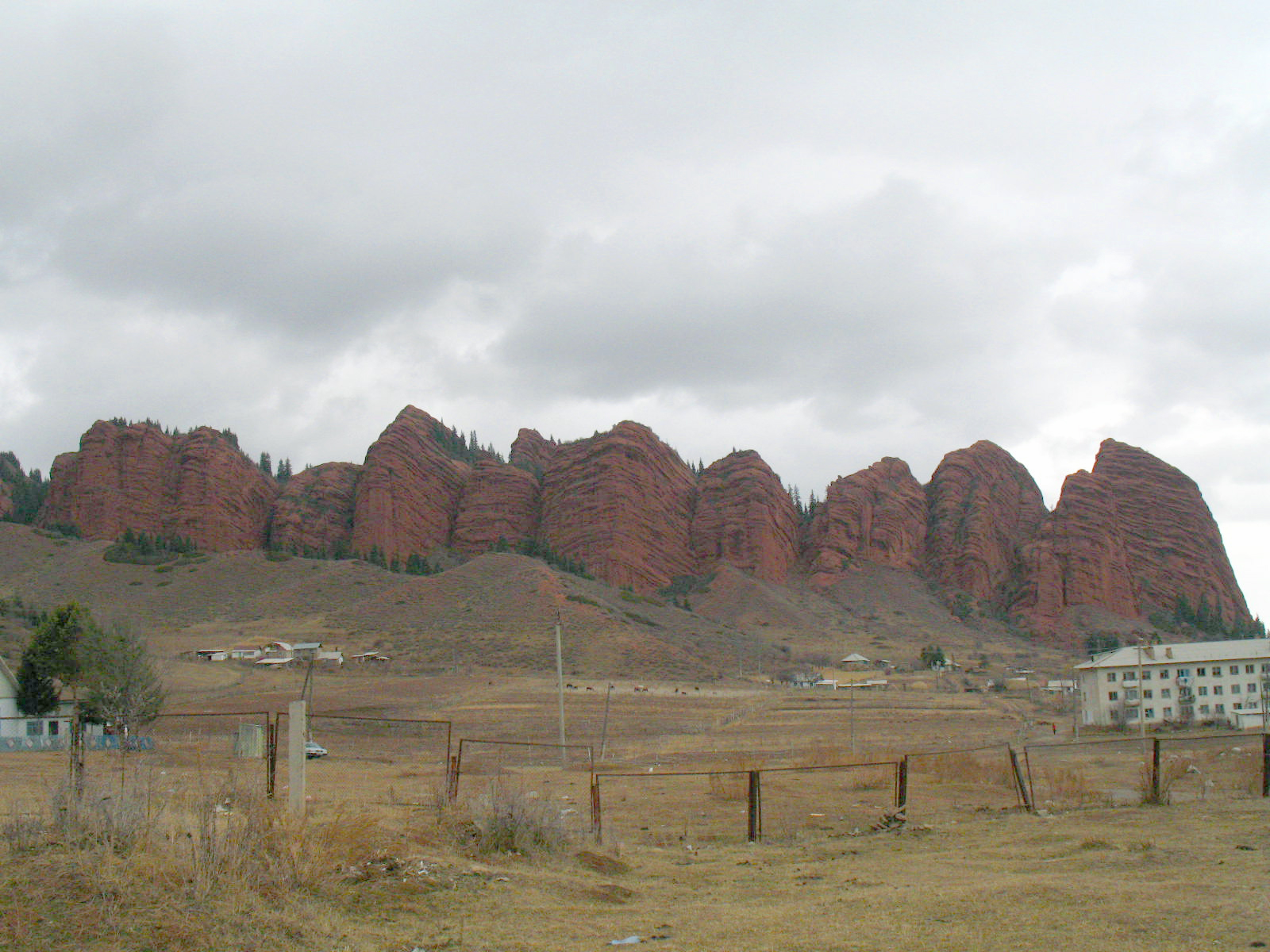
Jety-Oguz is one of those places in Kyrgyzstan that feels plucked from an old legend. It lies just outside Kochkor, a quiet town in the Issyk-Kul region where the mountains meet the valleys and life moves at the unhurried pace of the land itself. The name translates to Seven Bulls, and from a distance, the rock’s reddish outcrops do resemble a herd of massive animals frozen against the green slopes. This natural formation isn’t just a scenic stop—it carries layers of geological history, cultural stories, and a quiet presence that makes it feel alive in a way few places do.
The origins of Jety-Oguz stretch back millions of years, shaped by volcanic activity and the slow work of wind and water. The rock’s deep red hue comes from iron oxide, a stark contrast to the surrounding grasslands and gray cliffs. Over time, erosion sculpted the stone into the shapes that now give the place its name—rounded forms that evoke the backs of bulls. For geologists, it’s a textbook example of Earth’s history, each layer revealing a different chapter. For everyone else, it’s simply a striking sight, one that shifts with the light, appearing almost fluid at dawn or dusk.
Local legends have long woven Jety-Oguz into the fabric of Kyrgyz folklore. One story tells of seven bulls turned to stone as punishment for their defiance. Another speaks of ancient battles, the rock’s formations said to be warriors or spirits of the past, forever watching over the land. These tales are still shared today, passed down through generations, and there’s something undeniably compelling about them. Some say the rock changes with the time of day or the mood of those who look upon it, as if it holds a kind of sentience. Whether you believe the stories or not, the place has a way of making you feel like you’re standing in a living landscape, not just a static one.
Getting to Jety-Oguz is part of the experience. Kochkor, the nearest town, is a worthwhile stop in its own right, a place where travelers can glimpse the rhythms of rural Kyrgyz life. From there, it’s about twenty kilometers to the rock, a journey that winds through valleys dotted with grazing horses and sheep. The road is rough in places, but the scenery more than makes up for it—rolling hills, distant peaks, and the occasional yurt where locals might offer a cup of tea or a smile. Many visitors choose to make the trip on horseback, a common way to travel here, letting the slow pace of the ride sink in. The air carries the scent of wormwood and wild herbs, and the silence is broken only by the wind or the distant call of a shepherd.
The rock itself sits in open land, accessible from nearly every angle. The best times to visit are early morning or late afternoon, when the sun casts a warm glow over the red stone, deepening its color and bringing out the textures. At these hours, the place is almost eerily quiet, the kind of silence that makes you listen harder. Photographers are drawn here for the way light plays across the formations, creating dramatic contrasts and shadows. But even without a camera, it’s a place that invites stillness—whether to think, to wander, or simply to sit and watch the way the landscape shifts with the passing hours.
Beyond the rock, the surrounding area offers more to explore. Nearby is the Jety-Oguz Gorge, known for its hot springs, where visitors soak in mineral-rich waters said to heal aches and fatigue. The Kochkor Valley, just a short distance away, provides a glimpse into traditional Kyrgyz life, with yurts set up for travelers and the chance to try dishes like beshbarmak or fermented mare’s milk, kumis. These places add depth to the visit, showing how the land sustains both the people and the stories that have grown from it.
Jety-Oguz isn’t just a natural landmark—it’s part of Kyrgyzstan’s cultural landscape. Throughout the year, the area hosts festivals and gatherings that draw people from across the country. In summer, you might stumble upon a kok-boru match, a traditional horseback game, or a wrestling competition where athletes grapple in the open air. These events are a reminder of how deeply rooted traditions remain, even as modern life creeps in. The atmosphere is one of warmth and openness, the kind that makes strangers feel like guests.
For those who prefer to explore on foot, the area around Jety-Oguz offers plenty of trails. Some lead up gentle slopes for a higher vantage point, while others wind deeper into the mountains, revealing hidden valleys and alpine meadows. The scenery changes with the seasons—spring brings wildflowers, summer turns the hills lush and green, autumn paints them gold, and winter dusts the red rock with snow. Each time of year offers a different perspective, as if the land itself is revealing new secrets.
What makes Jety-Oguz special isn’t just its beauty, but the way it feels untouched by the usual trappings of tourism. There are no crowds, no souvenir stalls, no scripted experiences. Just the rock, the wind, and the quiet presence of the land. It’s the kind of place that lingers in your memory long after you’ve left, a reminder that some corners of the world still move to their own rhythm. Maybe that’s why people return—drawn back by the way the light hits the stone at sunset, the sound of the grass rustling, or the sense that here, time doesn’t just pass, but unfolds.