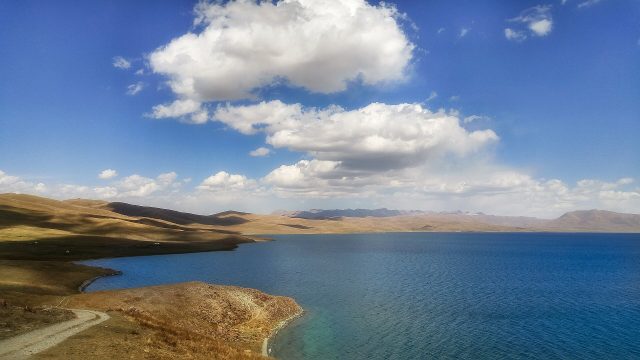
In the heart of Kochkor, a quiet town nestled in Kyrgyzstan’s highlands, stands a monument to Manas, the legendary hero whose name carries more weight than any fictional character ever could. For the Kyrgyz people, Manas is not just a figure from an epic poem—he embodies courage, justice, and the unbreakable spirit of unity. The *Epic of Manas*, with its hundreds of thousands of verses, is one of the longest oral traditions in the world, a living testament to a culture that has survived centuries of change. Kochkor, with its sweeping valleys and rugged mountains, is often called the historical homeland of Manas, and the land itself seems to whisper his story.
The monument sits on a gentle rise in the center of town, where the air is crisp and the view stretches toward the surrounding peaks. Manas is depicted on horseback, clad in armor, his posture calm rather than combative. The sculptor captured something deeper than physical strength—the quiet resolve that once united nomadic tribes. His horse stands firm, as if poised to ride off at any moment, yet content to rest for now. The statue is modest in size, blending into the landscape rather than dominating it. Over time, the metal has weathered into a soft patina, and in the golden light of late afternoon, the figure seems to glow.
Around the monument, a small park offers a place to pause. Locals stroll along the paths, children play nearby, and elders gather on benches to chat in the shade of poplar trees. There are no crowds here, no tour groups rushing past—just the occasional visitor taking a moment to sit and listen to the wind rustling through the leaves. It’s easy to imagine how, centuries ago, storytellers might have gathered in these same valleys, passing down tales of Manas from one generation to the next. In Kochkor, the epic isn’t just preserved in books; it’s alive in the way people speak, the way they remember, and the way they connect to their past.
Kochkor itself is a place where time moves differently. The town is a typical settlement in Naryn Province—low-slung houses line the main road, and the mountains loom in the distance, their slopes changing color with the seasons. There are no grand hotels or souvenir shops, no signs pointing tourists toward the next attraction. This is Kyrgyzstan as it has always been: unhurried, unpolished, and deeply rooted in tradition. The monument to Manas isn’t just a landmark; it’s a bridge between the past and the present, a reminder that history isn’t something confined to museums.
The statue was erected in the 1990s, a time when Kyrgyzstan was reclaiming its identity after decades of Soviet rule. Its installation was more than a cultural gesture—it was an act of national pride. Today, it stands as proof that the *Epic of Manas* isn’t just a relic; it’s a living tradition, woven into the fabric of daily life. Parents bring their children here to learn about their heritage, and older residents sometimes gather nearby, sharing stories or simply enjoying the quiet. The monument doesn’t demand attention; it invites reflection.
What makes this place special isn’t the grandeur of the statue, but the way it fits into the landscape. The metal has aged gracefully, its surface softened by time, and in the right light, the figure of Manas seems almost alive. At sunset, when the sun dips behind the mountains, the statue casts long shadows across the ground, as if the hero himself is still riding through the valley. There are no plaques explaining its significance, no audio guides narrating its history. You don’t need them. The story is in the wind, in the way the mountains frame the horizon, in the way the people of Kochkor carry it with them.
Visiting Kochkor isn’t about checking off a list of sights. It’s about slowing down, about taking the time to understand why Manas matters so deeply to the Kyrgyz people. This is a place where history isn’t just remembered—it’s felt. The monument, unassuming as it is, serves as a focal point for that connection. It’s a reminder that every culture has its own legends, its own heroes, and its own way of keeping the past alive. Sometimes, all it takes is a single statue to make those stories real again.
For those who wander beyond the usual tourist paths, Kochkor offers a glimpse into the soul of Kyrgyzstan. It’s a place where the epic isn’t just recited—it’s lived. The monument to Manas stands as a quiet guardian of that tradition, a symbol of resilience and pride. And if you listen closely, you might just hear the echoes of a story that has been told for a thousand years.