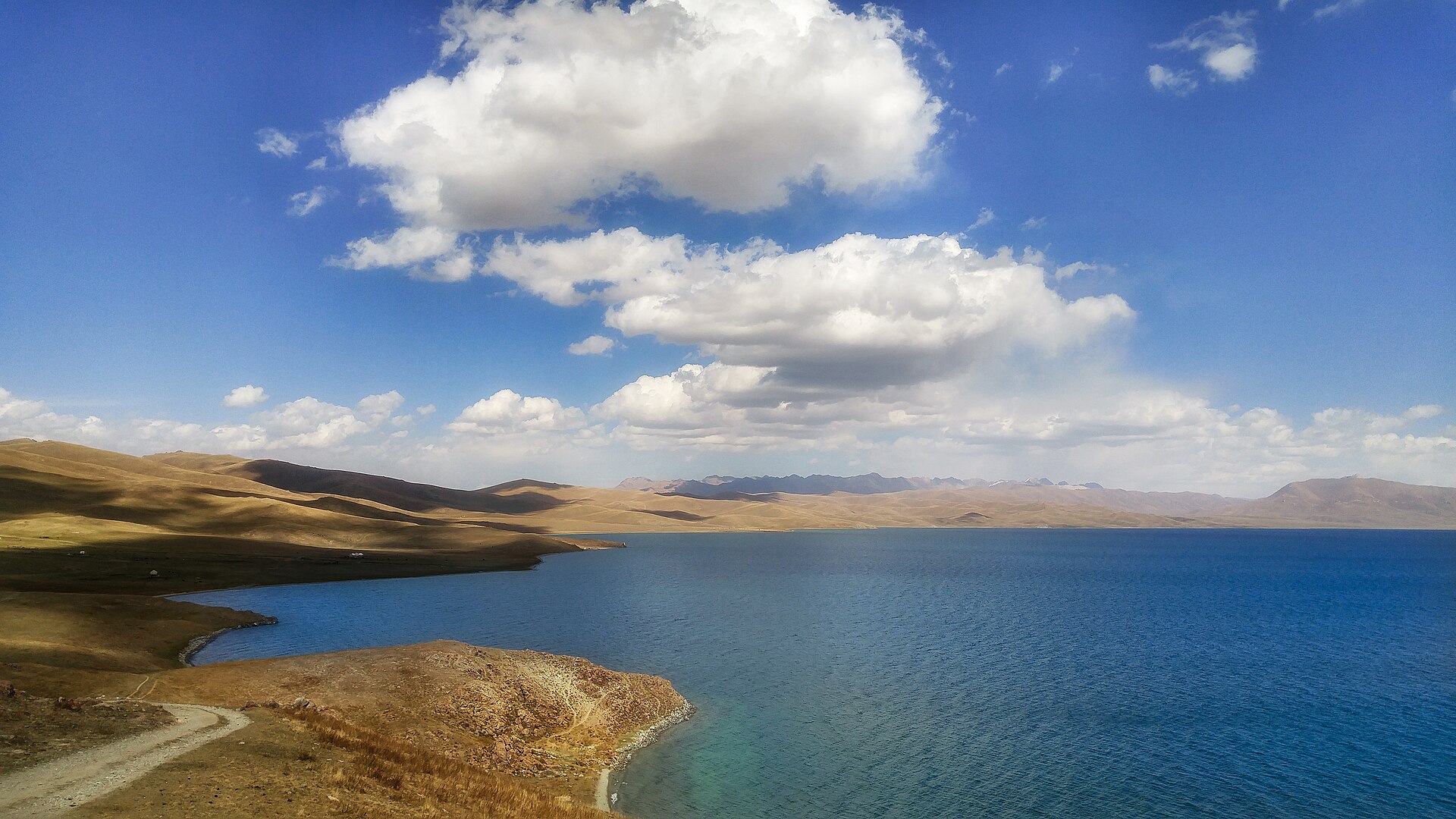
Lake Song-Kul is one of those places you visit not for crowds or exotic thrills, but for the kind of silence that feels almost physical. Sitting at nearly three thousand meters above sea level, it’s cradled by gentle mountain slopes and endless summer pastures where horses and sheep graze in the thin, crisp air. The water is so clear that on a bright day, you can see the bottom several meters down, shifting from turquoise to deep blue as the light changes. In winter, the lake freezes over, its surface turning into a vast mirror reflecting snow-capped peaks and the low, heavy sky.
The locals call it the "sky lake," and the name fits. The altitude and clean air make the heavens feel closer here than anywhere else. On summer nights, stars appear even in the lingering twilight, and the Milky Way stretches across the darkness so vividly it looks painted. On clear days, the snow-dusted ridges of Songkultau and Moldo-Too frame the valley, their soft outlines creating a sense of quiet rather than the dramatic grandeur of Kyrgyzstan’s southern ranges.
Song-Kul hasn’t always been this quiet. During the Soviet era, scientific expeditions studied its unique ecosystem, and long before that, medieval caravans crossed these highlands on the Silk Road, stopping to rest their animals and refill water skins before the long journey ahead. Now, only fragments remain—shards of pottery or old coins occasionally turned up by herders. No proper excavations have been done, so much of the lake’s past stays half-hidden, a story only hinted at by the land itself.
In summer, Song-Kul comes to life, but not in the way tourist hotspots do. Nomadic families arrive with their yurts, setting up seasonal camps on the jailoos, the high-altitude pastures. By evening, the scent of woodsmoke drifts over the water as they boil tea or ferment kumis, the traditional fermented mare’s milk. Travelers who make the journey often stay in these yurts, sharing meals of beshbarmak or flatbread with kurt, listening to stories of mountain life while watching the herders at work. It’s an unscripted kind of hospitality, far removed from the polished routines of guided tours.
Reaching Song-Kul isn’t easy, and that’s part of its appeal. From Kochkor, the nearest town, it’s a hundred kilometers of winding mountain roads, climbing through passes where the air grows thinner with every turn. In summer, a sturdy vehicle can make it, but winter buries the route under snow, cutting the lake off from the world. There are no hotels, no restaurants, no souvenir stalls—just the land and the few who are willing to meet it on its own terms.
The water stays cold even at the height of summer, but that doesn’t stop the brave from swimming. The shock of it wakes you up, leaving your skin tingling in the sharp contrast between the lake’s chill and the high-altitude sun. Fishermen try their luck with osman and marinka, though patience is key—these mountain fish are wary, and bites come slowly. For those who’d rather not wait, simply sitting by the shore with a line in the water is enough, watching clouds drift across the surface like fleeting visitors.
At night, the darkness around Song-Kul is complete. No streetlights, no distant glow from towns—just the vast, unbroken dark. It’s easy to feel like the lake is a threshold to somewhere else, a place where time moves differently. You can spend hours staring at the stars, listening to the water lap against the shore, wondering how many others over the centuries have stood in the same spot, looking up at the same mountains and sky.
This isn’t a place for those who want entertainment or comfort. It’s for people willing to trade the familiar for a few days of stillness and space. There are no crowds, no must-see sights, no agenda—just the lake, the mountains, and the sky, existing as they always have, with humans as temporary guests. That’s why so many who come here once find themselves returning, chasing that rare feeling of the world pausing, just for a moment, to let you simply be.