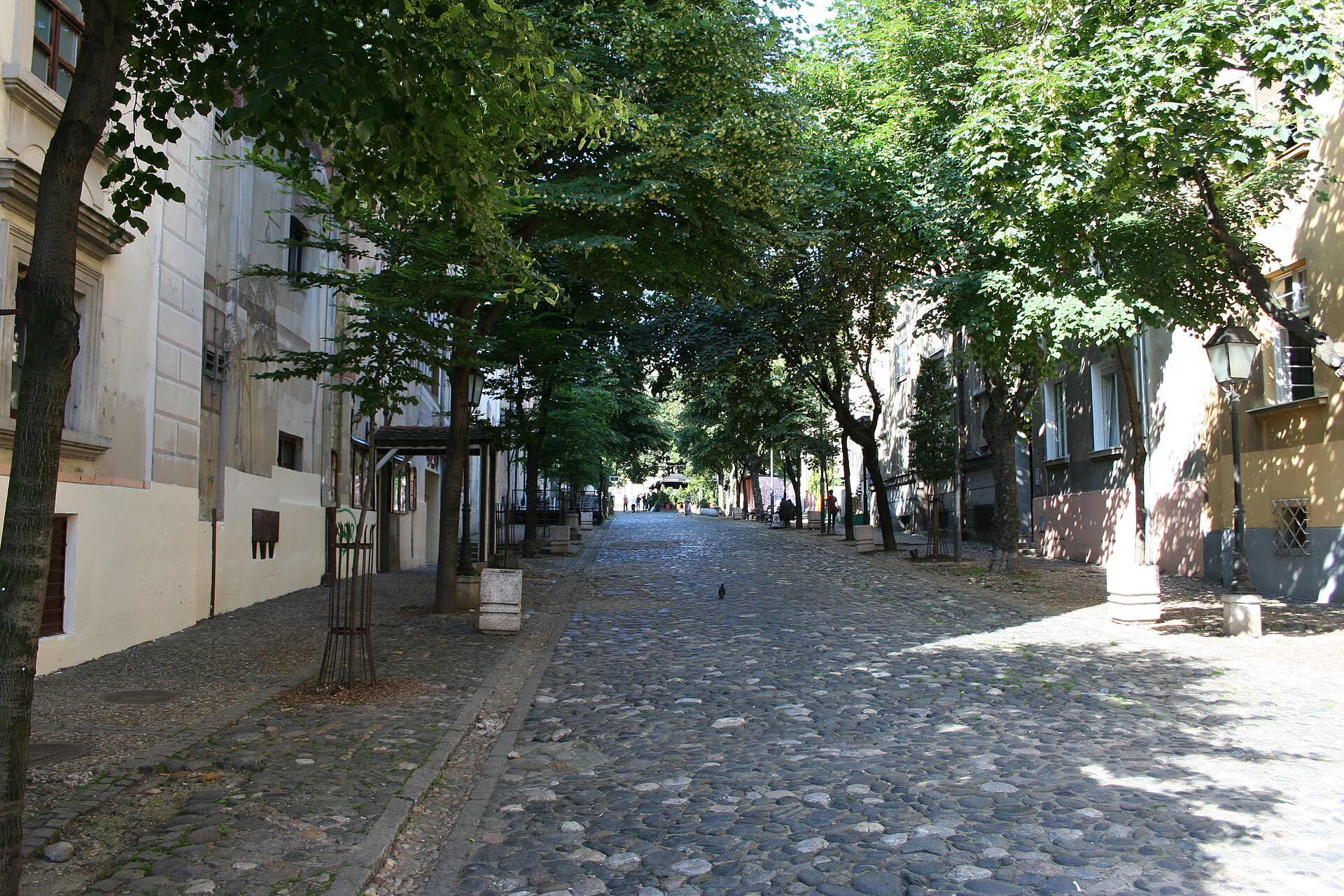
Skadarlija isn’t just a street in Belgrade—it’s a place where time seems to slow down, as if the city itself has taken a breath and decided to linger in the past. Tucked away in the old quarter of Stari Grad, it stretches from Republic Square to Dušanova Street, a narrow ribbon of cobblestones and low-slung houses with terracotta roofs. There’s no rush here, no hum of modern life, just the scent of strong coffee mingling with fresh bread and the occasional drift of cigarette smoke from an open café door. This is what Belgrade used to be before it learned to hurry—where people gathered in dimly lit corners to talk, listen to music, or simply watch the world go by.
The story of Skadarlija begins in the late 19th century, when the area became a refuge for those who didn’t quite fit into the rigid expectations of bourgeois society. Artists, writers, musicians, and even Romani families settled here, turning the neighborhood into a haven of creativity and rebellion. The streets filled with workshops where luthiers crafted violins and guitars, and by night, the sound of accordions and laughter spilled from open windows. By the 1920s, Skadarlija had transformed into Belgrade’s bohemian heart, a place where impromptu concerts and poetry readings happened on a whim. Some of Serbia’s most celebrated poets, like Đura Jakšić, became regulars, and his name still adorns one of the neighborhood’s oldest restaurants.
The architecture here is a patchwork of styles, each layer telling a different story. The houses are modest, often with wooden shutters and balconies draped in flowers, their facades weathered by time. Many date back to the early 1900s, when the area was first developed, and some still bear the marks of Art Nouveau, with its sinuous lines and floral motifs. A few buildings retain their original signs—faded lettering advertising long-gone tailors, cobblers, or taverns—hinting at the everyday lives that once filled these streets. It’s the kind of place where you half-expect to turn a corner and find a blacksmith’s forge still glowing in the twilight.
These days, Skadarlija draws both locals and visitors, not for its grand monuments or flashy attractions, but for its unshakable sense of authenticity. There are no luxury boutiques or neon-lit clubs here, just a handful of cafés serving thick Serbian coffee and restaurants where live music spills onto the pavement. On weekend evenings, the streets come alive with the sound of fiddles and accordions, playing everything from traditional folk tunes to jazz standards. Groups of friends gather at outdoor tables, sharing bottles of wine and plates of grilled meat, while musicians wander between them, taking requests. It’s the kind of place where strangers end up in conversation, and no one seems to mind the late hour.
Two Jelen, a restaurant that’s been here since the 19th century, is one of Skadarlija’s most enduring landmarks. Inside, the walls are lined with photographs of famous patrons—writers, actors, musicians—all of whom once sat at these same tables. The menu is a testament to old Belgrade, offering dishes like sarma (cabbage rolls stuffed with minced meat) and ajvar (a smoky red pepper spread) made from recipes that haven’t changed in generations. Live music is a constant, whether it’s a solo guitarist or a small ensemble, and the atmosphere is always warm, unhurried. Nearby, Tri Šešira (Three Hats) was once the haunt of Belgrade’s intellectuals, where debates about art and politics stretched long into the night. Today, it still feels like a place where ideas matter more than time.
But Skadarlija isn’t just about nostalgia—it’s a living, breathing part of the city. Small workshops still operate here, selling handmade ceramics, embroidered textiles, and even custom-made accordions. In one of the old houses, a luthier’s workshop remains, where craftsmen painstakingly assemble instruments by hand, just as they’ve done for over a century. Local artists display their work in tiny galleries, their paintings and sculptures often inspired by the neighborhood’s history and spirit. Even the street vendors selling roasted chestnuts or hand-painted postcards add to the sense that this place is still very much alive, not just a relic of the past.
Walking through Skadarlija, it’s easy to imagine what it must have been like a hundred years ago. The streets are so narrow that the buildings seem to lean in, as if sharing secrets, and the creak of old doors or the murmur of voices from a nearby café makes the past feel almost tangible. During the day, the neighborhood has a quieter rhythm—old men play chess on folding tables, children chase pigeons across the cobblestones, and the occasional radio plays a scratchy recording of a folk song. There’s a sense of timelessness here, as if the modern city beyond these streets doesn’t quite exist.
Skadarlija is more than just a tourist attraction; it’s a piece of Belgrade’s soul. This is where the city’s cultural identity was shaped, where poets like Branislav Nušić once recited their work in smoky cafés and where the first jazz bands in Serbia found their audience. The stories of those nights still linger in the air, passed down through generations of musicians and writers who continue to gather here. It’s a place where history isn’t just remembered—it’s lived, in the way people talk, the music they play, and the way they take their time over a meal or a drink.
What makes Skadarlija special is its refusal to change. While the rest of Belgrade races forward, this little corner of the city remains stubbornly itself—worn, a little rough around the edges, but full of character. There’s no pretense here, no attempt to impress. The buildings are old, the streets are uneven, and the people are real. It’s the kind of place where you can sit at a sidewalk table, order a glass of rakija, and suddenly understand why Belgraders love their city so fiercely. Skadarlija isn’t just a street; it’s a reminder of what Belgrade once was, and what it still is, if you know where to look.