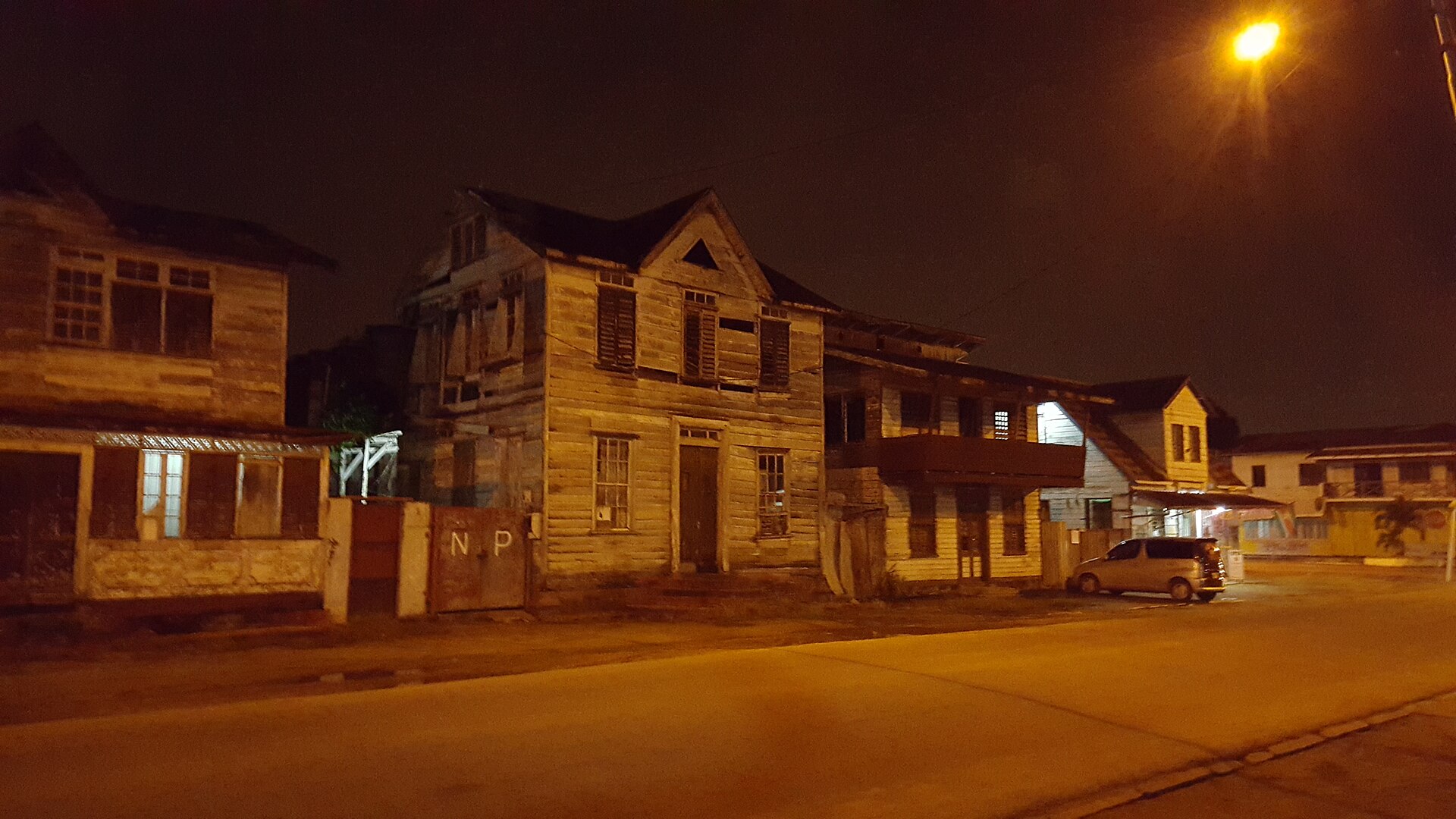
Sint-Rosakerk is one of those quiet places that doesn’t demand attention at first glance, yet once you pause, you realize it holds a story woven into the very fabric of Paramaribo. Tucked away on a street corner where life moves at its own unhurried pace, the church stands as a subtle reminder of the city’s layered past. Dedicated to Saint Rose of Lima, the patron saint of Latin America, it may not be as famous as Paramaribo’s grander landmarks, but it offers something rarer—a sense of the city as it once was, unpolished and deeply human.
Built in the 19th century when Suriname was still under Dutch rule, the church reflects a blend of European architectural traditions adapted to the realities of a tropical climate. Its wooden walls, painted in muted tones, and its airy design, allowing breezes to flow freely, show how local builders reimagined familiar forms to suit their environment. Inside, the simplicity continues: wooden pews, a modest altar, a few aged icons. There’s no gilded opulence or marble grandeur like in European cathedrals, but that’s not what makes this place special. What lingers is the feeling of authenticity, the sense that this building has breathed alongside the city for over a century.
The church hasn’t always looked as it does today. The first structure on this site appeared in the early 1700s, but like many wooden buildings in Paramaribo, it was destroyed by fire. The city’s history is marked by such losses—flames were a constant threat, and each new construction carried the weight of past disasters. The current building dates to the 1860s, rebuilt after yet another fire, this time with lessons learned. That’s when the bell tower was added, still one of the taller structures in the area, a quiet sentinel over the surrounding streets.
For generations, Sint-Rosakerk was more than just a place of worship. In the 19th century, as Suriname struggled through economic decline after the abolition of slavery, the church became a gathering point for communities seeking solace and solidarity. It offered shelter in every sense—from the heat, from the chaos of daily life, from hardship. Even now, as Paramaribo has grown into a bustling modern city, the church remains a pocket of calm, drawing not only the faithful but anyone in need of a moment’s peace.
What’s striking is that the church was never exclusively Catholic. Suriname has always been a tapestry of faiths, and this place reflects that diversity. Over the years, it welcomed Protestants and others when spaces for gathering were scarce. That inclusivity is part of why it feels so unassuming—it was never built to impress, but to serve, regardless of background or belief.
Today, the church still holds services, though its congregation is different from the one that filled its pews a century and a half ago. Paramaribo has changed, and so have its people. Yet on Sundays, when the bell rings and a small group gathers, the past feels close. The wooden walls seem to hold echoes of old voices, and the breeze through the open windows carries a whisper of the lives that have passed through here.
Sint-Rosakerk isn’t the kind of place that makes it onto must-see lists, and that’s precisely why it feels so genuine. There are no crowds, no pressure to pose for photos, no scripted tourist experience. You can step inside, sit on a bench, and listen to the silence. In that quiet, it’s easy to reflect on how many stories this building has witnessed. Its true value isn’t in its architecture or its age, but in the way it quietly endures, a living piece of history that still has room to breathe.