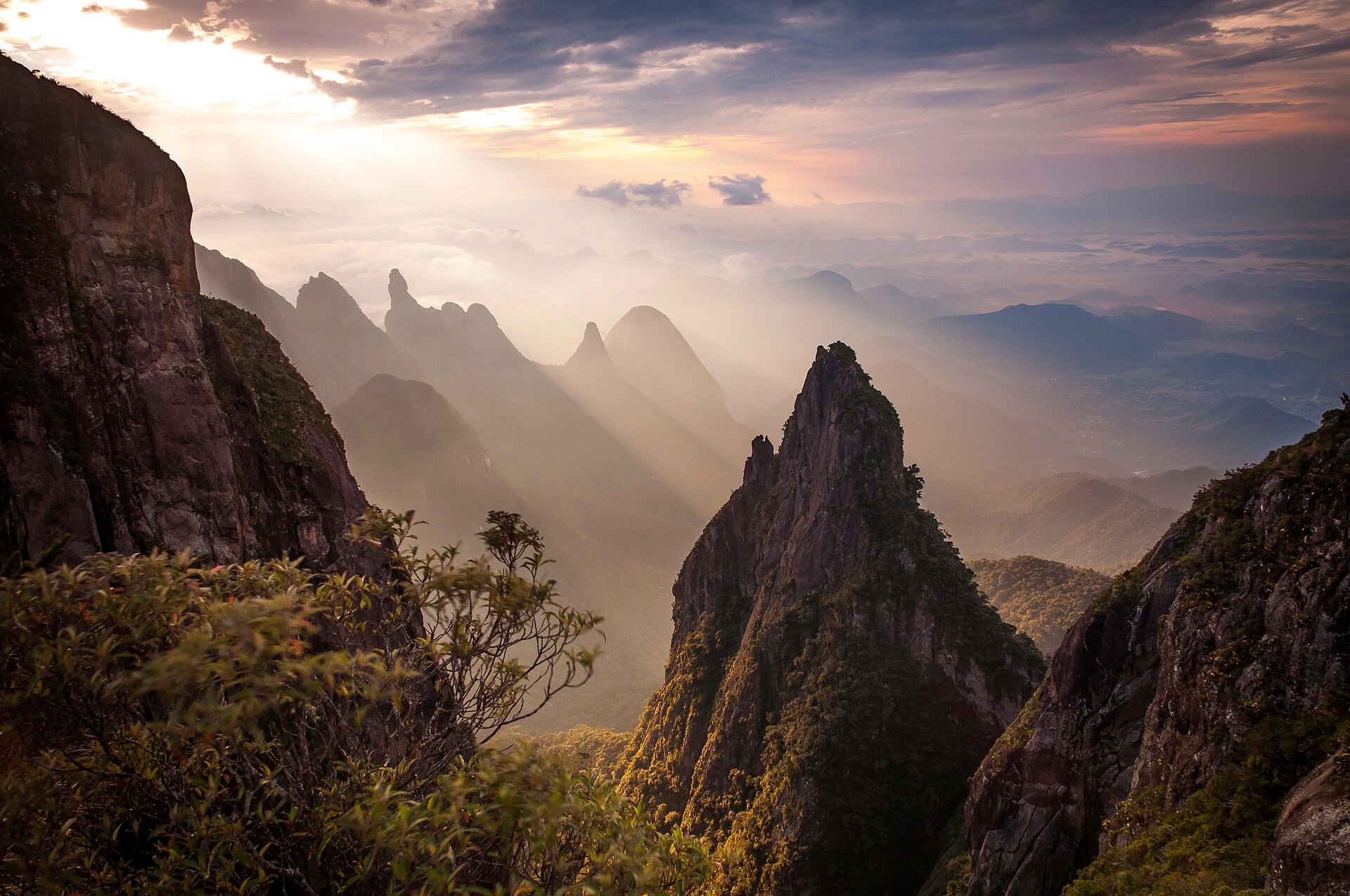
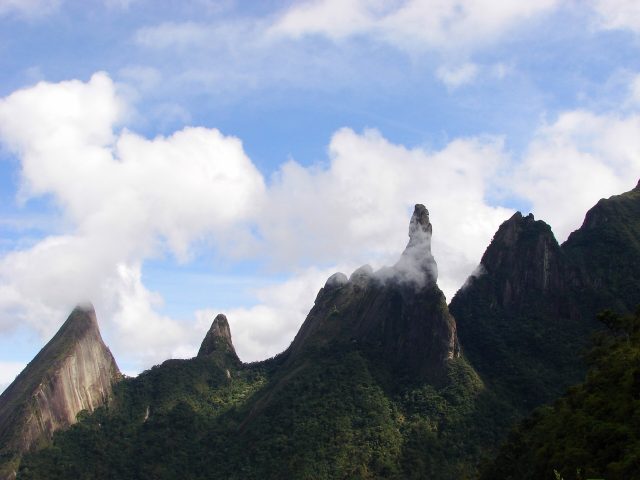
The Serra dos Órgãos mountain range is one of Brazil’s most striking natural landmarks. The peaks rise like the pipes of a grand organ—hence the name—creating a dramatic silhouette against the sky. Here, the only sounds are the rush of waterfalls, the rustle of wind through the trees, and the occasional call of a bird echoing through the valleys. For many Brazilians, it’s a refuge from the heat, offering cool mountain air and vistas that feel almost too perfect to be real.
The history of these mountains is part of Brazil’s colonization and development. European explorers first passed through the region in the 16th century, but the area gained attention only in the 19th century. Teresópolis, at the foot of the range, was founded as a retreat for wealthy residents of Rio de Janeiro seeking relief from the tropical climate. For decades, the mountains remained wild and largely inaccessible. Roads were built in the mid-20th century, opening the region to tourism and leading to the establishment of the Serra dos Órgãos National Park. Today, the park preserves the landscape and its unique ecosystems.
What makes these mountains special is the raw beauty of the natural world. The rock formations—towers, spires, and jagged peaks—seem to defy gravity. The most famous is the Dedo de Deus, or "God’s Finger," a towering pinnacle that draws climbers from across the country. But you don’t need to be an experienced mountaineer to appreciate the range. Gentler trails wind through dense forests, past waterfalls, and along rivers that cut through the valleys. The contrast between the stark, rocky summits and the lush greenery below is striking.
The Serra dos Órgãos plays a vital role in the region’s ecology. The mountains act as a natural watershed, feeding rivers that supply water to Teresópolis and nearby towns. The forests filter the air and support an incredible variety of plant and animal life. Some species, like certain frogs and birds, are found nowhere else. Conservation efforts balance tourism with preservation, and visitors are encouraged to stick to marked trails.
The atmosphere here is different from anywhere else in Brazil. Mornings often begin with mist clinging to the valleys, slowly lifting to reveal the peaks. By evening, the setting sun bathes the rocks in gold and pink. At night, the sky is so clear that the Milky Way stretches overhead. Local villages welcome visitors with simple meals and stories passed down through generations. There’s a sense of timelessness here, as if the mountains have always stood guard.
The range offers something for every traveler. Adventurers can tackle challenging hikes or scale rocky cliffs. Those looking for a slower pace can wander along forest paths or picnic by waterfalls. Around Teresópolis, there are places to stay, from campsites to guesthouses. One popular spot is the Véu da Noiva waterfall, where water plunges over a hundred meters, creating a misty veil in the sunlight.
What lingers after a visit isn’t luxury or crowds, but the quiet. The air feels cleaner, the world slower. These mountains remind us what nature can create when left alone—a beauty that doesn’t need embellishment. For Brazilians, the range symbolizes the country’s wild spirit. For foreign visitors, it’s a chance to experience a landscape that feels ancient and alive. Whether you come for a day or a week, the Serra dos Órgãos stays with you, a quiet imprint on memory.