El Cobre is a quiet settlement tucked into the foothills of Cuba’s Sierra Maestra, where the land still bears the marks of its past. For centuries, this place was defined by the copper mine that shaped its existence—an industry that brought both fortune and suffering to the island. The mine wasn’t just a source of wealth; it was a crossroads of history, where the lives of indigenous people, African slaves, Spanish colonizers, and local farmers intersected in ways that left lasting scars on the land and its people.
The first records of copper mining here date back to the early 1500s, when Spanish settlers discovered rich deposits in the red earth. Copper was a prized commodity, used for coins, weapons, and the wiring of industrializing nations. The mine became one of the colony’s economic pillars, drawing workers from across the region. Indigenous laborers, forced into the mines, died from disease and exhaustion. When their numbers dwindled, enslaved Africans were brought in to replace them, working in conditions that offered little chance of survival.
By the mid-1800s, the mine’s output had declined. The copper veins were thinning, and the technology remained basic. Yet the work continued, sporadically, into the early 20th century. After slavery was abolished, the miners were free laborers—peasants who took whatever work they could find. Life in El Cobre was hard. The pay was low, the labor demanding, and the risks constant. For many, it was the only way to survive.
Today, the mine is a shadow of what it once was. The open pits and tunnels, some collapsed, others half-flooded with rainwater, stretch into the earth. Locals say that if you venture deep enough, you can still find rusted tools or scraps of clothing left behind by the workers. The air is quiet, broken only by the wind or the call of a bird. You can almost hear the echoes of voices, the sound of picks, the weight of the past pressing down.
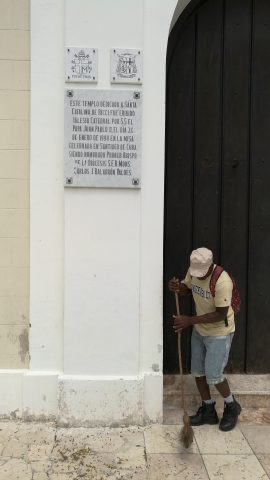
The village still holds traces of its colonial past, from the weathered houses to the 18th-century church that serves as a gathering place. Nearby, a small museum preserves fragments of the mine’s history—old photographs, tools, and documents that tell the story of the men who worked here. The exhibits are modest, but they carry the weight of real lives.
For most travelers, El Cobre is a brief stop on the way to Santiago de Cuba or Baconao Park. But those who stay find a different side of the island—not the Cuba of postcards, but something quieter. The people here are warm and often share stories about their home. They’ll tell you how American companies tried to revive the mine in the early 1900s, only to abandon the project, or how Soviet geologists later searched for new deposits.
Standing at the edge of the old quarry, looking down at the layers of exposed rock, you feel the weight of history. The earth here is a witness to generations of labor, to lives spent underground for the sake of a metal that once meant power. There are no grand monuments—just the land itself, holding the memory of those who worked beneath it. That’s why El Cobre never became a tourist hotspot. It doesn’t perform. It simply exists.
Nature has begun to reclaim the site. Bushes and grass cover the abandoned pits, and some quarries have filled with water, turning into small ponds where children swim. The physical traces of the mine are fading, but the stories remain—passed down in conversations, in street names, in songs sung at local festivals. El Cobre doesn’t try to be appealing. It exists as it always has, with its history, its scars, and a quiet dignity.