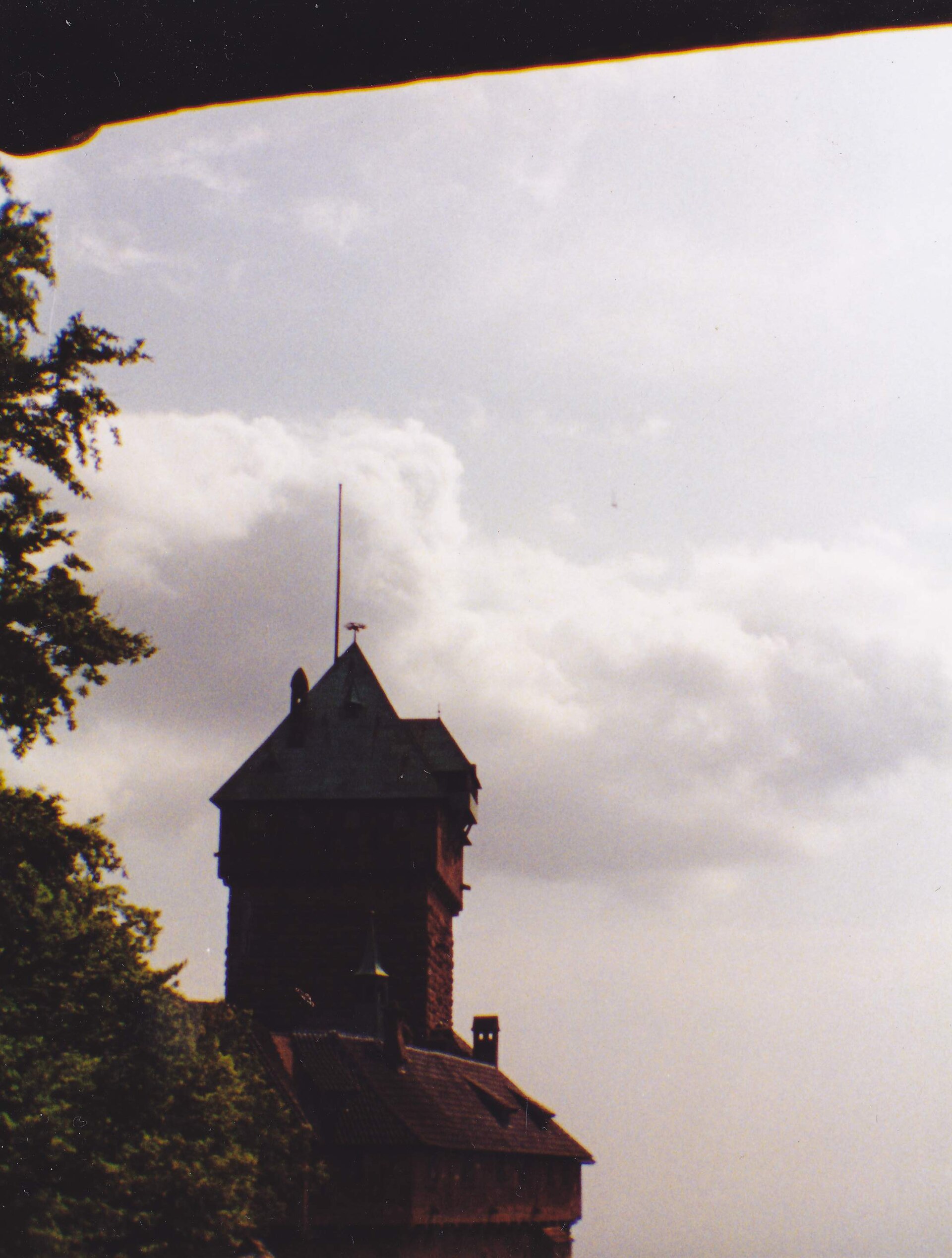
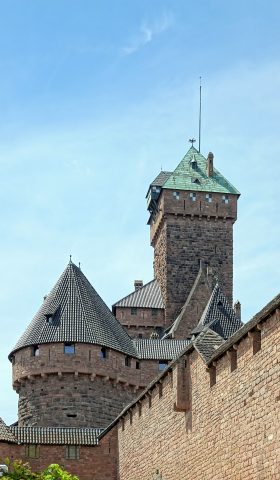
Château du Haut-Kœnigsbourg is the kind of place that feels plucked from the pages of a medieval chronicle, yet it hasn’t been frozen in time like a museum exhibit. Instead, it carries the weight of its past with quiet authenticity. Perched on a hill above the small village of Orschwiller in eastern France, the castle overlooks the dense forests and rolling vineyards of Alsace. Its imposing silhouette—tall stone walls, round towers capped with conical roofs, and a dry moat—hints at its original purpose as a fortress. But beyond its formidable exterior lies a story shaped by conflict, shifting loyalties, and the slow passage of centuries.
The castle’s origins trace back to the early 13th century, when this region was part of the Holy Roman Empire. The first written records of Château du Haut-Kœnigsbourg date to 1225, when it served as a fortified residence for local lords. In an era when castles were built for defense rather than comfort, its walls had to withstand raids, bandits, and the armies that frequently marched through Alsace. The structure endured multiple sieges, and its underground passages and hidden chambers likely concealed more than a few secrets—whether political intrigues or personal dramas. By the 14th century, the castle came under the control of the Rathsamhausen family, who owned it for generations, modifying and reinforcing it as warfare evolved.
Unlike many castles that became lavish royal retreats, Château du Haut-Kœnigsbourg remained a working stronghold. Life here was practical, even austere, though not without its share of turmoil. During the Reformation in the 16th century, Alsace became a battleground between Catholics and Protestants, and the castle found itself at the center of these conflicts. When the region came under French rule in the 17th century, the castle’s military importance waned. Its walls, designed to repel medieval sieges, were no match for modern artillery, and it gradually transformed into a country estate. The local nobility who lived here turned their attention to winemaking and agriculture, leaving the fortress to slowly fade into the landscape.
Today, the castle is open to visitors, and it’s one of those rare places where history feels tangible. Unlike meticulously restored sites that aim for a flawless recreation of the past, Château du Haut-Kœnigsbourg wears its age openly. The stone walls are darkened by time, wooden beams in the halls bear the marks of centuries of use, and the cellars still hold old wine presses and barrels. The guides here aren’t just reciting facts from textbooks—they’re often locals with deep connections to the castle, sharing stories passed down through generations. They don’t just talk about battles and noble owners; they speak of the servants, craftsmen, and farmers who lived and worked here, their names long forgotten but their presence still lingering in the worn floors and creaking staircases.
The architecture of Château du Haut-Kœnigsbourg reflects its layered history. The oldest parts, including the main keep, date back to the 13th century, but later additions—bastions, new wings, even a small chapel—were incorporated over time. The interiors are modest, stripped of the opulence found in royal palaces. Heavy furniture, faded tapestries, and massive fireplaces that once warmed long winter nights fill the rooms. The grand hall, with its high ceilings and heraldic emblems, is particularly striking. It’s here that medieval festivals are still held, where visitors can try on armor, sample dishes from the era, and listen to troubadours performing centuries-old songs.
The surroundings of the castle are as compelling as the fortress itself. Orschwiller is a quintessential Alsatian village, with neat houses draped in grapevines and narrow streets leading to an old church. The nearby forests are crisscrossed with hiking trails, offering hours of exploration with views of the Rhine Valley and the Vosges Mountains. A short distance away lies Sélestat, one of Alsace’s oldest towns, where medieval gates and a town hall with astronomical clocks still stand. And beyond that, Strasbourg awaits—a city that feels like an open-air museum, with its half-timbered houses and Gothic cathedral.
What makes Château du Haut-Kœnigsbourg special isn’t grandeur or extravagance. There are no gilded halls, marble staircases, or priceless art collections here. Instead, its charm lies in its unpretentiousness. The castle doesn’t try to impress or conform to expectations; it simply exists as it always has, bearing the marks of those who built, defended, and lived within its walls. If you listen closely, the quiet courtyards and dimly lit passageways seem to whisper fragments of the past. For travelers seeking a place with character rather than spectacle, this castle offers something far more meaningful—a connection to history that feels real, unpolished, and deeply human.