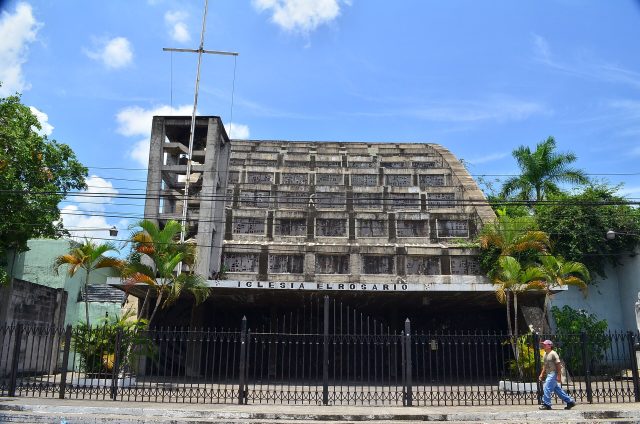
San Vicente Cathedral sits in the city’s main square, its presence unassuming yet deeply rooted in local life. The building doesn’t compete with the ornate churches of Latin America. Instead, it blends into São Vicente’s rhythm, surrounded by low-slung buildings and the hum of street vendors. Few tourists stop here, though the cathedral has stood for nearly two centuries.
Construction started in the early 1800s, when El Salvador was under Spanish rule. São Vicente was becoming a regional hub, and the cathedral’s building stretched over decades. It wasn’t just a place of worship—it was a statement of prestige. The province’s elite gathered here to affirm their status, shaped by European tastes and local ambitions.
The architecture shows this transition. The facade is restrained, with tall columns and a triangular pediment. Inside, thick pillars support the nave, and simple plaster rosettes decorate the vaulted ceilings. The wooden altar, gilded and catching the light, stands out in the otherwise plain interior. It reflects the church’s influence in 19th-century society, when religion shaped public and private life.
Earthquakes have tested the cathedral, like much of El Salvador. The 2001 quake left cracks in the walls, requiring lengthy repairs. During restoration, workers found fragments of old frescoes beneath plaster—hints of earlier decorative schemes, possibly colonial. Too damaged to save, they suggest a richer history than the exterior reveals.
Today, the cathedral remains part of daily life. Sundays fill the square with worshippers, their hymns spilling onto cobblestones. Weekdays are quieter: elderly men sit on benches, children dart between trees. Inside, the air is still, broken only by the creak of pews or the rustle of prayer books.
There are no guided tours or informational plaques. The cathedral doesn’t perform for visitors—it simply exists, woven into the town’s fabric.
If you step inside, the experience is about atmosphere. Light filters through high windows, casting shadows on worn stone floors. Incense lingers from services, mixing with the dampness of old walls. Time feels suspended here, where the past isn’t just remembered but still present in quiet footsteps.
The lack of fanfare makes it compelling. This is a building that has seen generations come and go, their stories etched into its structure.
San Vicente Cathedral is a living piece of El Salvador’s history. It has weathered political upheavals, natural disasters, and economic shifts. Its resilience lies in its simplicity, in the quiet certainty of its place. To sit in its pews is to feel the weight of that history—not as something distant, but as something that still breathes.