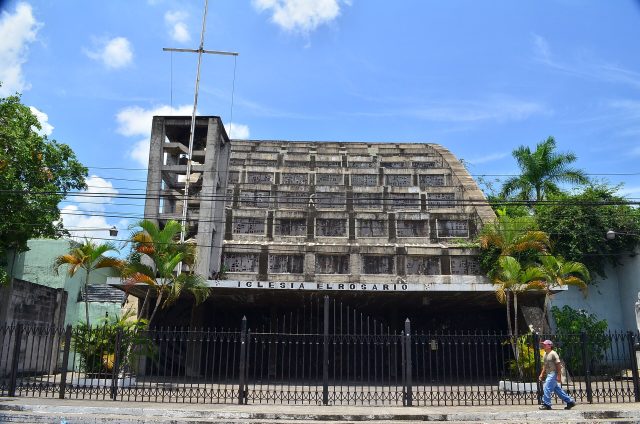
São Vicente’s main square is one of those places where a city reveals itself slowly, without the rush or the polished veneer of tourist spots. Tucked in the heart of the town that shares its name, it’s surrounded by low-slung buildings with peeling plaster and brightly painted signs advertising small shops. There are no crowds of visitors here, just locals going about their day—some pausing on benches, others hurrying past, children playing near the fountain when it’s running. The pace feels unhurried, as if time moves just a little slower than in the capital, and that quiet rhythm is what sets São Vicente apart from other Salvadoran towns.
The square’s history is woven into the story of the city itself. Founded in the early 1600s, São Vicente was one of the first Spanish settlements in what is now El Salvador. Back then, it was an important stop between the capital and the Pacific coast, and the square served as both a marketplace and an administrative hub. Town meetings were held here, colonial decrees were announced, and on feast days, the space filled with fairs and religious processions. Over time, the city lost some of its former importance, but the square remained the place where the threads of daily life still converge.
The architecture around the square blends colonial heritage with later additions. The most striking building is the Church of El Pilar, built in the 18th century. Its facade is simple, almost austere, but inside, wooden beams and faded frescoes hint at the lives and prayers of people from centuries past. Nearby, houses with wooden balconies and wrought-iron grilles reflect the Spanish colonial style. Some are in need of repair, but that only adds to the square’s charm—it feels authentic in a way that restored tourist zones often don’t.
At the center of the square stands a monument to General Gerardo Barrios, a 19th-century figure who played a key role in Salvadoran history. Barrios was president and pushed for modernizing reforms, though opinions about him remain divided. Some see him as a progressive leader, others as a harsh ruler. For the people of São Vicente, though, he’s first and foremost a local son, and the statue is less about politics than a point of local pride. The small park around it becomes a gathering spot in the evenings, where teenagers hang out and older residents sit in the shade.
Life on the square never really stops, but weekends bring a livelier atmosphere. Street vendors set up stalls selling fruit, homemade pastries, and cold drinks, filling the air with the scent of fried plantains, spices, and fresh coffee. Locals come not just to shop but to chat—catching up on news, sharing gossip, or simply sitting under the trees. For visitors, it’s a chance to see how people in small Salvadoran towns actually live, where everyone knows each other and the rhythm of the day follows the sun, not the clock.
Just a short walk away is the local market, a place that immerses you in the town’s everyday energy. Vendors sell everything from fresh vegetables and tropical fruit to cheap clothes and household goods. The bargaining is loud and spirited, with sellers calling out to customers and shoppers haggling without hesitation. The market is busiest in the early morning before the heat sets in, and if you’re lucky, you might hear someone strumming a guitar or singing a folk song—moments that stick with you more than any landmark.
In the evening, the square transforms. As the day’s heat fades, families come out with their children, young people gather near the fountain, and older men play dominoes at the tables of small cafés. The air carries the scent of flowers and roasted corn, and if there’s been rain, the lamplight reflects in the puddles. Sometimes, local musicians put on impromptu performances—nothing grand, just people playing for their neighbors. If you find yourself here on such an evening, it’s worth lingering. The sense of peace and simplicity is rare in modern cities.
São Vicente isn’t a tourist hotspot, and its square isn’t the kind of place you visit for Instagram-worthy photos or guided tours. There are no world-class museums or high-end restaurants here. But that’s exactly why it’s worth spending a few hours in the square. It’s a place where you can see the real life of a small Salvadoran town, feel its rhythm, and understand that behind the colonial facades lies something deeper than history. What makes it special is its unfiltered reality—the peeling paint on the walls, the laughter of children, the conversations of elders who remember the town as it was decades ago.