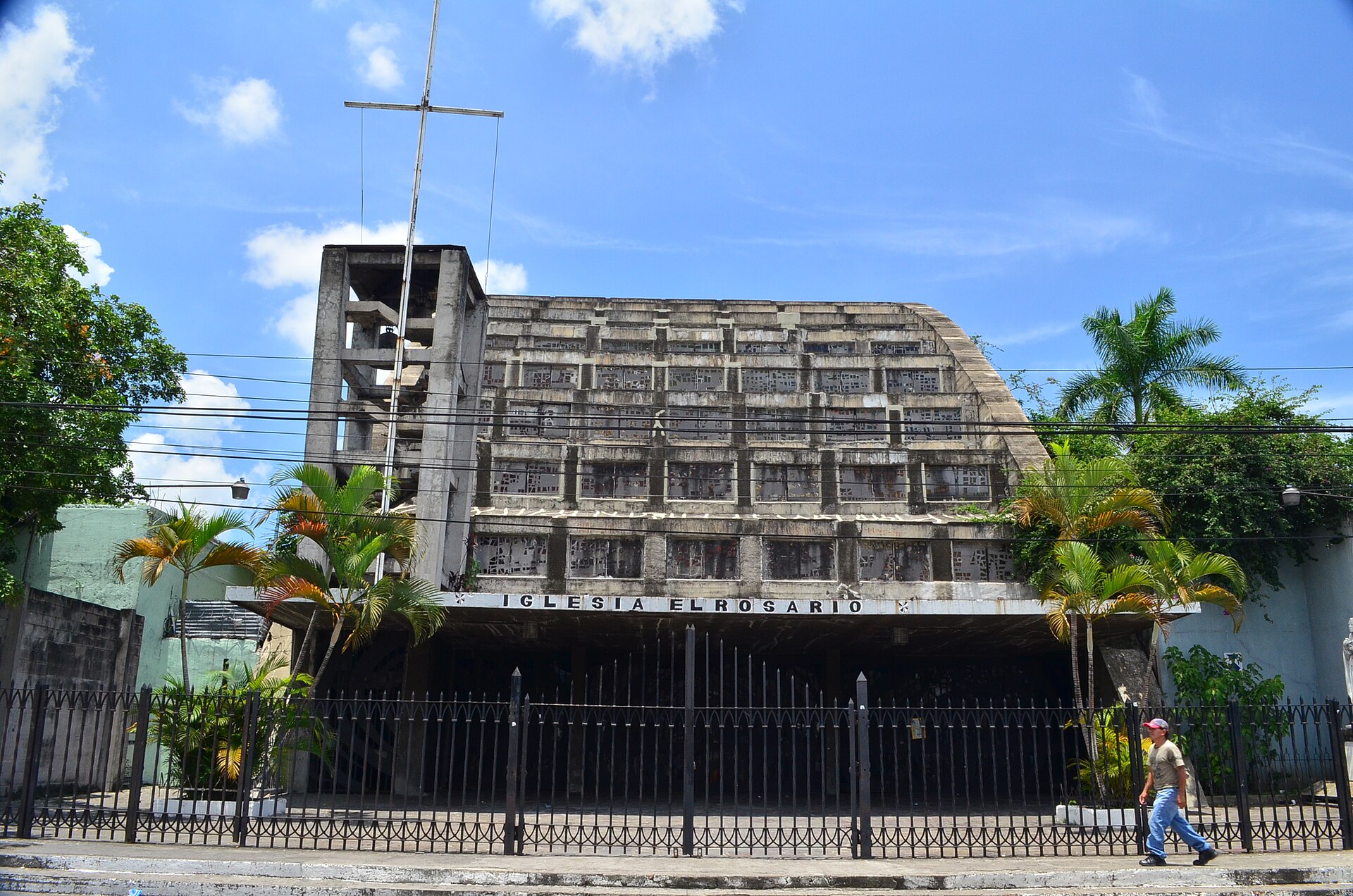
El Pilar Church in São Vicente is one of those places that feels suspended in time, holding not just the weight of religious tradition but the layered history of El Salvador itself. Built during the colonial era, it stands on the town’s main square, where the earliest Spanish settlements once thrived. Today, it’s more than just a place of worship—it’s a symbol of endurance. Having weathered earthquakes, wars, and centuries of change, the church remains a quiet but unshakable part of the city’s identity, a reminder of how the country’s past is etched into its architecture.
From the outside, El Pilar appears unassuming, and that’s part of its charm. The whitewashed walls and simple lines of its facade are typical of colonial design, not immediately striking but full of subtle character. Look closer, though, and the details reveal its age. Thick walls, small barred windows, and heavy wooden doors suggest it was built not just for prayer but as a refuge, a fortress against uncertain times. Inside, the atmosphere is one of quiet reverence—wooden pews, a modest altar, and a few aged icons create a space that feels both sacred and lived-in.
The church’s history is deeply intertwined with that of São Vicente. Founded in the early 17th century as a key outpost of Spanish colonization, the town grew around El Pilar, which became its spiritual and civic heart. In those days, the church wasn’t just for services; it was where townspeople gathered to make decisions, where colonial decrees were announced, and where people sought shelter during uprisings. Even after El Salvador gained independence in the 19th century, the church remained a unifying presence, though it wasn’t spared from the political upheavals that followed.
Earthquakes have left their mark on El Pilar, as they have on much of the region. The most devastating, in the early 20th century, damaged the building severely, but local efforts ensured its restoration. Today, the scars remain—cracks in the walls, uneven patches in the facade—each one a testament to the church’s resilience. These imperfections make it feel less like a preserved relic and more like a living piece of history, still standing despite everything.
Yet El Pilar is far from a museum. It’s an active place of worship, and that vitality is palpable the moment you step inside. On Sundays, the pews fill with parishioners, prayers echo under the vaulted ceiling, and on feast days, the church bursts with flowers and hymns. The most moving moments come during religious processions, when statues of saints are carried through the streets, followed by candlelit crowds. For many in São Vicente, this is where life’s milestones unfold—baptisms, weddings, farewells—making the church more than just a landmark.
The square around El Pilar was once the town’s beating heart, and in many ways, it still is. Locals gather on benches, children play, and vendors sell fresh fruit and snacks. Under the shade of trees, elderly men play dominoes while women chat, the rhythm of daily life unfolding at its own unhurried pace. The atmosphere is easygoing, as if time moves differently here than in the rush of modern cities. The church stands at the center of it all, a bridge between past and present, a place where some things never really change.
For travelers who venture to São Vicente, visiting El Pilar offers a chance to connect with El Salvador’s history beyond the usual tourist spots. There are no crowds, no loud announcements, no souvenir stalls—just the quiet of ancient walls, the scent of wax and incense, and the sense that every corner holds another story waiting to be discovered. The town doesn’t give up its secrets easily, but those who take the time to listen will find something deeper than just a pretty building.
São Vicente isn’t one of El Salvador’s most famous destinations, and that makes El Pilar all the more special. It doesn’t try to impress with grandeur or scale, but in its modesty lies its true strength. This is a place where history isn’t just preserved—it’s still alive, in the prayers of the faithful, the conversations on the square, and the very stones that remember the hands of those who built and rebuilt it. That’s why El Pilar feels like one of those rare corners of the world where past and present coexist, not in competition, but in quiet harmony.