The Shambles in York is one of those rare places where the past doesn’t just linger—it feels alive. This narrow, winding street, paved with uneven cobblestones, curves between medieval buildings that lean slightly toward each other, as if sharing secrets from centuries gone by. There’s no rushing here. The street invites you to slow down, to notice the way the timber-framed houses cast shadows in the afternoon light or how the scent of freshly baked bread drifts from a nearby café. It’s easy to imagine carts rattling over these stones in the Middle Ages, merchants calling out their wares, or the clatter of hooves as horses pulled goods through the city. Today, the sounds are different—quiet conversations, the clink of coffee cups, the occasional laughter of visitors—but the atmosphere remains unchanged.
York’s history as a Viking settlement, when it was known as Jorvik, is woven into the very fabric of the Shambles. The street emerged during the city’s golden age as a bustling hub of trade, where merchants from across Europe converged to sell spices, textiles, and other goods. The name itself likely comes from the Old French word *chambre*, meaning "chamber" or "hall," possibly referring to the grand homes of wealthy townspeople or the meeting places of guilds. Over the centuries, the Shambles has witnessed wars, plagues, and the rise and fall of empires, yet it has retained its medieval character in a way few places have. Walking here is like stepping into a living history book, where every building has a story to tell.
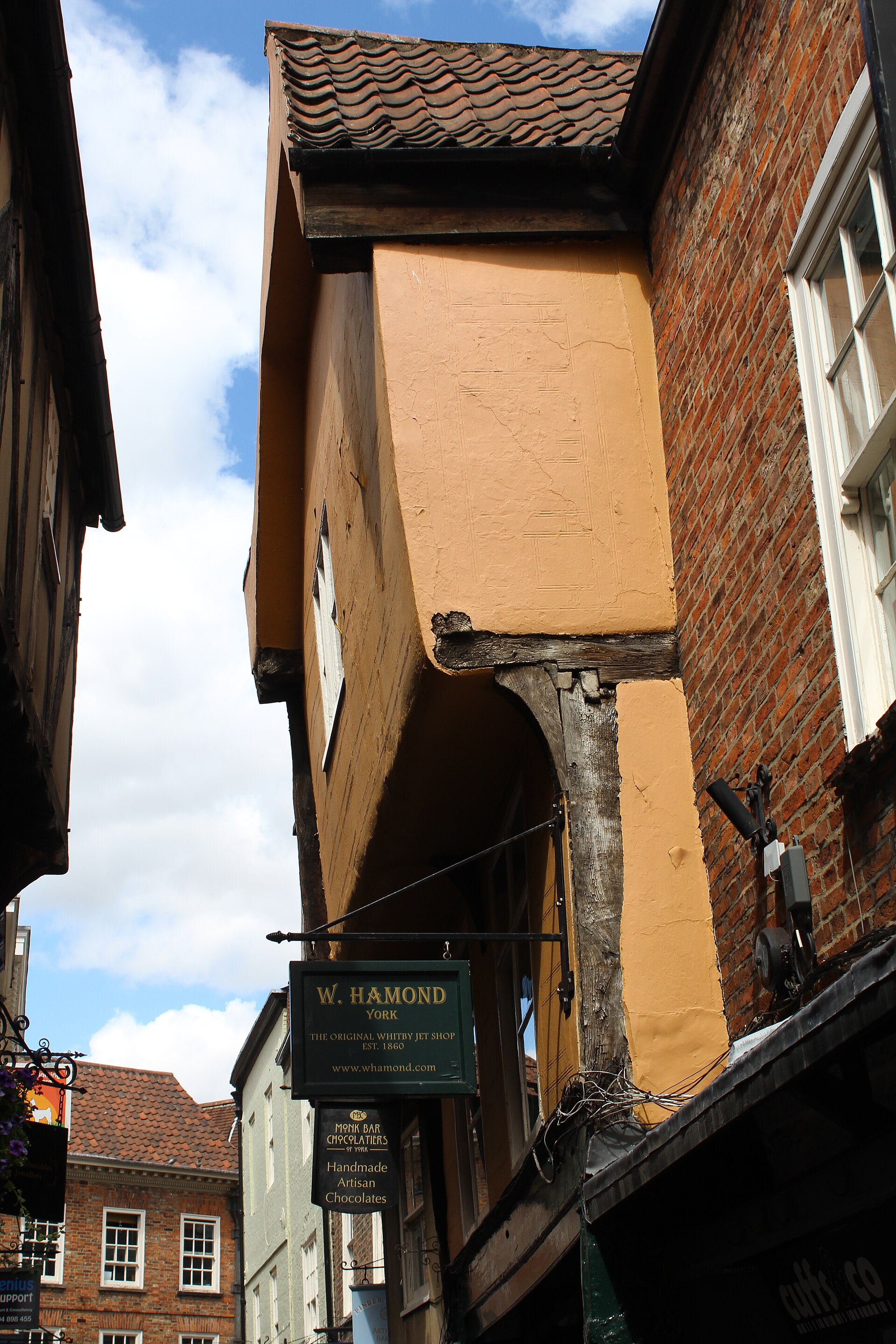
The architecture of the Shambles is a testament to York’s enduring legacy. The timber-framed houses, with their whitewashed walls and dark wooden beams, are classic examples of English medieval design. Many date back to the 14th and 15th centuries, though some have been restored or rebuilt over time. One of the most striking features is the way the upper floors of the buildings jut out over the street, a common technique in medieval construction that maximized space in crowded urban areas. The effect is intimate, almost cozy, as if the street itself is embracing you. Among the most notable buildings is the one known as the "House of Clocks," where an old timepiece still hangs on the façade, a silent reminder of the passage of time.
For centuries, the Shambles was the heart of York’s commercial life. In the Middle Ages, it was lined with butchers’ shops, their stalls spilling onto the street, while tanners, blacksmiths, and weavers worked in nearby workshops. The street was part of a vital trade route, connecting the River Ouse to the city’s markets. Today, the butchers are gone, but the spirit of commerce remains. Small, independent shops have taken their place, selling everything from handmade ceramics to vintage books and locally produced jams. There are no chain stores here, no modern facades—just a collection of unique, often quirky businesses that give the street its character. It’s the kind of place where you might stumble upon a tiny shop selling hand-knitted scarves or a café serving tea in mismatched china, each spot adding to the street’s charm.
One of the most atmospheric spots on the Shambles is The Shambles Tavern, a pub housed in a 16th-century building. With its low ceilings, exposed wooden beams, and a fireplace that crackles in colder months, it feels like a place where time has stood still. The pub is known for its selection of local ales and hearty, no-frills food—think steak and ale pie or fish and chips, the kind of dishes that have been served here for generations. In the summer, tables spill onto the street, and the pub becomes part of the scene, a place where locals and visitors alike gather to enjoy a drink and soak in the surroundings. It’s the kind of spot where you might strike up a conversation with a stranger or simply sit quietly, watching the world go by.
The Shambles is often called one of the most beautiful streets in Europe, and it’s not hard to see why. Unlike many historic sites that feel like museum pieces, this street is very much alive. The buildings aren’t just preserved; they’re lived in, worked in, and loved. Even the crowds of tourists, which can be considerable, don’t detract from its magic. Instead, they add to the sense of a place that is still very much part of the city’s daily life. The street changes with the hours—quiet in the early morning, bustling in the afternoon, and almost dreamlike in the evening when the streetlights cast a warm glow over the cobblestones. Winter is a particularly special time, when the buildings are draped in twinkling lights and the air smells of mulled wine and roasted chestnuts.
What makes the Shambles truly special is the way it captures the essence of York. This isn’t a city of grand boulevards or towering skyscrapers. It’s a place where history is layered into every street, where the past isn’t just remembered but still felt. The Shambles is a perfect example of that. It’s a street that has seen kings and commoners, merchants and monks, yet it remains unpretentious, welcoming, and utterly authentic. There’s no need for grand gestures or tourist traps here. The magic is in the details—the way the light filters through the narrow windows, the sound of footsteps on the cobblestones, the sense that you’re walking the same path as countless others before you.
For anyone visiting York, the Shambles is more than just a stop on a sightseeing itinerary. It’s a place to pause, to breathe, and to let the city’s history wash over you. Whether you’re sipping a cup of tea in a café, browsing a bookshop, or simply standing in the middle of the street and looking up at the leaning buildings, you’re experiencing something rare—a piece of the past that hasn’t been sanitized or commercialized. It’s a reminder that history isn’t just about dates and events; it’s about the places where life has been lived, where stories have unfolded, and where, if you listen closely, you can still hear the echoes of those who came before.