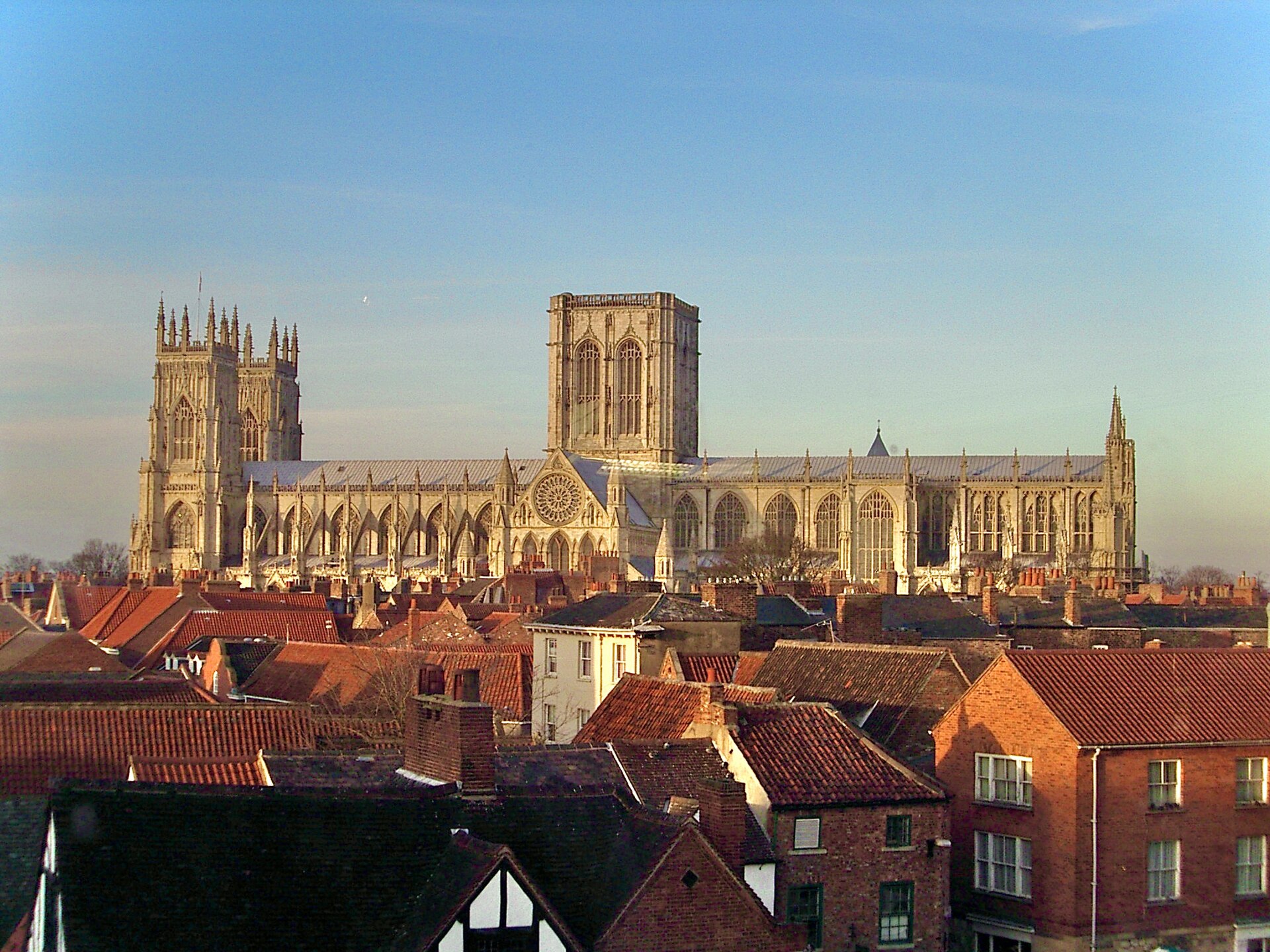
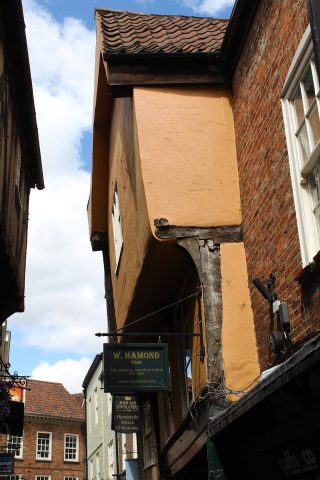
York Minster rises from the heart of the city like a stone chronicle of England itself. The streets around it twist and narrow, lined with crooked timber-framed houses that have leaned into each other for centuries. This is where medieval merchants once haggled over wool, where pilgrims knelt in prayer, and where kings were crowned beneath its vaulted ceilings. The building has witnessed coronations, treaties, and moments that shaped the nation, yet it remains alive—not just a monument, but a place where the past breathes through the music of the organ, the murmur of visitors, and the shifting light through stained glass.
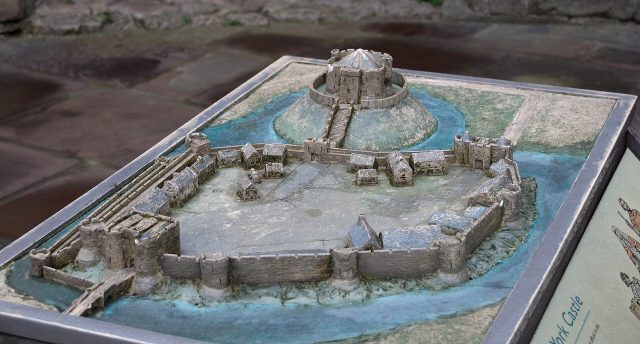
The story of this site stretches back far beyond the cathedral’s construction. Long before the first stones were laid in the thirteenth century, the land was part of Eboracum, a Roman fortress guarding the northern frontier of their empire. A Christian church stood here as early as the seventh century, though little remains of those early structures. The Normans arrived in the eleventh century, raising thick walls and heavy arches that still form the core of the crypt. Over the centuries, Gothic masons transformed the building, adding soaring spires and vast windows, while later craftsmen refined its details. Fires, wars, and restorations have left their marks, but the Minster endures, layer upon layer of history visible in its stones.
Step inside, and the nave unfolds like a forest of light and shadow. The ceiling arches overhead, so high it seems to dissolve into the dimness, while sunlight filters through the stained glass, painting the stone in soft hues of blue, red, and gold. The most striking feature is the Great East Window, the largest expanse of medieval stained glass in the world. Created in the early fifteenth century, its panels depict biblical scenes with a delicacy that makes the figures appear almost alive. Saints stand in vibrant robes, their faces turned toward heaven, while intricate borders weave patterns of leaves and flowers. On a bright day, the colors glow as if lit from within, and it’s easy to forget the centuries that separate us from the hands that shaped this glass.
At the opposite end of the cathedral, the West Window—known as the Heart of York—offers a different kind of story. Crafted in the fourteenth century, its panels blend religious imagery with scenes of everyday life in medieval York. Here, a stonemason carves a block of stone; there, a merchant counts coins beneath a Gothic arch. The faces are individual, the details precise—some figures even wear the fashions of the time, their expressions caught between piety and the ordinary concerns of the living. It’s a window that doesn’t just depict faith but the people who built and sustained it, their world preserved in glass.
Climb the tower, and the city unfolds beneath you. The red-tiled roofs of York stretch in every direction, their patterns broken only by the curve of the River Ouse and the remnants of the old city walls. On clear days, the view extends to the distant hills, and in the farthest reaches, the faintest hint of the North Sea shimmers on the horizon. The tower itself is a testament to persistence—built, rebuilt, and strengthened over centuries, its stones bearing the weight of time. From this height, the Minster no longer looms over you but becomes part of the landscape, a fixed point around which the city has grown and changed.
Below ground, the crypt holds quieter echoes of the past. Here, the remains of the Norman church survive in rough-hewn arches and faded frescoes, their colors muted by age. The space feels intimate, almost secret, with the weight of the cathedral pressing down from above. This was where the dead were laid to rest—archbishops, knights, and ordinary citizens whose names have long since faded from memory. Some tombs are elaborate, carved with effigies; others are simple slabs worn smooth by time. In the dim light, it’s easy to imagine the footsteps of those who once walked these stones, their voices lost but their presence lingering in the cool, still air.
The Minster is not a museum. It remains a living place of worship, its rhythms shaped by the cycle of services, concerts, and events that fill its vast interior. The organ, installed in the nineteenth century, still shakes the air with its deep resonance during services, its pipes vibrating against the ancient stone. Occasionally, the cathedral hosts candlelit tours after dark, when the shadows deepen and the stained glass seems to glow from within. On these nights, the building feels different—not just old, but alive with the ghosts of its past.
Visit in the early morning, when the light slants through the windows and the only sounds are the distant murmur of prayers or the clear voices of the choir. Sit in one of the wooden pews and watch how the sun moves across the stone, picking out details you might otherwise miss—the worn carvings on a misericord, the faint outline of a long-forgotten fresco, the way the arches frame the sky like a series of living paintings. The Minster has stood here for centuries, but it is not static. It changes with the light, the seasons, the people who pass through its doors. Listen closely, and you might hear the whisper of history itself.