York Castle is one of those rare places where history isn’t just remembered—it lingers in the air, in the stones beneath your feet, in the way the light falls across the river. Standing on the banks of the Ouse in the heart of York, a city that has watched empires rise and fall for nearly two thousand years, the castle feels like a fragment of the past that refused to fade. It hasn’t always looked the way it does today; much of the original Norman fortifications are long gone, yet the site itself has been a silent witness to some of England’s most pivotal moments. Power was brokered here, justice was meted out, and now, in its later years, the castle has become a keeper of stories—some brutal, some poignant, all undeniably real.
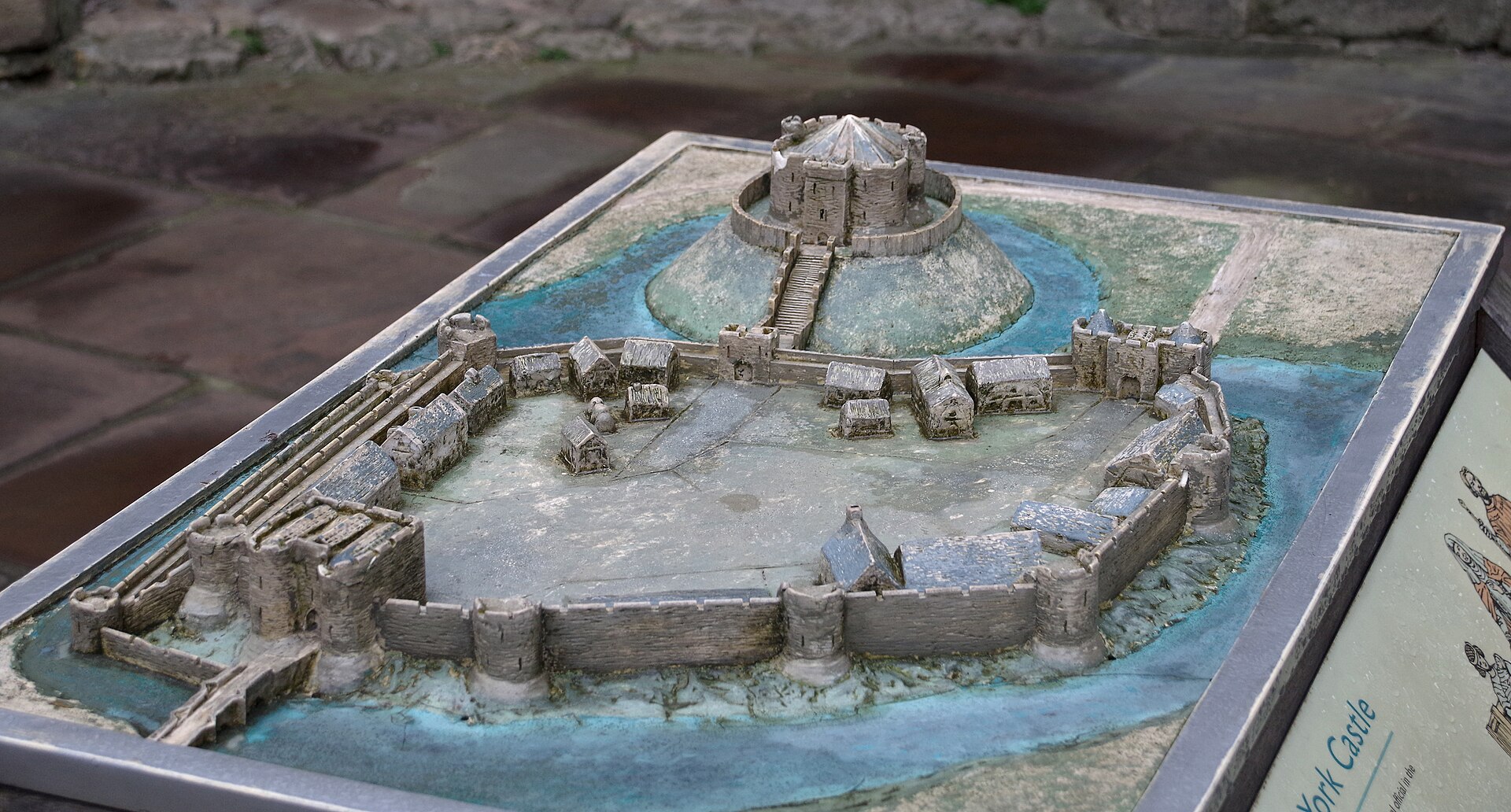
The first defences were thrown up in the 11th century, not long after William the Conqueror’s forces had subdued the north. The initial structure was little more than a wooden motte-and-bailey, a hastily assembled stronghold of earthworks and timber designed to assert control over a restive region. But by the 12th century, under Henry II, the castle began its transformation into something more permanent. Stone replaced wood, and the imposing Clifford’s Tower rose from the landscape, its circular bulk a deliberate statement of royal authority. The tower’s name comes from Roger de Clifford, a nobleman executed here in the 14th century for his role in a rebellion against Edward II—a grim reminder that this place was as much about punishment as it was about power.
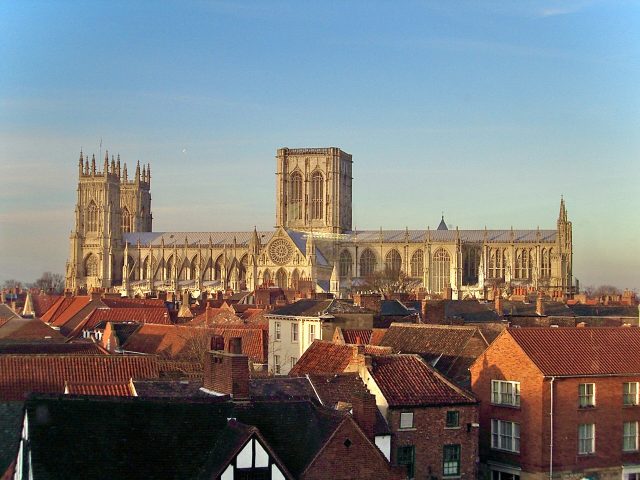
Clifford’s Tower is the castle’s most enduring symbol, a structure that has survived fires, sieges, and the slow decay of time. Inside, the medieval interiors are mostly gone, stripped away by centuries of use and neglect, but the climb to the top is still worth the effort. From the battlements, York unfolds in all directions: the crooked lanes of the old town, the soaring spires of the Minster, the green sweep of the city walls. The view is especially striking at dusk, when the streetlights flicker to life and the river below catches the last of the evening light, turning the water into a ribbon of gold.
For much of its history, the castle wasn’t just a military stronghold. By the 17th century, as the threat of invasion receded, its role shifted. The buildings that had once housed soldiers became a prison, a place where debtors, thieves, and political dissidents were locked away. Among the most infamous inmates was Dick Turpin, the 18th-century highwayman whose exploits have since been mythologised in ballads and folklore. The prison operated for centuries, and by the time it closed in the 19th century, thousands had passed through its gates. Today, the surviving structures house the York Castle Museum, where the focus isn’t just on the grand narratives of kings and battles, but on the lives of ordinary people—those who were punished, those who did the punishing, and those who simply tried to survive within these walls.
The museum doesn’t just display artefacts; it immerses visitors in the past. There are no grand halls or gilded relics here, only the raw, unvarnished remnants of daily life. The exhibits include everything from the tools of medieval justice to the personal belongings of prisoners—letters, clothing, even the last messages scratched into cell walls. One of the most compelling sections recreates the Victorian era, when the prison system was overhauled in the name of reform. Visitors can walk through reconstructed cells, see the uniforms inmates were forced to wear, and learn about the harsh routines that governed their days. It’s unsettling, but that’s the point: history isn’t always comfortable, and this place doesn’t let you forget it.
Just a short walk from the museum lies the York Dungeon, a more theatrical take on the city’s darker history. Unlike the castle itself, this isn’t a preserved historical site but an experience designed to shock and entertain. Actors in period costumes guide visitors through a series of staged scenes—witch trials, plague outbreaks, public executions—all brought to life with sound effects, lighting, and a healthy dose of melodrama. It’s not for everyone, especially those with a low tolerance for the macabre, but it does capture something of the city’s medieval atmosphere, albeit in a heavily dramatised form.
Beyond the castle’s walls, the surrounding park offers a quiet counterpoint to the weight of history inside. It’s a place where locals come to escape the bustle of the city, where families spread out picnics on the grass and children feed the ducks along the riverbank. The park is at its most beautiful in spring, when the trees burst into bloom, and again in autumn, when the leaves turn shades of amber and crimson. In winter, the paths are often dusted with frost, and the bare branches of the trees frame the castle in stark, skeletal lines. It’s a reminder that while the past is always present here, the world outside keeps turning.
York Castle isn’t just a monument; it’s a living part of the city’s identity. It has weathered wars, fires, and the slow march of time, yet it still stands, a tangible link to the people who shaped England’s story. You could spend hours here—climbing the tower, wandering the museum, or simply sitting by the river, letting the weight of centuries settle around you. York itself is a city of layers, but the castle gives it depth, a sense of continuity that makes the past feel almost within reach. That’s why people come here, not just to see history, but to feel it.