Zaculeu sits on a quiet hillside just outside Huehuetenango, where the air carries the scent of pine and damp earth. Unlike the more famous Maya sites, it hasn’t been polished for mass tourism. The ruins here are raw, half-buried in the undergrowth, their limestone surfaces worn smooth by centuries of rain and wind. The place feels lived-in, as if the people who built it might return at any moment. There are no crowds, no vendors hawking souvenirs—just the occasional rustle of leaves and the distant call of a bird.
The city rose to prominence around the 7th century, serving as a political and religious hub for the Mam people, a Maya group that still lives in the highlands today. Zaculeu means White Earth, a name that likely comes from the pale stone used in its construction. By the 10th century, like many Maya settlements, it was abandoned. No one knows exactly why—drought, warfare, or shifting trade routes are all possibilities. The mystery lingers in the empty plazas and crumbling staircases.
The architecture follows the classic Maya style, but with a local twist. The pyramids are lower and broader than those in the lowlands, built to withstand the cooler climate of the highlands. The largest structure, known simply as Structure 1, dominates the site. Climbing its steps, you can see the valley stretching out below, the same view the city’s rulers would have had centuries ago. Not all of Zaculeu has been excavated. Some buildings remain hidden under layers of soil, their secrets still waiting to be uncovered.
One of the most striking features is the ball court. For the Maya, the game played here wasn’t just sport—it was a ritual, a reenactment of cosmic battles between light and dark. The court at Zaculeu is modest compared to those in Mexico, but its alignment and carvings suggest it was central to the city’s spiritual life. Nearby, stelae depict rulers and gods, their faces eroded but still recognizable. These carvings offer glimpses into the city’s past, hinting at ceremonies, alliances, and conflicts.
The site has a quiet, almost forgotten feel. On most days, you’ll have the ruins to yourself, save for the occasional local farmer passing through. The forest around Zaculeu is thick with oak and cypress, their branches casting dappled shadows over the stone. In the early morning, mist clings to the hills, softening the edges of the ruins. Some say the place is haunted, that the spirits of the Mam still linger in the wind. Whether you believe that or not, there’s an undeniable sense of continuity here, as if the past isn’t as distant as it seems.
Zaculeu isn’t a place for those looking for grand museums or guided tours. There are no signs explaining every detail, no gift shops selling replicas of artifacts. What you get instead is something rarer: a direct encounter with history. The stones underfoot are the same ones walked on by priests and merchants, the same ones that once echoed with the sounds of daily life. You can almost hear the murmur of a market, the chanting of a ritual, the distant beat of a drum.
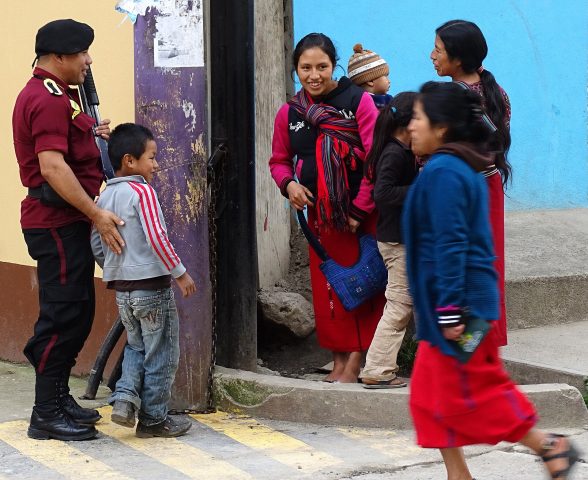
Getting here takes effort. The road from Huehuetenango winds through the mountains, passing small villages where life moves at a slower pace. Women in traditional dress weave on back porches, and children play in dusty streets. The site itself is unassuming—a few paths leading through the ruins, a small ticket booth at the entrance. There’s no grand entrance, no paved walkways. You’re left to explore on your own, to piece together the story from what remains.
What makes Zaculeu special is its unfiltered quality. It’s a reminder that Guatemala’s history isn’t confined to textbooks or tourist brochures. The Maya civilization didn’t vanish—it evolved, adapted, and left traces in places like this. Zaculeu doesn’t offer easy answers or dramatic revelations. Instead, it invites you to slow down, to look closely, and to imagine what it might have been like to stand here a thousand years ago. The past here isn’t just preserved—it’s still alive, waiting to be noticed.