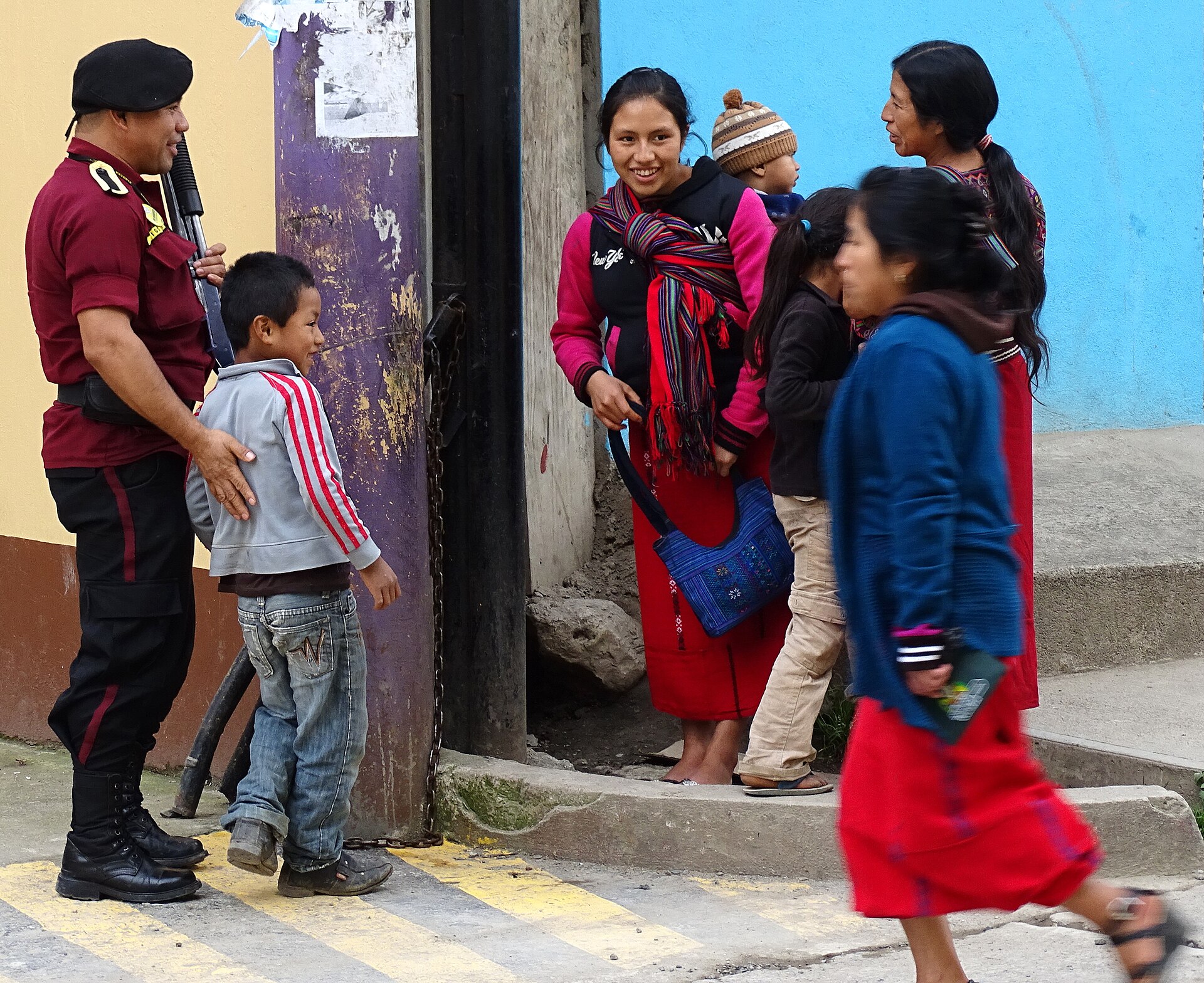
Nebaj is one of those rare places in Guatemala that exists almost entirely outside the usual travel narratives. Tucked away in the highlands of Huehuetenango, it doesn’t appear in glossy brochures or feature on must-see lists, and that’s precisely what makes it worth knowing. Here, life moves at a different pace—one set by the seasons, the harvest, and the slow, steady rhythm of tradition. There are no crowds, no souvenir stalls, no carefully curated experiences. Instead, Nebaj offers something far more valuable: a glimpse of Guatemala as it has been for centuries, untouched by mass tourism.
The village sits at around two thousand meters above sea level, surrounded by rolling hills blanketed in dense forests and terraced fields. The air is crisp and cool, carrying the scent of pine and damp earth, while the landscape unfolds in layers of green—misty valleys, patchwork farms, and a sky that feels closer than anywhere else. Most of the people here are Maya, and many still speak Mam, one of Guatemala’s indigenous languages, alongside Spanish. Daily life revolves around age-old customs: planting corn and beans, weaving textiles on backstrap looms, and observing festivals tied to the ancient agricultural calendar. Modern infrastructure is sparse, and that’s part of the charm. There are no neon signs or paved highways, just dirt paths winding between adobe houses with tiled roofs, where chickens scratch in the yards and smoke curls from wood-fired stoves.
Nebaj’s history is deeply intertwined with that of the Huehuetenango region, a place that has always been remote. Long before the Spanish arrived, these highlands were home to Maya communities that lived in relative isolation, preserving their language, beliefs, and way of life. Even during the colonial era, the rugged terrain kept outsiders at bay, shielding the area from heavy European influence. Today, Nebaj feels like a living relic of that past—a place where people still farm the same land, celebrate the same festivals, and pass down the same stories as their ancestors did. It’s not a museum with guided tours, but a community where history isn’t preserved behind glass; it’s simply lived.
The architecture here is unassuming, built for function rather than show. Houses are made of adobe and wood, with roofs of clay tiles or thatch, and the streets are either packed earth or rough stone. At the heart of the village, you’ll usually find a small central square dominated by a church—the most prominent building in town. These churches aren’t just places of worship; they’re the anchors of community life. Built collectively over generations, their walls hold the memories of countless baptisms, weddings, and funerals. Inside, wooden saints stand draped in hand-embroidered cloth, and altars blend Catholic imagery with Maya symbolism, a quiet testament to the syncretism that defines so much of rural Guatemala.
Life in Nebaj follows the natural cycles of the land. Mornings begin with the sunrise, as women head to the market or the local spring with clay jugs balanced on their heads, while men set off for the fields. By midday, the village is quiet, with most people working or, if there’s a school nearby, children studying. Evenings bring families together for meals of tortillas, beans, and whatever vegetables are in season. On weekends and during festivals, the pace changes. The square comes alive with music, dancing, and the hum of conversation. Artisans lay out their wares—woven bags, pottery, silver jewelry, and beaded necklaces—while the scent of grilled meat and fresh coffee fills the air. These moments are when Nebaj feels most alive, a place where time slows just enough to let you witness the unbroken thread of tradition.
For travelers who make the journey here, Nebaj offers a rare kind of authenticity. There are no luxury hotels or fusion restaurants, just the simple hospitality of local families who might invite you into their home for a meal or a cup of coffee. Some households offer basic lodging—a spare room, a shared bathroom, a plate of food cooked over an open fire. It’s not comfort in the conventional sense, but that’s the point. Staying here means waking up to the crow of roosters, drinking coffee grown on nearby slopes, and walking trails that lead to hidden waterfalls or caves where Maya once sought shelter. The lack of tourist infrastructure isn’t a drawback; it’s what makes the experience real.
The surrounding landscape is just as compelling as the village itself. Footpaths wind through forests teeming with birdsong, past coffee plantations where the beans are still hand-picked, and toward archaeological sites that remain largely unexplored. Local guides, often farmers or hunters, know these trails intimately and are happy to share their knowledge—pointing out medicinal plants, recounting legends of the land, or leading you to a secluded waterfall where the water runs so clear it looks like glass. There are no tour buses or guided groups here, just the quiet companionship of the mountains and the occasional glimpse of a quetzal flashing through the trees.
Nebaj isn’t a place for those seeking nightlife or luxury. It’s for travelers who want to see Guatemala as it truly is: slow, unpolished, and rich with stories that don’t make it into guidebooks. There’s no need to rush or plan every detail. The village doesn’t try to impress; it simply exists, and in that quiet persistence lies its magic. You might spend a morning watching women weave on their looms, their fingers moving with practiced ease, or an afternoon sitting on a wooden bench in the square, listening to the murmur of Mam and the occasional clatter of a passing horse. These moments don’t feel like sightseeing; they feel like being let in on a secret.
What makes Nebaj special isn’t any single attraction, but the way it refuses to perform for visitors. There are no staged ceremonies or rehearsed explanations of local culture. Instead, life unfolds as it always has—imperfect, unscripted, and deeply human. The people here aren’t trying to sell you anything; they’re just living, and if you’re lucky, they’ll let you be part of it for a little while. That’s the gift of places like Nebaj: they remind you that the most meaningful travel isn’t about checking off landmarks, but about stepping into a rhythm older than tourism itself. And if you’re patient, the place will reveal itself—not all at once, but in small, quiet ways, like the taste of freshly ground coffee or the sound of a flute drifting through the evening air.