Huehuetenango’s central park isn’t just the town square—it’s where the past and present of this highland Guatemalan city quietly collide. Perched over two thousand meters above sea level, the air here carries a crispness that makes the sky feel closer, the light sharper. The park sits at the heart of a region shaped by trade, tradition, and the slow rhythms of provincial life, surrounded by low-slung colonial buildings that have witnessed everything from Spanish rule to the modern bustle of a city that still moves at its own pace.
The square itself is unassuming, designed with the effortless charm of Latin American plazas. A small fountain anchors the space, its gentle trickle blending with the rustle of leaves from the trees that shade the benches below. Mornings belong to the locals—older men sipping coffee from plastic cups, women catching up on neighborhood gossip, children darting between the trees before school. By midday, the park hums with activity: vendors sell ripe mangoes and tamales wrapped in banana leaves, while groups of men gather under the pavilions to play dominoes, their laughter rising above the clatter of tiles. There’s no urgency here, no tourist crowds jostling for space—just the easy cadence of a town that hasn’t yet been swept up in the rush of the outside world.
The buildings around the park tell the story of Huehuetenango in their own quiet way. On the north side stands the Catholic cathedral, built in the mid-20th century but carrying the weight of older traditions in its thick walls and simple facade. Its columns and restrained ornamentation lack the grandeur of Antigua’s churches, but there’s a solidity to it, a sense of endurance. Nearby, the municipal building looms with its high ceilings and heavy doors, a place where the business of the city has been conducted for generations. And then there’s the old cinema on the corner, its marquee long dark, a relic of a time when going to the movies was an event, not just another evening’s distraction.
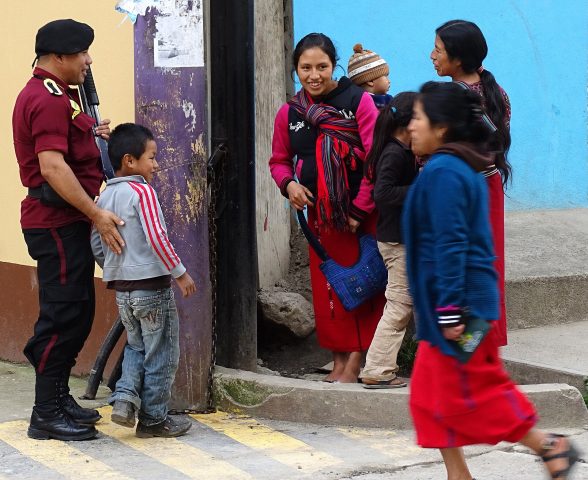
This is a city with deep Indigenous roots, and even here, in its most official space, that heritage lingers. While the park has an official name, most locals still call it *la plaza*, a term that predates the Spanish conquest. The surrounding highlands are home to Maya communities who have preserved their languages, textiles, and customs despite centuries of change. Sometimes, women in brightly embroidered *huipiles* and woven skirts appear in the park, selling handmade goods or visiting relatives. Their presence is a reminder that Huehuetenango isn’t just a colonial relic—it’s a place where different eras and cultures coexist, often in the same breath.
As the day cools into evening, the park transforms. The heat of the afternoon gives way to a softer light, and the square fills with people of all ages. Teenagers cluster near the fountain, sharing music from a phone or leaning against the low walls to talk. Families stroll along the paths, children trailing behind on bicycles, while older couples walk arm in arm, pausing to watch the last of the sunset. On weekends, a small stage might be set up for performances—usually local marimba bands, their wooden keys producing a sound that’s both lively and soothing. The music blends with the murmur of conversation and the occasional shout of a street vendor, creating a soundtrack that feels entirely of this place.
For travelers, the park offers something rare: a chance to step into the rhythm of real Guatemalan life, not the version packaged for tourists. There are no luxury hotels here, no overpriced restaurants with menus in five languages. Instead, there’s the quiet pleasure of watching a town go about its day—vendors arranging their wares, dogs dozing in patches of sunlight, the occasional stray chicken pecking at crumbs. If you’re hungry, a few small eateries nearby serve up local specialties like *kak’ik*, a spicy turkey soup, or thick tortillas slathered with refried beans. The coffee is strong and dark, the kind that lingers on your tongue long after the last sip.
Huehuetenango itself is often overlooked by visitors, and that’s part of the park’s appeal. There are no tour buses idling at the curb, no souvenir stalls hawking mass-produced textiles. Instead, there’s the unfiltered life of a highland city—one that hasn’t yet been polished for outsiders. This isn’t a place of grand ruins or dramatic landscapes, but that’s precisely what makes it worth lingering in. The park isn’t a destination; it’s a pause, a moment to sit and absorb the way time moves differently here.
If you find yourself in this part of Guatemala, don’t rush past. Take a seat on one of the benches, order a coffee from a nearby stall, and let the afternoon unfold. Watch the way the light slants across the cathedral’s facade in the late afternoon, or how the children’s laughter echoes against the old cinema’s walls. This is the Guatemala that doesn’t make it onto postcards—the one that exists in the quiet corners of towns like Huehuetenango, where history isn’t just remembered but lived, day after day.