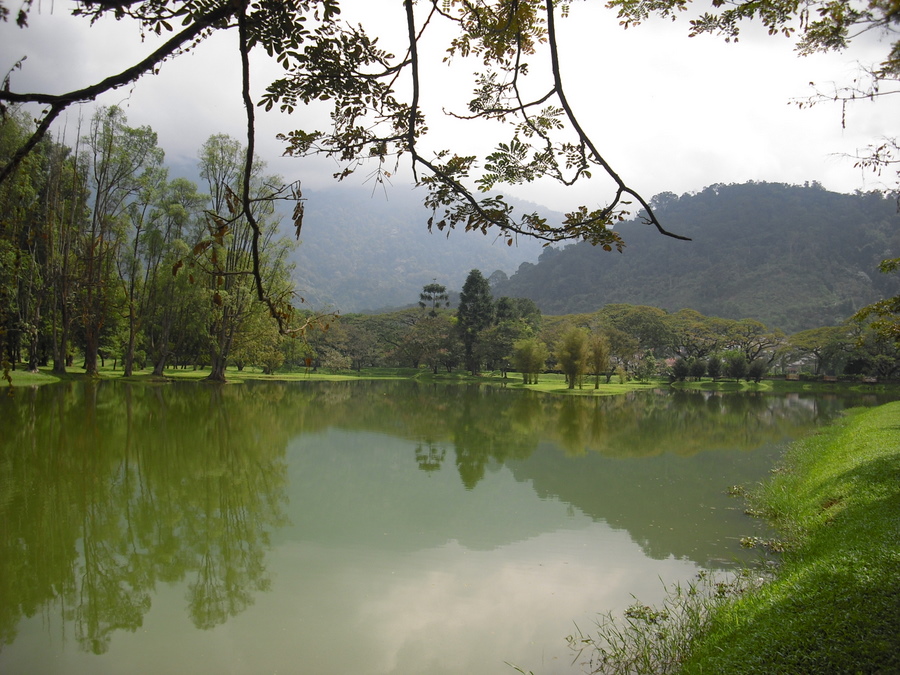
Taiping Gardens is one of those rare places where time seems to have paused, preserving the quiet charm of a bygone era. Established in the mid-19th century, it was Malaysia’s first public park, created when Taiping was still a young, bustling town fueled by tin mining. British officials, seeking respite from the heat and the chaos of the growing settlement, set aside this patch of land to shape nature into something orderly and beautiful. What emerged wasn’t just a garden, but a symbol of change—a place where the wild gave way to cultivated elegance, yet never quite lost its untamed spirit.
Today, the gardens sprawl across a generous expanse of land, a mix of manicured lawns, winding paths, and tranquil ponds. Towering fig trees with their sprawling aerial roots stand as silent witnesses to the jungles that once covered the Malay Peninsula, while exotic palms and flowering shrubs from distant lands add splashes of color. The lotus ponds are especially striking, their still waters reflecting the soft glow of lamplight in the evenings. Mornings here belong to the locals, some casting fishing lines into the water, others simply enjoying the quiet. The air is thick with the scent of damp earth, and the pace of life slows to match the unhurried rhythm of the place.
The architecture within the gardens is understated but evocative. Small wooden and stone bridges arch over narrow streams, their surfaces worn smooth by decades of footsteps. Ornate gazebos with carved railings offer shade, while old-fashioned lampposts cast a warm glow when night falls. At the heart of the park stands a modest pavilion, once the stage for brass bands that entertained colonial families on lazy afternoons. These days, it hosts occasional concerts or exhibitions, though more often than not, it sits empty, its only visitors the birds flitting across its roof. Nearby, a small zoo—one of the oldest in Malaysia—houses deer, monkeys, and even a few crocodiles. It’s nothing grand, but for children, it’s a world of wonder.
Taiping Gardens isn’t just a place to stroll; it’s a living piece of the city’s history. In the 19th century, Taiping was a pioneer in Malaysia, the first to introduce electricity, telephones, and railways. The gardens became a microcosm of that progress, a place where British governors, local sultans, and tin miners alike could escape the demands of their daily lives. After independence, the park retained its significance, remaining a beloved gathering spot for families, especially on weekends. Parents spread out picnic blankets, children chase each other across the grass, and elderly men set up chessboards under the shade of ancient trees.
Over the years, the gardens have undergone several restorations, each one careful to preserve their original character. Some of the old structures have been repaired, the ponds dredged, and rare plants reintroduced. Yet the true magic of the place lies not in perfection, but in its imperfections—the crumbling steps that lead nowhere, the moss-covered wells, the way nature slowly reclaims what was once strictly ordered. These details make the gardens feel alive, not like a museum exhibit but like a place that breathes and grows.
Taiping is known as the "rain town," and the gardens are at their most atmospheric when the skies open up. After a downpour, the paths glisten, the leaves shine like polished jade, and the air is thick with the scent of wet earth and greenery. The sound of the city fades into the background, muffled by the rain, and the park feels even more secluded. Locals say this is where you can experience the real Malaysia—not the flashy, fast-paced version of Kuala Lumpur, but something quieter, deeper, rooted in history.
The gardens are woven into the fabric of the city’s culture. Taiping still holds onto traditions from its colonial past, and the park is where many of them play out. Wedding parties often choose the gardens for their photo shoots, believing the lush greenery brings good fortune to the newlyweds. In the evenings, groups of older Malaysians practice tai chi under the trees, while Indian families gather for picnics. During festivals, the park is strung with lanterns, and the air fills with the scent of flowers, spices, and street food. It’s a place where different communities come together, each adding their own layer to the park’s story.
Despite its popularity, Taiping Gardens has managed to avoid becoming a tourist trap. There are no crowds, no souvenir stalls, no pushy guides. Instead, it remains a place for slow, unhurried exploration. You can wander the paths for hours, sit by the pond and watch the fish, or simply enjoy the sight of squirrels darting fearlessly between the trees, hoping for a handout. Every now and then, the park fills with the sound of children’s laughter—school groups visiting for a lesson on local flora and fauna, or families letting their kids run wild on the grass.
More than just a park, Taiping Gardens is a piece of the city’s soul. It holds the memories of the past while remaining a vibrant part of daily life. For some, it’s a place to jog in the morning; for others, a quiet refuge from the hustle of the week. For many, it’s a tangible connection to history, a place where you can almost hear the echoes of the past—the rustle of long skirts, the murmur of colonial officials, the distant hum of the jungle that once stood here. The world changes, but the gardens endure, timeless and serene.