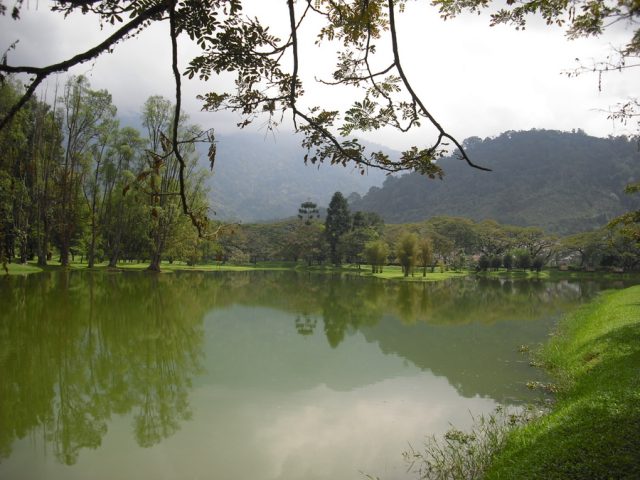
Perched in the hills of Perak, just a short distance from Taiping, Bukit Larut—better known as Maxwell Hill—feels like a place time forgot. There are no crowds here, no neon signs or bustling cafes, just the quiet rustle of leaves and the cool mountain air that carries the faintest hint of colonial days. The hill takes its name from William George Maxwell, a British official who, in the late 19th century, recognized its potential as a retreat from the stifling heat of Malaysia’s lowlands. Today, it remains one of the few places in the country where the past lingers so palpably, as if the world beyond these hills has moved on without it.
Reaching Maxwell Hill is an experience in itself. The only way up is aboard one of the old Land Rovers that have been ferrying visitors along the narrow, winding road since 1948. These vehicles, still operated by locals, have become part of the hill’s charm. The journey is slow, the road twisting through dense jungle with sudden drops and sharp turns that reveal sweeping views of valleys and distant peaks. On rainy days, the drive becomes even more dramatic, mist curling around the trees as the tires grip the slick asphalt. For those who prefer to walk, the hike up takes several hours, demanding stamina but rewarding with a sense of quiet accomplishment.
At the summit, life unfolds at its own unhurried pace. A handful of colonial-era bungalows, built in the early 20th century for British officials and their families, still stand among well-tended gardens. Some remain in the hands of descendants of the original settlers, while others have been converted into modest guesthouses or small cafes. The architecture is understated but elegant—wooden verandas, tiled roofs, high ceilings, and large windows that let in the soft mountain light. The air is filled with the scent of damp earth and blooming orchids, and the only sounds are the occasional call of a bird or the distant chime of a wind chime.
Beyond the bungalows, the hill is a haven for nature. The surrounding forests are part of a protected area, home to rare birds, butterflies, and even the elusive Malayan tiger, though sightings are exceedingly rare. A network of trails winds through the jungle, leading to viewpoints, waterfalls, and mountain streams. One of the most popular routes takes hikers to the summit of Gunung Inggi, where the landscape unfolds in a breathtaking panorama of rolling hills and valleys. The forest here is alive in a way that feels almost untouched, the air cool and fragrant, the silence broken only by the rustle of leaves and the distant rush of water.
Maxwell Hill’s quiet existence is deeply tied to the history of Taiping, Malaysia’s first capital. The town itself is steeped in colonial heritage, known for the 1874 Pangkor Treaty that marked the beginning of British rule in the Malay Peninsula. Taiping’s museums, old cemeteries, and parks tell the story of a bygone era, and Maxwell Hill serves as a natural extension of that narrative—a place where British officials once escaped the tropical heat, leaving behind a legacy of bungalows and gardens that still whisper of the past.
What draws visitors here today is not the promise of luxury or entertainment, but the chance to step away from the noise of modern life. The guesthouses are simple but comfortable, offering little more than a bed, a hot meal, and the quiet companionship of the hills. The small cafes serve local dishes and tea grown on nearby plantations, the flavors unpretentious but satisfying. Evenings are especially peaceful, the air filled with the hum of cicadas and the occasional hoot of an owl. On clear nights, the sky is a dazzling canopy of stars, so close it feels as though you could reach out and touch them.
This is not a place for those seeking the familiar comforts of a resort or the constant buzz of activity. Maxwell Hill rewards those who appreciate stillness, who find joy in the slow unfurling of a fern or the way sunlight filters through the trees. It’s a reminder of a slower, quieter way of life, one that has all but disappeared elsewhere. Perhaps that’s why it endures—why, despite its obscurity, it remains one of Malaysia’s most authentic corners, a place where the past isn’t just remembered but still very much alive.