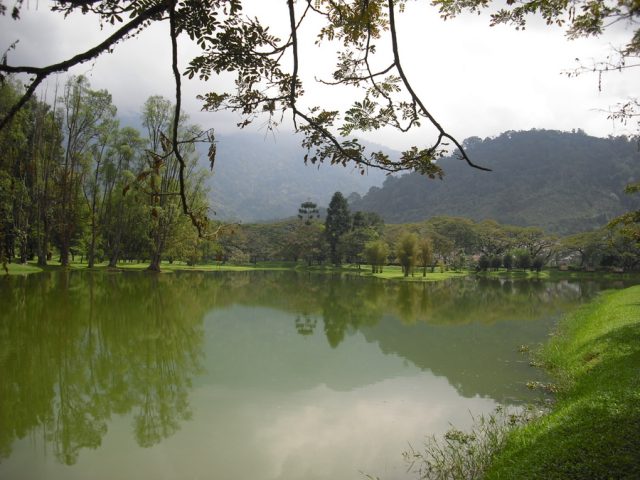
Taiping Lake Gardens is one of those places that doesn’t reveal itself immediately but lingers in the mind long after you’ve left. Tucked in the heart of Taiping, Malaysia’s first capital of Perak state, it feels like a world apart from the country’s more famous destinations. Time moves differently here—slower, softer, without the usual tourist bustle. The lake isn’t some manicured attraction designed for visitors; it emerged naturally from human activity and now exists as a quiet blend of nature and history.
The story of Taiping Lake begins in the late 19th century, when the land was scarred by tin mining. As the ore was extracted, deep pits formed, filling over time with rainwater. What remained was a sprawling network of lakes covering around forty hectares. Locals call it the Garden of Lakes, and the name fits perfectly. Instead of a single expanse of water, it’s a patchwork of ponds, small islands, and lush greenery, all connected by winding paths and bridges.
Today, the lake is a green refuge in the middle of the city, a place where both locals and visitors come to escape the heat and noise. Shaded walkways line the water, offering shelter under towering trees planted during colonial times. Rasamala, figs, and other tropical plants create a dense canopy, their leaves rustling in the breeze. Mornings here are filled with birdsong, while evenings bring a light mist over the water, adding to the sense of calm.
The lake’s character is deeply tied to its past. Along its shores stand old colonial buildings, remnants of British rule, when Taiping was Perak’s administrative center. Some now house museums and cafes, but most remain part of the city’s fabric, their weathered facades telling stories of a bygone era. Nearby, the old railway station—with its high ceilings and large windows—still carries the atmosphere of the time when Taiping was a thriving hub.
Beyond its natural beauty, the lake is a cultural and social heart for the city. Festivals, open-air concerts, and art exhibitions often take place here. On weekends, families gather for picnics, children feed the ducks, and photographers chase the perfect shot of the sunset reflecting on the water. Yet despite its popularity, the lake hasn’t become a tourist trap. There are no flashy attractions or souvenir stalls—just wooden benches, old lampposts, and quiet paths where the only sounds are leaves rustling and water lapping.
For those curious about the lake’s origins, the nearby Perak Museum offers a deeper look into the tin rush that shaped the region. The exhibits trace Taiping’s rise from a small settlement to one of Malaysia’s key cities, filling in the gaps of the lake’s history. The museum is small but insightful, a natural complement to a stroll along the water.
Taiping Lake doesn’t demand attention. It doesn’t dazzle with bright colors or loud entertainment. Instead, it invites you to slow down, to listen to the silence, and to feel the rhythm of a Malaysian town where past and present coexist effortlessly. You might spend an hour here or an entire day, watching the light shift over the water, the clouds drift in its reflection, and locals go about their lives, undisturbed by the occasional visitor.
In a world that moves too fast, places like this are rare. Taiping Lake is a reminder that beauty isn’t always obvious—sometimes it’s found in quiet corners where time flows at its own pace. It asks nothing of you except to pay attention, to respect what nature and history have created. And perhaps that’s why it stays with you long after you’ve left—a place where you can simply be, without hurry or distraction.