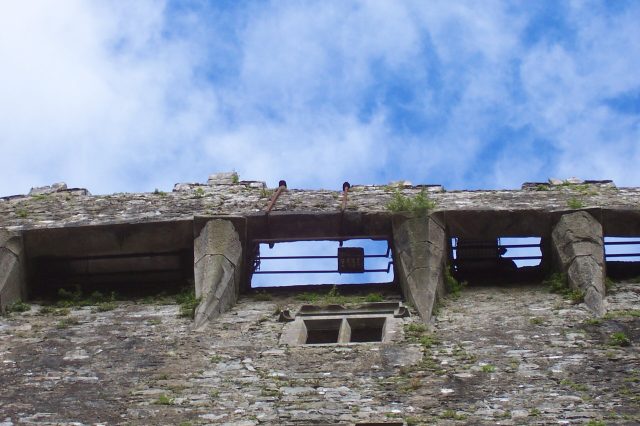
The Rock Close at Blarney is one of those quiet corners of Ireland that doesn’t announce itself with grand views or flashy attractions. Instead, it offers something far more subtle—a sense of timelessness, a place where nature and human hands have worked together so seamlessly that it’s hard to tell where one ends and the other begins. Tucked just a short walk from Blarney Castle, this small garden feels like a world apart, where the usual rush of modern life fades into the background, replaced by the slow, steady rhythm of moss-covered stones and winding paths.
The garden’s origins trace back to the 19th century, when the Colthurst family, who owned Blarney Castle, decided to shape the land around it into something more deliberate. At the time, the fashion across Europe was for picturesque landscapes that evoked the romance of untamed nature, and Rock Close became a perfect example of that ideal. Unlike many manicured parks of the era, however, this one didn’t fight against the existing terrain. Instead, it embraced it. The natural rock formations, draped in ferns and moss, became the heart of the design, with paths carefully laid to guide visitors through the most striking parts of the landscape, revealing new perspectives with every turn.
What makes Rock Close truly distinctive is the way the rocks themselves define the space. They aren’t just decorative—they’re the foundation of the garden, shaping its character in ways that feel almost accidental. Some rise like miniature cliffs, while others sprawl like ancient boulders, their surfaces softened by layers of greenery. In places, the rocks form small caves and grottos, inviting exploration along narrow, winding trails. On rainy days, when the stones glisten and the air is thick with the scent of damp earth and pine, the garden takes on an almost mystical quality. It’s easy to imagine that around the next bend, you might stumble upon something unexpected—a forgotten statue, a hidden bench, or simply a view that stops you in your tracks.
Among the garden’s quieter charms is the Witch’s Stone, a massive boulder perched on a hillside. Local lore suggests that touching it grants the gift of persuasive speech, much like the famous Blarney Stone in the castle above. Unlike its more famous counterpart, though, this one doesn’t require any acrobatics—just a simple reach to place your hand on its rough surface. Another highlight is the small waterfall that cascades into a pond, surrounded by rhododendrons. The water is clear and cold, its steady murmur adding a soothing backdrop to the garden, especially if you pause on one of the nearby benches to listen.
Though Rock Close isn’t large, it’s the kind of place where you can wander for far longer than you might expect. The paths twist and turn, leading you up gentle slopes and down into shaded hollows, each new angle offering a different view. Benches are scattered throughout, providing spots to rest and take in the surroundings. Spring is particularly magical, when rhododendrons and magnolias burst into bloom, filling the air with their fragrance. In summer, the garden becomes a lush, green maze, where the dense foliage and towering trees create a sense of seclusion. Autumn brings a blaze of gold and crimson, while winter strips the landscape back to its bare essentials—bare branches and stark rocks that somehow feel even more ancient.
Despite its proximity to Blarney Castle, which draws crowds year-round, Rock Close rarely feels busy. It’s not that people avoid it; more likely, many simply don’t know it’s there. The garden doesn’t demand attention—there are no flashy signs, no souvenir stalls, just the quiet presence of nature. Even if your main reason for visiting Blarney is the castle, it’s worth setting aside an hour or two to explore the garden. It’s one of those places where the journey is just as rewarding as the destination, a reminder that sometimes the most memorable experiences are the ones that unfold slowly, without fanfare.
What makes Rock Close special isn’t any single feature, but the way it all comes together—the way the rocks, the plants, and the paths create a space that feels both intentional and effortless. There’s nothing forced or artificial about it; it simply exists, as if it has always been this way. That’s probably why it has endured for well over a century, unchanged in its essential character. It doesn’t ask for admiration or praise; it just is. And for those who take the time to wander its paths, to touch the mossy stones, or to sit and listen to the water, it offers something rare—a moment of quiet connection to a place that has seen generations come and go. If you ever find yourself in Blarney, don’t rush straight to the castle. First, let the garden work its quiet magic.