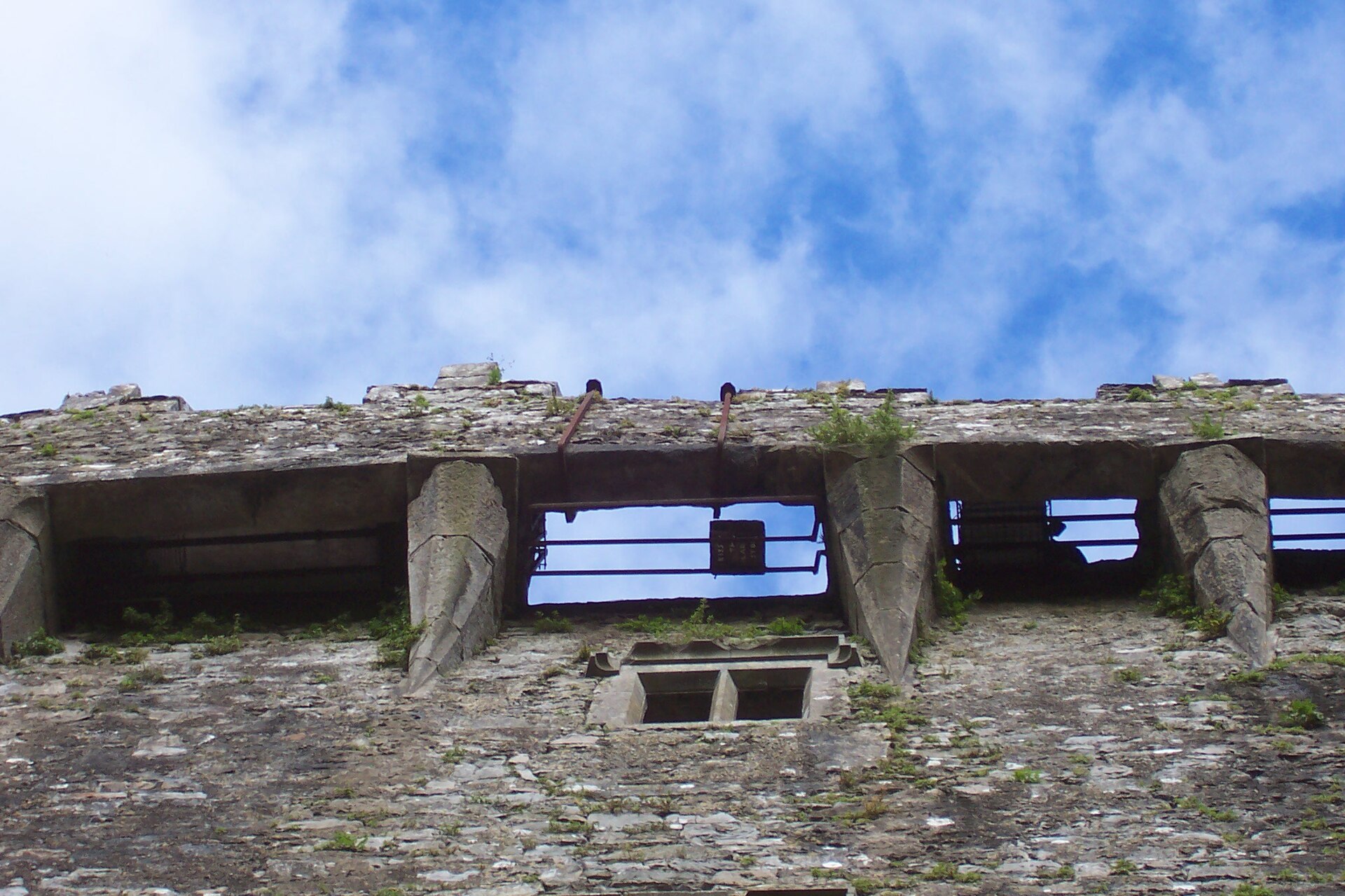
Perched on a rocky outcrop near the town of Blarney, just a short drive from Cork, the medieval fortress known as Blarney Castle holds one of Ireland’s most peculiar treasures: the Blarney Stone. This unassuming slab of limestone, wedged into the battlements of the castle’s tower, has drawn visitors for centuries, not for its appearance—it looks like any other weathered stone—but for the promise it carries. Legend has it that kissing the stone grants the gift of eloquence, the ability to speak with charm and persuasion. Reaching it, however, is no simple feat. You must lie on your back, lean over the edge of the tower, and, gripping the iron rails for dear life, stretch downward until your lips meet the cold, rough surface. It’s an undignified position, to say the least, but the steady stream of people willing to attempt it suggests the reward is worth the effort.
The castle itself is a relic of Ireland’s turbulent past, built in 1446 by Cormac MacCarthy, a powerful lord of Munster. Over the centuries, it has withstood sieges, changing hands between warring factions, yet much of its original structure remains intact. The thick stone walls, narrow arrow slits, and winding staircases evoke the medieval era in a way few places can. Inside, the great halls are lined with heavy oak beams and furnished with pieces that hint at the castle’s former life as a noble residence. From the top of the tower, the view stretches across rolling green hills and the winding Martin River below, a landscape that feels untouched by time. It’s easy to imagine the castle as it once was—a stronghold of power, intrigue, and survival.
The stone’s fame is rooted in more than just folklore. One popular tale ties it to the 17th century, when Queen Elizabeth I demanded that Cormac MacCarthy surrender the castle as a show of loyalty. MacCarthy, however, responded with long, flattering letters that promised much but delivered little. Frustrated, the queen reportedly exclaimed, “This is all Blarney!”—a phrase that eventually entered the English language to describe smooth, evasive talk. Another legend claims the stone was a gift from a witch saved from drowning by MacCarthy, who revealed its magical properties as thanks. Whether these stories hold any truth is beside the point; they’ve become part of the stone’s mystique, shaping how people perceive it.
Today, Blarney Castle is one of Ireland’s most visited sites, and the line to kiss the stone rarely dwindles. But the appeal goes beyond the legend. The castle grounds are a peaceful escape, with manicured gardens, ancient trees, and winding paths that lead to quiet ponds. Visitors can wander through the estate, pausing on benches to soak in the atmosphere or browsing the gift shop for souvenirs—though the real draw is the sense of stepping into history. The air here feels thick with stories, from the clatter of armored boots on stone to the whispered negotiations of long-dead lords.
The Blarney Stone has left its mark on culture far beyond Ireland. Writers like Mark Twain and Winston Churchill referenced it, and the word “blarney” remains in use today to describe someone who speaks with effortless charm, often without saying much at all. In Ireland, the stone has come to symbolize a national trait: the ability to talk one’s way out of trouble with wit and warmth. It’s no wonder so many people make the pilgrimage—not just for the promise of eloquence, but to connect with that spirit of resilience and cleverness that has defined the Irish for generations.
Kissing the stone is a ritual in itself. Staff assist visitors, offering guidance on how to position themselves safely, though the experience is still a bit precarious. Some approach it with laughter, others with reverence, but all end up in the same undignified pose—head dangling, lips puckered. Afterward, there’s often a mix of embarrassment and satisfaction, as if the act itself were a rite of passage. Even if the gift of gab doesn’t immediately manifest, the memory of the moment lingers.
Blarney Castle and its famous stone are more than just a tourist attraction; they’re a living piece of Ireland’s past. The fortress has witnessed centuries of conflict, diplomacy, and survival, while the stone has become a symbol of the power of words. Together, they create an atmosphere that’s hard to put into words—one that draws people back time and again. Perhaps that’s the real magic of the place: it reminds us that history isn’t just about dates and battles, but about the stories we tell and the legends we keep alive. And the Blarney Stone, with its mix of humor, mystery, and history, is one of the best stories Ireland has to offer.