King’s Park in Bloemfontein is one of those places that quietly holds the memory of a city, though few travelers ever seek it out. Tucked away in the heart of South Africa, far from the usual tourist routes, it feels like a fragment of another era—one that hasn’t been preserved behind glass but left to exist as part of everyday life. Established in the late 1800s, the park was never just an ornamental garden. It became a living space where generations of locals gathered, celebrated, and found moments of respite. Today, the stillness here isn’t empty; it’s filled with echoes of the past—the laughter of children playing, the distant notes of a brass band, the rustle of newspapers in the hands of people who once sat on these same benches.
The park sprawls across several hectares, its layout revealing the European influences of its time. Stone-paved paths lead to a central rotunda, where music once played on weekends and families would gather for leisurely afternoons. The trees weren’t planted at random—many were brought from distant places, their branches now weaving a shifting canopy of light and shadow. Spring transforms the park into a soft blur of color, with magnolias and jacarandas blooming in delicate purples and whites. In summer, the dense foliage offers a cool retreat from the heat, a place to linger beneath the shade of old oaks.
The name King’s Park traces back to South Africa’s British colonial period. In the 1890s, when Bloemfontein was still the capital of the Orange Free State, the park was created in honor of Queen Victoria. Later, during the era of the Union of South Africa, it was renamed, though the original name stuck in local usage. Beyond its role as a place of leisure, the park has also been a stage for history. Political rallies, official ceremonies, and even temporary prisoner-of-war camps during the Anglo-Boer War all took place within its boundaries. It’s a reminder that public spaces often bear witness to more than just quiet afternoons.
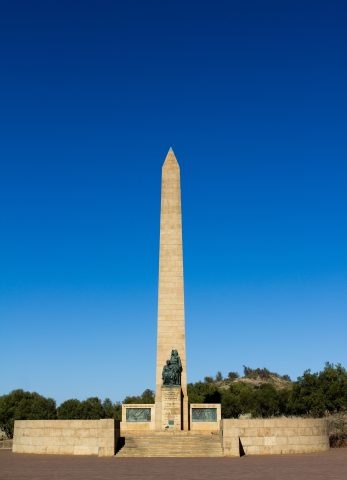
The architecture here is unassuming, and that’s part of its charm. The neoclassical rotunda at the center feels like a nod to the days when Bloemfontein aspired to be a European-style city. Nearby, old lampposts and worn stone benches still stand, their surfaces smoothed by decades of use. In the northern part of the park, a memorial honors the women and children who perished in concentration camps during the Anglo-Boer War. Few tourists pause here, but for locals, it’s a place of quiet reflection, a marker of a painful chapter in the country’s past.
King’s Park has always been woven into the fabric of the city. In the early 1900s, it hosted flower shows and Sunday concerts where orchestras played waltzes and marches. Later, as Bloemfontein became South Africa’s judicial capital, the park became a place where lawyers and judges strolled during breaks in court proceedings. Today, you’ll still find students from the nearby university lounging on the grass, mothers pushing strollers, and elderly visitors reading newspapers or simply enjoying the quiet. On weekends, street musicians sometimes perform, briefly reviving the park’s old sense of occasion.
Unlike many historic sites, King’s Park hasn’t been turned into an open-air museum. There are no explanatory plaques or roped-off paths—just a space that continues to exist as part of the city’s daily rhythm. That’s what makes it feel alive. You can visit in the early morning, when the sun is still low and the park is just waking up, birds flitting between branches while the first visitors amble along the paths. Or you might stay until evening, when the lampposts glow softly, and the place seems suspended in time.
For those who do make their way to Bloemfontein, King’s Park offers a glimpse of the city as locals know it—not polished for visitors, but lived in. There are no crowds, no souvenir stands, no flashy attractions. Instead, there’s a sense of quiet continuity, as if history here isn’t something that happened long ago but something that’s still unfolding. Sit on a bench near the rotunda, and you’ll see the city go about its day: schoolchildren passing by, someone feeding ducks by the pond, an old man making his way down the path with a cane. In moments like these, the park reveals itself not just as a green space, but as a piece of Bloemfontein’s soul.