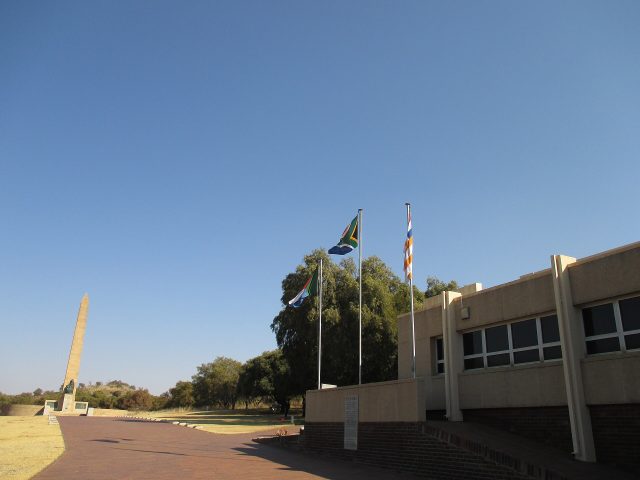
The National Women’s Monument in Bloemfontein is a place where South Africa’s history feels heavier than stone. It stands as a quiet testament to the thousands of women and children who perished in British concentration camps during the Anglo-Boer War, a conflict that left deep scars on the country. The war, fought at the turn of the 20th century, was brutal not just on the battlefield but in the lives it shattered behind the lines. The camps, meant to house Boer families, became sites of suffering—hunger, disease, and neglect took a devastating toll. The monument doesn’t just mark an event; it forces you to confront the human cost of war, especially for those who had no part in the fighting.
The design of the monument is simple but powerful. At its heart is a tall sandstone obelisk, its clean lines unbroken except for the bronze figure at its peak—a woman cradling a dying child in her arms. Sculpted by Anton van Wouw, the statue captures grief and resilience in equal measure. The surrounding park is modest, with neatly kept lawns and trees that offer shade and silence. There are no grand flourishes here, no ornate details to distract from the weight of what the monument represents. The restraint in its architecture mirrors the gravity of its purpose.
The monument was unveiled in 1913, more than a decade after the war ended. Its creation was driven by Boer women who had survived the camps and their descendants, who wanted to honor those who didn’t live to see peace. Funds were raised through donations across the country, a reflection of how deeply the war had touched the nation. For many Afrikaners, the monument remains a symbol of a defining chapter in their history, one that shaped their identity and collective memory.
Visiting the monument is more than a historical stop—it’s an encounter with the past. The conditions in the camps were appalling. Families were herded into overcrowded tents, where disease spread rapidly and medical care was nearly nonexistent. Thousands died, many buried in unmarked graves. The monument serves as a collective memorial for those whose names were lost to time. Every year, on Remembrance Day, descendants gather here to pay their respects, their presence a reminder of how the past lingers in the present.
Yet the monument doesn’t feel like a place of despair. Instead, it speaks to the strength of those who endured. The women who survived the camps didn’t just endure—they preserved their language, culture, and traditions, passing them down through generations. Their resilience became the foundation for rebuilding their communities. Today, the monument is a place for reflection, where visitors can consider how that history shaped modern South Africa. There’s no room for political debate here, only memory and respect.
The area around the monument is worth exploring as well. Bloemfontein, known as the City of Roses, is a place of parks and gardens, and the monument sits in a quiet corner of the city, away from the bustle. Nearby, the War Museum offers a deeper look at the era, with exhibits that include photographs, documents, and personal belongings from the camps. The museum is small but thoughtfully curated, designed to inform without overwhelming, letting the stories speak for themselves.
For many South Africans, the National Women’s Monument is a place of pilgrimage. Families come here to teach their children about the past, to show them why history matters. You’ll often see people sitting quietly on benches, lost in thought, or hear soft conversations in Afrikaans. The monument isn’t a typical tourist attraction—it exists for those who want to understand the forces that shaped the country and to honor the lives lost along the way.
The passage of time hasn’t diminished the monument’s significance. It remains a powerful reminder that war isn’t just about battles and victories; it’s about broken lives, loss, and grief. The monument doesn’t call for vengeance or hatred. Instead, it invites reflection, a chance to learn from the past so as not to repeat its mistakes. Visiting here is an opportunity to engage with history, one that, despite its tragedy, remains an essential part of South Africa’s story. For some, it’s a place of mourning; for others, a symbol of endurance. For many, it’s simply a quiet space to sit and think.