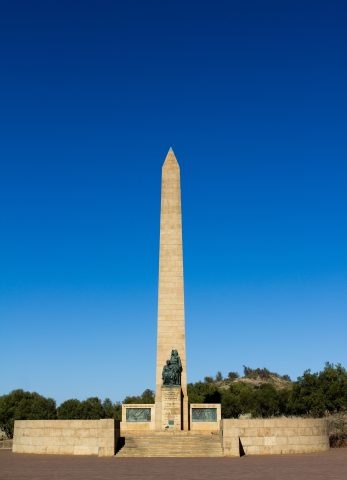
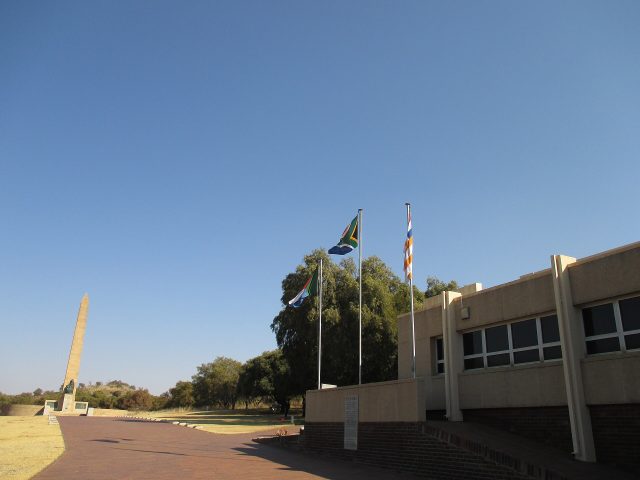
The First Raadsaal Monument in Bloemfontein is one of those places you don’t stumble upon by accident. It sits on a quiet hill just outside the city, where the noise of urban life fades into the stillness of the open land. To reach it, you turn off the main roads and follow a winding path upward, leaving behind the bustle of the streets below. The monument itself is unassuming—a simple granite obelisk with bronze reliefs, enclosed by a low fence. Yet this modest structure marks a pivotal moment in South Africa’s history, when the fate of two Boer republics, the Orange Free State and the Transvaal, was being decided. It was here that the first symbol of their independence took shape, long before the wars and upheavals that would follow.
The story of the monument begins in the late 19th century, a time of tension and defiance for the Boers, descendants of Dutch settlers who had carved out a life in southern Africa. In 1899, on the eve of the Anglo-Boer War, leaders from the Orange Free State and the South African Republic gathered at this spot to formalize a military alliance. Bloemfontein, then the capital of the Orange Free State, was a natural choice for such a meeting. The hill where the monument now stands was considered strategically significant, offering a clear view of the surrounding land. Today, the events that unfolded here are distant echoes, but the monument remains a quiet testament to how fragile peace can be—and how swiftly political decisions can alter the lives of thousands.
The design of the monument is straightforward yet striking. The four-meter-tall granite stele, dark and weathered, contrasts sharply with the bronze panels that wrap around its base. These reliefs depict scenes from Boer life: ox wagons rolling across the veld, battles fought under the African sun, and the moment when two presidents—Martinus Steyn and Paul Kruger—shook hands to seal their alliance. The craftsmanship is precise, capturing the determination and hardship of a people who saw themselves as fighting for their very existence. Around the monument, a small park has been laid out with neatly trimmed lawns and benches, offering a place to sit and look out over the city sprawling below.
For many South Africans, especially those of Boer descent, the Raadsaal Monument is more than just a historical marker. It’s a place where memory is kept alive, where the past feels closer than it does in the pages of a textbook. Throughout the year, the site hosts events that celebrate Boer culture—folk music festivals, exhibitions of old photographs, gatherings of descendants of war veterans. The most poignant moments come in late May, during Remembrance Day, when families of veterans and survivors make their way to the monument. The atmosphere is solemn, filled with the sound of old songs and the recitation of poetry, while children play on the grass, only half-understanding the weight of the occasion.
Bloemfontein itself seems far removed from the turmoil of that era. Today, it’s a typical South African city—spacious, green, and unhurried, with wide streets and parks that invite leisurely strolls. Yet traces of the past are still visible if you know where to look. The city center retains some colonial-era buildings, and local museums house artifacts that tell the story of the Boer republics. But the Raadsaal Monument is where that history feels most tangible. Standing on the hill, you can almost hear the echoes of the debates and decisions that once took place here, long before the war that would reshape the region forever.
A visit to the monument doesn’t take long, but it leaves an impression that lingers. On the surface, it’s just a stone pillar on a hill, but it also represents an entire era—one that ended in defeat for the Boers and the beginning of British dominance. The war that followed the alliance signed here brought immense suffering: concentration camps, the deaths of civilians, and the destruction of farms. The monument doesn’t spell out these horrors, but its silence speaks volumes. It serves as a reminder that independence is never just about victories; it’s also about the hard lessons that come with them, lessons that shouldn’t be forgotten.
The land around the monument stretches out in all directions, vast and open, with sheep grazing on the dry grass and the distant outlines of modern buildings on the horizon. The climate here is harsh but beautiful—hot summers, cool winters, and infrequent rains. On clear days, the view from the hill is expansive, and it’s easy to imagine the scene over a century ago, when men stood in this very spot, looking out at the same landscape and contemplating the future. They couldn’t have known then that their alliance would be short-lived, or that the war ahead would change South Africa in ways no one could have predicted.
Today, the Raadsaal Monument is a place where history is taught—not just to tourists, but to schoolchildren who visit on field trips. Teachers use the site to explain how the country was shaped, talking about the heroes and the mistakes of the past. For the children, it’s just another lesson, but for adults, it’s a reminder that the events commemorated here still resonate in modern South Africa. In a country where debates about colonialism and racism remain unresolved, such places take on a deeper significance. They force us to remember that history isn’t just a collection of dates and facts; it’s made up of real lives, real struggles, and real consequences.
If you find yourself in Bloemfontein, it’s worth making the short trip up the hill to the monument, even if just for a little while. There are no crowds here, no souvenir shops or noisy cafes—just the wind, the quiet, and the stone that bears witness to a time when people believed in their cause with all their hearts. Perhaps that’s the monument’s greatest value: it doesn’t try to persuade or impose a single version of history. It simply stands, a silent observer of the past, a place where you can pause and reflect on what it truly means to be free.