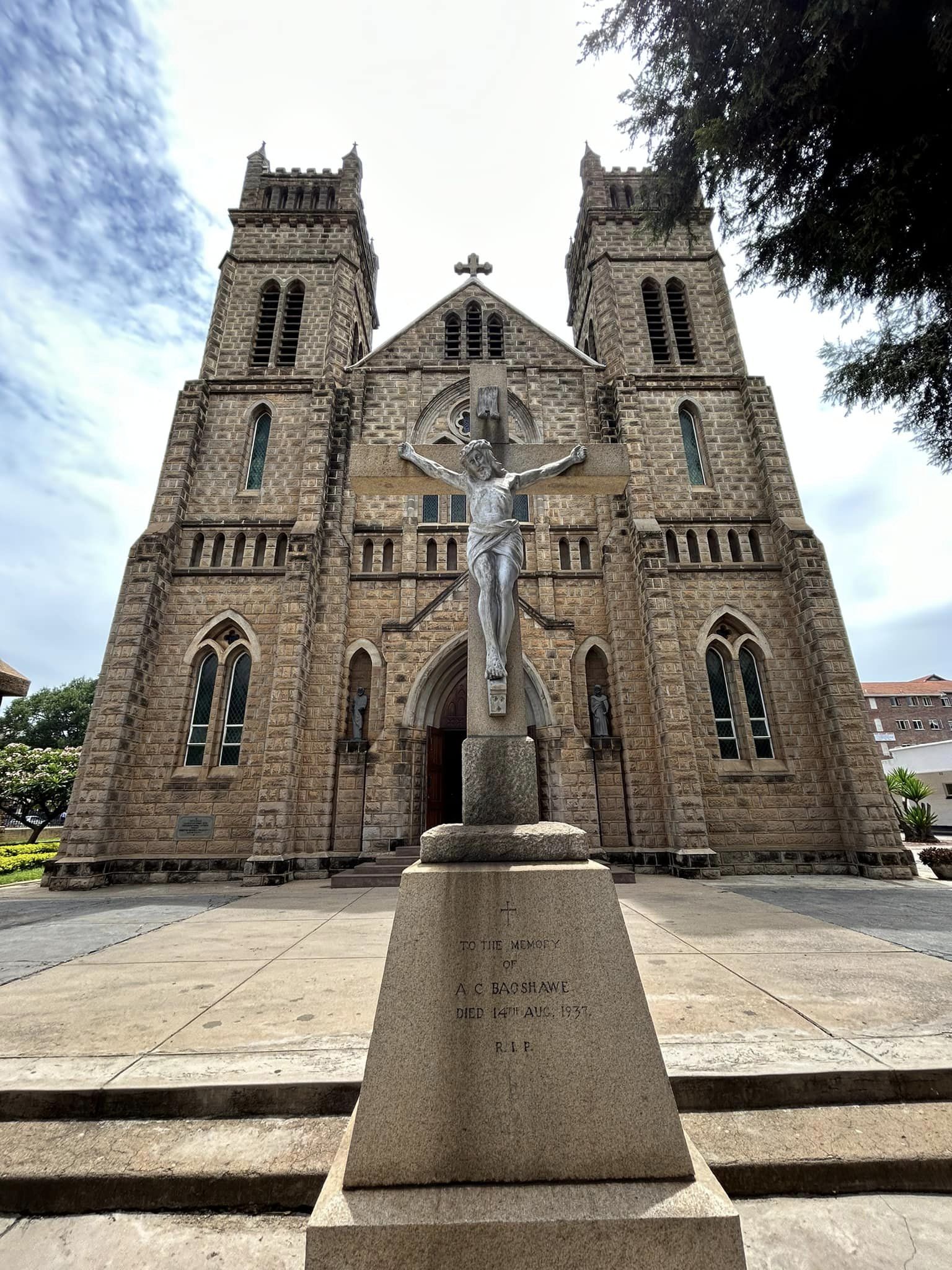
Sacred Heart Cathedral stands on a gentle rise in the heart of Harare, a quiet witness to Zimbabwe’s transformations over the past century. Built in the early 1900s, when the country was Southern Rhodesia and the city was Salisbury, the cathedral was among the first stone structures erected for faith rather than administration or commerce. The Catholic community here was small then, and the church marked its presence. Today, it overlooks a city that has grown from a colonial settlement into an independent capital, where Christianity and local traditions blend, and European architecture meets African rhythms.
The cathedral’s red-brick walls, imported because local materials weren’t suitable, give it a solid, unassuming look. The clock tower, once a landmark for residents, now shares the skyline with modern high-rises. Heavy wooden doors frame the entrance, above which a stained-glass window of Christ casts soft light inside. The space feels open, though by European standards, it’s modest. There’s no gilding or marble—just simplicity.
The altar, carved from local wood, bears African motifs. Frescoes on the walls depict biblical scenes set in Zimbabwean landscapes, with angels resembling local people. This fusion makes faith feel rooted in the land. In the side chapels, old photographs show European missionaries alongside early congregants, many converted by those same priests.
Sacred Heart Cathedral is a crossroads of histories. During colonial rule, it symbolized European influence; after independence, it adapted. Services are held in English, Shona, and Ndebele, reflecting the country’s diversity. On feast days, traditional hymns mix with African melodies, and worshippers wear national dress. On weekdays, the only sound is the occasional peal of bells drifting over the city.
A small garden surrounds the cathedral. Parishioners gather there after services to talk or rest. On holidays, the garden is decorated, and meals are shared on the lawn. The cathedral isn’t isolated—it’s part of daily life. Nearby, the parish school, one of Harare’s oldest, educates children from all backgrounds, its lessons tied to the church’s values.
The cathedral has endured wars, political upheavals, and economic crises. In difficult times, it has been a refuge, and its priests have mediated conflicts. Today, it remains a place of stability. While it doesn’t host political rallies, it organizes charitable efforts—feeding the hungry, supporting hospitals, and running shelters. It continues the mission it was built for: serving people, regardless of origins or beliefs.
Visiting Sacred Heart Cathedral isn’t just about history. You can walk in, sit on a pew, and listen to the quiet or the sounds of the city outside. The doors are open to everyone on weekdays. On feast days, the cathedral fills with light, music, and people, showing why this place matters to Harare.
Harare is a city of contrasts, where modernity and tradition coexist. Sacred Heart Cathedral is one of those places where they don’t clash but fit together. It’s not a museum, though it holds history. It’s a living church, still bringing people together, offering hope, and reminding them that faith, like life, has no boundaries.