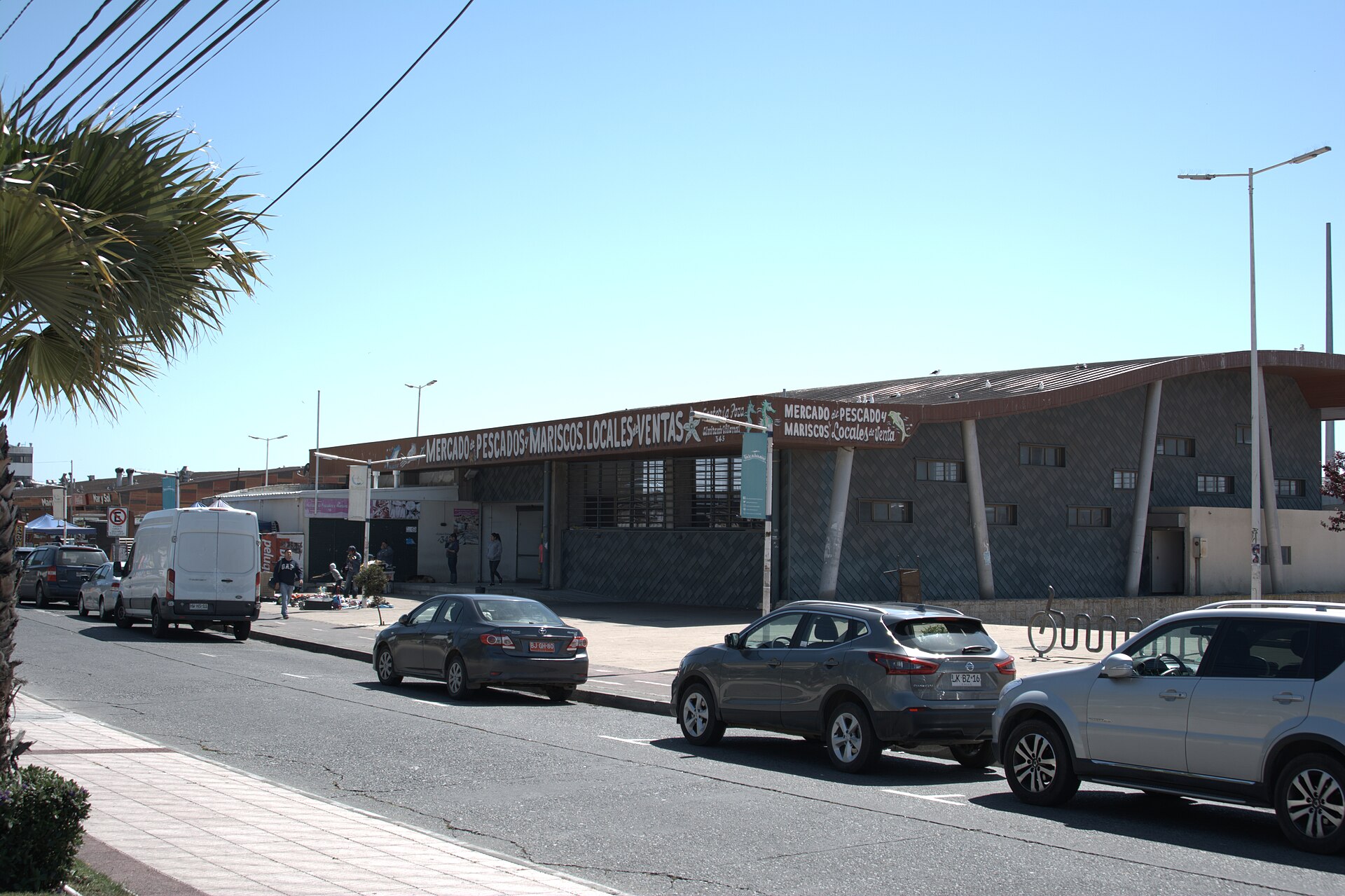
Talcahuano’s market is the kind of place where a city shows its true face, unfiltered and unpolished. It doesn’t follow the script of tourist-friendly bazaars with their neatly arranged stalls and rehearsed sales pitches. Instead, it hums with the rhythm of daily life—the scent of fresh fish mingling with the murmur of voices speaking rapid-fire Spanish, the scrape of wooden crates being dragged across concrete, the occasional shout of a vendor calling out prices. This isn’t just a market; it’s a living thing, shifting with the time of day, the season, even the mood of the city itself.
Perched on the edge of the Pacific, Talcahuano has always been a town shaped by the sea. Fishermen set out before dawn, and by mid-morning, their catch is spread across the market’s tables. You’ll find everything the ocean has to offer here—familiar mussels and shrimp alongside stranger delicacies like sea urchins or the occasional sea snail. But the market isn’t just about seafood. Winding through its narrow alleys, you’ll pass stalls piled high with ripe fruit, bundles of herbs, wheels of local cheese, and loaves of bread still warm from the oven. Small eateries tucked between the vendors serve steaming bowls of fish soup made with the morning’s catch or sear scallops right in front of you, the sizzle of the grill cutting through the chatter.
The market’s story is woven into Talcahuano’s own history. The town has weathered its share of disasters—earthquakes, tsunamis, fires—but each time, it has rebuilt, and the market has been at the heart of that revival. In the mid-20th century, it wasn’t just a place to buy groceries; it was where deals were struck, news was exchanged, and politics were debated over cups of strong coffee. Even now, with supermarkets dotting the city, the market hasn’t lost its role as a social hub. For many locals, it’s still the place to catch up with neighbors, swap gossip, or simply watch the day unfold.
There’s nothing grand about the market’s architecture. It’s not a monument of marble and glass but a patchwork of corrugated metal roofs and open-air stalls, connected by narrow passages that force you to sidestep your way through. The layout is purely practical—every inch of space is used, with counters jammed together and aisles so tight you might have to turn sideways to pass. Yet that very crampedness gives the place its energy. It feels like stepping into the city’s pulse, where there’s no room for pretense, only the raw, unvarnished rhythm of trade.
The day starts early here. By six in the morning, the market is already alive—fishermen unloading their haul, vendors arranging their goods, and the first wave of shoppers, mostly local women, arriving for the day’s freshest picks. By noon, the place is at its busiest, a cacophony of voices, clattering dishes, and the sharp tang of smoked fish mixing with the sweetness of ripe mangoes and the earthy aroma of spices. As evening falls, the crowds thin, but the market doesn’t empty completely. A few stalls stay open late, and the cafés still buzz with customers lingering over wine or plates of fried fish.
For visitors, the market offers a glimpse of Chile that’s far removed from postcard-perfect scenes. There are no trinket shops hawking English-language souvenirs, no vendors aggressively pushing their wares. Instead, there’s the real, unscripted life of a port town—where every stall has a story, and every transaction feels personal. You might buy a kilo of mussels and have the vendor show you how to clean them, or order a bowl of *caldo de congrio*, the rich fish soup that’s a Chilean staple. If you’re lucky, an old fisherman might share tales of the sea, spinning yarns about the days when he cast his nets in these same waters decades ago.
The market is also a place where you can’t escape the ocean’s presence. Talcahuano’s identity is tied to the sea, and that connection is palpable here. Even if you can’t tell a hake from a halibut, the vendors will happily explain the difference, offering tips on how to cook each fish or why today’s catch is particularly fresh. If you time it right, you might even see a large fish being cleaned and filleted on the spot—a messy, fascinating process that sticks in your memory long after you’ve left.
Of course, the market isn’t perfect. It can be loud, crowded, and occasionally chaotic, with puddles of water underfoot and the occasional stray cat weaving between the stalls. But that’s part of its charm. This isn’t a sanitized tourist attraction; it’s a place where life happens in all its messy, vibrant reality. You could spend an hour here or an entire afternoon, watching the ebb and flow of customers, the way the light shifts across the stalls, the way the day’s energy slowly winds down as the sun dips behind the rooftops. Talcahuano’s market isn’t just a place to shop—it’s a slice of Chilean life, unfiltered and alive, worth experiencing at least once.