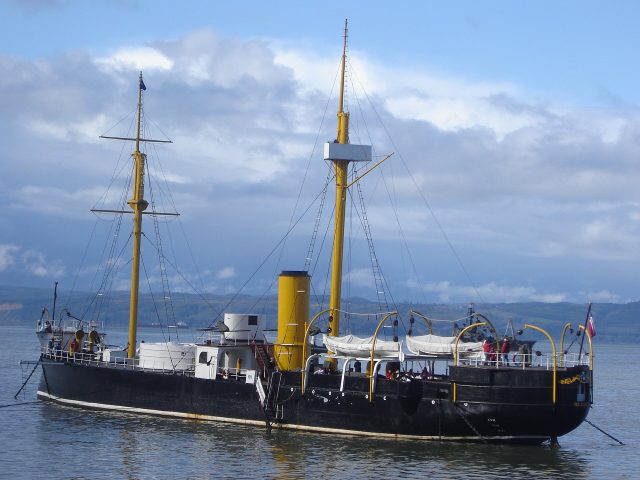
The *Huáscar* isn’t just a museum ship—it’s a time capsule afloat in the harbor of Talcahuano, where every rivet and plank carries the weight of a turbulent past. Built in mid-19th-century Britain for the Peruvian navy, this ironclad warship became a legend not only for its military prowess but for the dramatic twists of fate that saw it change hands and nations. Today, it rests at anchor in Chile’s busiest port, offering visitors a rare chance to step directly into history without the filter of glass cases or reconstructed sets.
What makes the *Huáscar* truly extraordinary is its survival. It’s the last remaining ship of its class, a relic of an era when naval warfare was defined by brute force and iron plating. The vessel’s armored hull, designed to withstand cannon fire, still bears the scars of battle, while its massive turret guns loom over the deck like silent sentinels. Inside, the ship remains remarkably intact—narrow passageways lead to cramped officers’ quarters, the engine room hums with the ghostly presence of its old steam boilers, and the decks echo with the imagined shouts of sailors long gone. Walking through its corridors, you can almost feel the heat of the furnaces and the tension of a ship preparing for combat.
The *Huáscar*’s story is inseparable from the War of the Pacific, one of South America’s most bitter conflicts. In 1879, it played a pivotal role in the Battle of Angamos, where the Peruvian fleet was decisively defeated by Chile. Captured and repurposed under the Chilean flag, the ship went on to serve in blockades and naval operations, becoming a symbol of victory for one nation and a painful reminder of loss for another. Today, it stands as a bridge between Chile and Peru, a physical testament to how war reshapes borders, identities, and collective memory.
Talcahuano itself is a city shaped by the sea. Its harbor has always been its lifeblood, and the *Huáscar* fits naturally into the landscape, moored where the waves of Concepción Bay lap against the docks. The air carries the scent of salt and seaweed, mingling with the distant clatter of fishing boats and the occasional cry of gulls. Unlike tourist-heavy destinations, Talcahuano moves at its own unhurried pace, allowing visitors to approach the ship not as a spectacle but as a living piece of history. A stroll along the waterfront, past small seafood cafés and weathered piers, only deepens the sense of connection to the past.
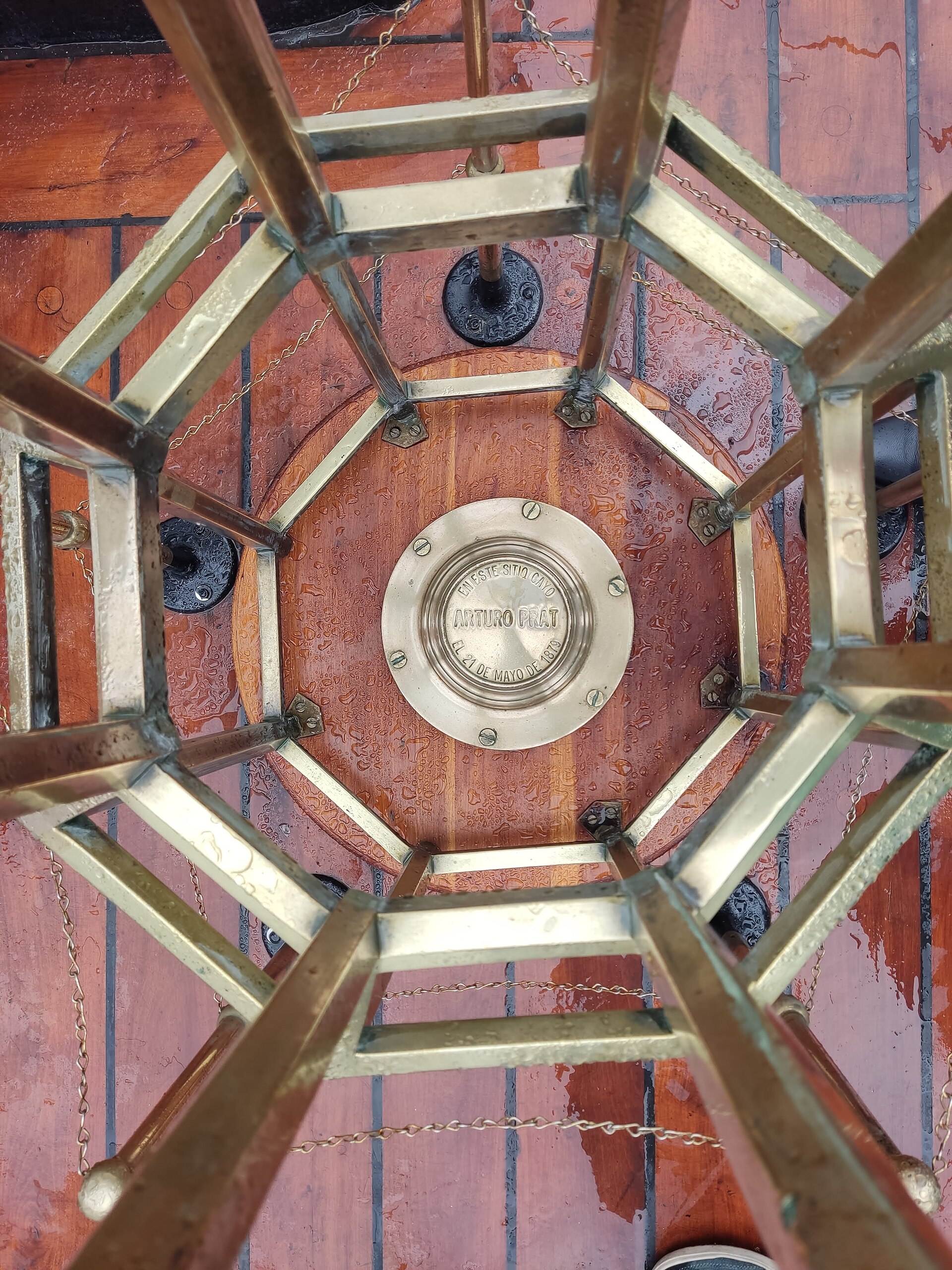
The museum aboard the *Huáscar* is designed to immerse rather than merely inform. Original artifacts—from the wooden furniture in the officers’ cabins to the battle-scarred gun turrets—paint a vivid picture of life at sea in the 19th century. Exhibits don’t just recount the ship’s technical specifications; they tell the stories of the men who served on it, from the grueling routines of sailors to the chaos of naval engagements. The Battle of Angamos, in particular, is given careful attention, its significance woven into the very fabric of the ship’s identity. Standing in the shadow of the guns that once fired on enemy vessels, it’s impossible not to reflect on the human cost of war.
For naval history enthusiasts, the *Huáscar* is a treasure. Unlike reconstructed ships or static displays, this is the real thing—a vessel that has weathered battles, storms, and decades of neglect before being restored with painstaking care. Restorers have preserved as much of the original structure as possible, from the worn teak decks to the soot-stained boilers in the engine room. The ship’s condition is a delicate balance between authenticity and preservation; some areas show their age, but that only adds to the sense of stepping into another era. It’s easy to imagine the *Huáscar* cutting through the waves, its engines roaring, its crew at battle stations.
Visiting the *Huáscar* is more than a history lesson—it’s a meditation on impermanence. The ship has outlived its builders, its enemies, and even the empires that once claimed it. It has been a weapon, a trophy, and now a monument, bearing witness to an age when naval power could decide the fate of nations. For Chile, it’s a point of national pride; for Peru, a lingering echo of defeat. For the rest of the world, it’s a rare opportunity to touch a piece of history that refuses to be confined to textbooks. The ship’s silent decks and creaking timbers seem to whisper of the lives it carried, the battles it fought, and the quiet dignity of a machine that once shaped the world.
Talcahuano, with its unassuming charm, is the perfect setting for the *Huáscar*. There are no flashy attractions or crowds here, just the steady rhythm of a working port and the quiet presence of a ship that has seen too much to be forgotten. The museum doesn’t try to dazzle with technology or spectacle; instead, it invites visitors to slow down, to listen to the wind in the rigging, and to imagine the weight of history pressing down on every plank. If you find yourself in this corner of Chile, the *Huáscar* is worth visiting—not for the photos, but for the chance to stand where sailors once stood, to feel the past breathing beneath your feet.