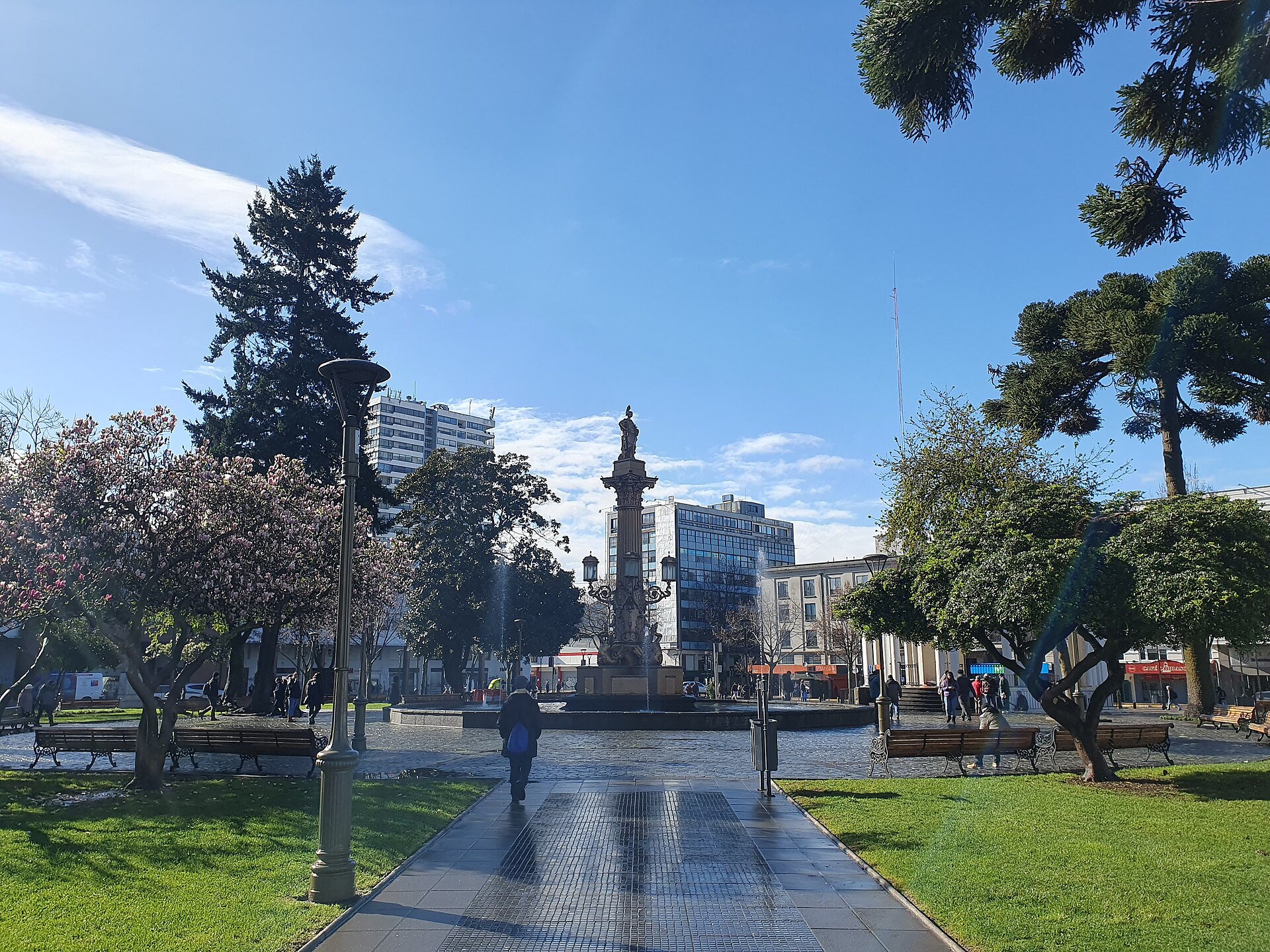
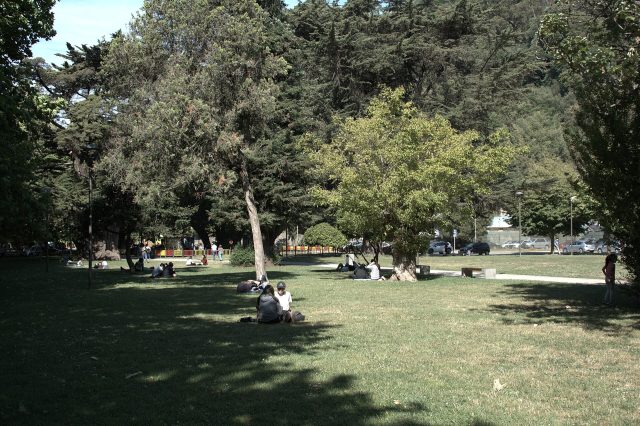
Plaza de la República is one of those quiet corners where a city reveals its true character. In Talcahuano, a port town with salt in its veins, this small square sits at the heart of daily life, where the rhythm of the streets slows just enough to let you notice the details. It’s not grand or imposing—just a modest patch of pavement framed by trees, benches, and low-rise buildings that have seen generations come and go. Here, the past isn’t locked away in museums; it lingers in the worn wooden shutters of the surrounding houses, the way the light falls on the cobblestones in the late afternoon, and the easy conversations between neighbors who’ve known each other for years.
Talcahuano has always been a city shaped by the sea, and even here, a few blocks inland, you can sense it—the faint tang of salt in the air, the distant hum of dockwork, the way the wind carries the sound of gulls. In the 19th century, this was the kind of place where ships from Europe and the Americas unloaded their cargo, where merchants haggled over prices in the shade of these same trees, and where sailors swapped stories before heading back to sea. The square was the crossroads of it all, a place where the town’s pulse was strongest. Today, the port is quieter, the trade routes have shifted, but if you look closely, you can still see traces of that era in the architecture. The buildings around the plaza are unassuming—two or three stories tall, their facades painted in soft blues, yellows, and whites—but they carry the marks of time: wrought-iron balconies, ornate cornices, and heavy wooden doors that once swung open to welcome travelers and traders.
There’s something unhurried about Plaza de la República, as if the square itself resists the rush of modern life. The pace here is set by the people who use it: the elderly man reading a newspaper on a bench, the mother pushing a stroller, the group of teenagers laughing outside a corner shop. In the evenings, when the streetlights flicker on, the square takes on a different mood. The glow from the cafés spills onto the pavement, and the chatter of patrons blends with the distant sound of waves breaking against the shore. It’s the kind of place where you might linger longer than you intended, watching the day slip into night.
Unlike the grand plazas of Santiago or Valparaíso, Plaza de la República isn’t a stage for grand events or monumental statues. It’s more like a living room for the city—a space where life unfolds without fanfare. On weekends, local musicians sometimes set up near the fountain, playing folk songs that drift through the air. During festivals, the square is strung with lights, and families gather to eat empanadas and dance cueca. But even on ordinary days, there’s a sense of community here, the kind that comes from shared routines and small, unremarkable moments.
Talcahuano isn’t a place that draws crowds of tourists, and that’s part of its appeal. The city moves at its own pace, untroubled by the need to impress. Plaza de la República offers a glimpse into that rhythm. In the mornings, vendors set up stalls selling fresh fruit and vegetables, their voices mingling with the clatter of market carts. By midday, the scent of coffee and baked bread drifts from the cafés, and in the afternoons, the square empties slightly, as if the town itself is taking a siesta. It’s a place where you can sit on a bench, watch the world go by, and feel the weight of history in the quietest of ways.
The sea has always been Talcahuano’s lifeblood, and the square is no exception. In the 19th century, when the port was one of the busiest on Chile’s Pacific coast, this was where travelers paused before heading inland or south toward Patagonia. The plaza was a waypoint, a place where paths crossed—those of sailors, merchants, and locals going about their business. Today, the docks are less bustling, but if you wander the nearby streets, you’ll find old warehouses and piers that hint at the city’s past. Some have been repurposed, others left to weather the years, but they all tell the same story: of a town that grew up around the water, shaped by its tides and its trade.
Talcahuano has faced its share of hardships. Earthquakes and tsunamis have left scars on the city, and the plaza, like much of the town, has been rebuilt more than once. But there’s a resilience here, a quiet determination to carry on. The square isn’t polished or pristine—it’s lived-in, with all the imperfections that come with time. That authenticity is what makes it special. It’s not a postcard-perfect destination, but a place where you can feel the pulse of real life, unfiltered and unscripted.
If you find yourself in Talcahuano, don’t rush straight to the waterfront or the port. Take a moment to wander Plaza de la República first. Sit on a bench, order a coffee at one of the small cafés, and watch how the light changes as the day goes on. Maybe you’ll strike up a conversation with a local, or maybe you’ll just listen to the sounds of the city—the laughter of children, the clink of glasses, the distant roar of the ocean. In a world where so many places feel staged for visitors, this square offers something rare: a sense of belonging, not to a tourist attraction, but to a community. And sometimes, that’s where the real magic of travel lies.