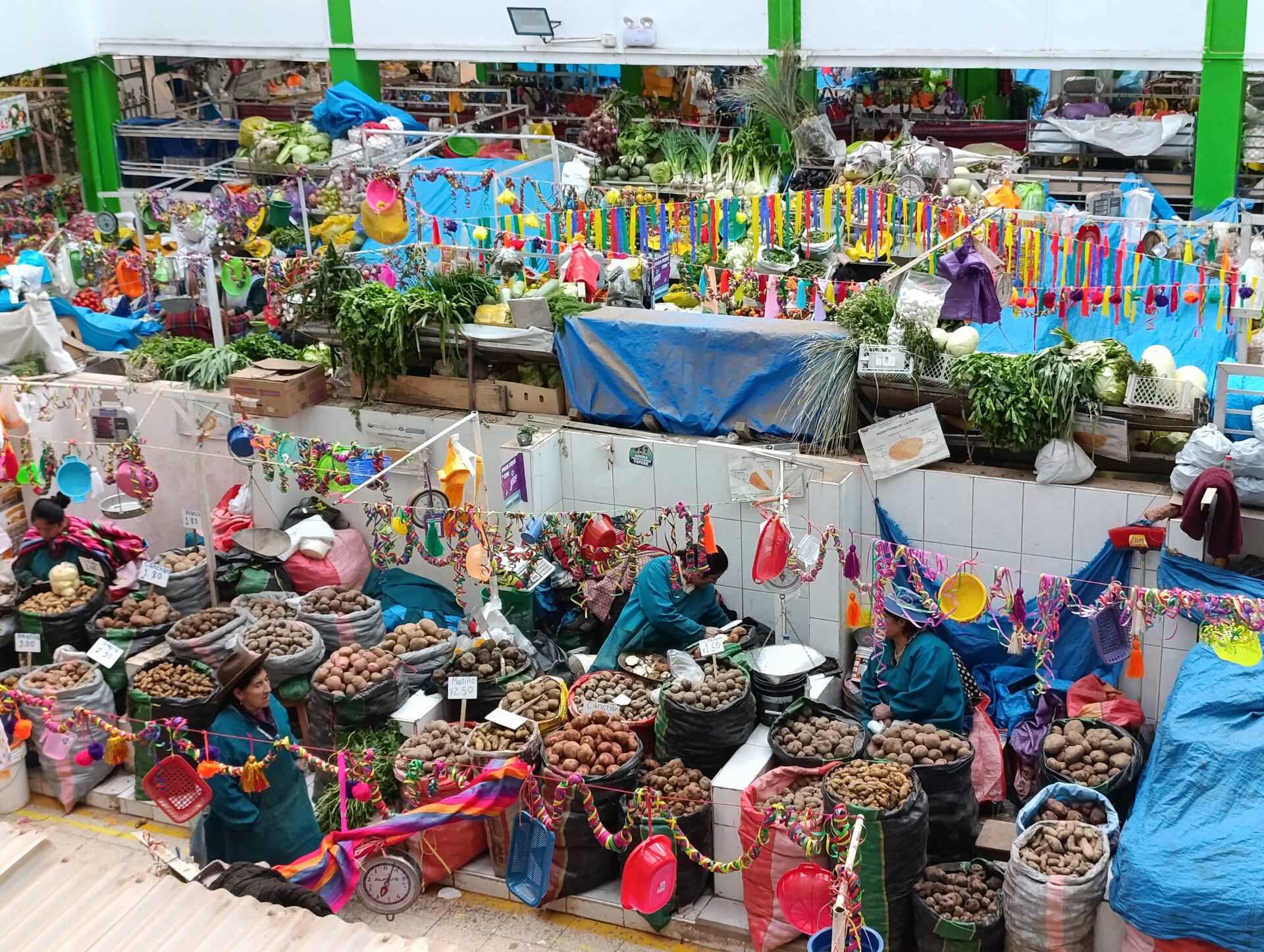
San Sebastián Market in Cusco is one of those rare places where the city reveals itself without pretense—no polished tourist veneer, just the raw, unfiltered pulse of Peruvian life. It’s smaller than the famous San Pedro Market and far less crowded with visitors, which is precisely why it feels so authentic. Tucked away in the district of the same name, this market exists in a part of Cusco that was once a separate village before the city expanded around it. Even now, it retains a distinct character, a quiet resistance to the urban sprawl that has swallowed so much of the surrounding area.
The market’s history is woven into the fabric of San Sebastián itself. Long before it became part of Cusco, this district was a hub for artisans, traders, and farmers from the nearby valleys. During colonial times, it hosted lively fairs where goods from across the region—alpaca wool, corn, and the hundreds of potato varieties Peru is known for—changed hands. What began as temporary stalls eventually grew into a permanent market, though even today, trade spills onto the streets, especially on weekends when farmers from outlying villages arrive with their produce. The market hasn’t changed much in essence; it’s still a place where commerce happens in the most straightforward way possible.
The architecture here is purely functional, designed for utility rather than aesthetics. There are no grand facades or ornate details—just low ceilings, concrete counters, and brightly colored awnings that provide shade over the stalls. The market is divided into sections: meat, fish, vegetables, dairy, and a few rows of prepared food and souvenirs. Everything is arranged for efficiency, with no frills or unnecessary embellishments. It’s not a place that tries to impress; it simply exists, serving its purpose day after day.
What draws people to San Sebastián Market isn’t the promise of Instagram-worthy moments or curated experiences. Instead, it’s the atmosphere—the unscripted rhythm of daily life. Here, you won’t find tourists posing for photos in front of every stall. What you will see are locals doing their weekly shopping, women in traditional embroidered clothing, elderly men haggling over potatoes, and children helping their parents unload goods. The sounds of the market are a mix of Spanish and Quechua, the shouts of vendors, the hum of motorcycles delivering supplies, and the unmistakable aromas of fresh bread, grilled meat, and spices that fill the air.
If you arrive early in the morning, you’ll witness the market coming to life. Vendors arrange their goods, prepare the first batches of food, and negotiate with wholesalers. The meat section is particularly fascinating—Peruvians approach it without sentimentality. Whole carcasses are butchered in plain sight, and vendors skillfully carve off cuts with practiced precision, weighing them on old mechanical scales. The fish section is equally worth exploring, offering not just familiar trout or sea fish but also more unusual varieties, like dried or smoked fish from Lake Titicaca.
For anyone curious about Peruvian cuisine beyond the tourist-friendly versions served in downtown restaurants, this is the place to eat. The food here is simple, hearty, and unpretentious—exactly what locals eat every day. You can try a bowl of *chuchuca*, a thick chicken soup with corn and potatoes, or *anticuchos*, skewers of grilled beef heart cooked over charcoal right on the street. Another dish to look for is *picante de cuy*, a spicy guinea pig stew considered a delicacy in the Andes. The flavors are bold and unapologetic, just like the market itself.
Beyond being a place to buy groceries or grab a meal, San Sebastián Market functions as a social hub for the neighborhood. It’s where people catch up with neighbors, share news, and swap recipes. For many vendors, the market isn’t just a job—it’s a way of life passed down through generations. Some families have been selling here for decades, their stalls becoming fixtures of the market. You’ll notice how vendors remember their regular customers by name, how they banter, argue, and ultimately find common ground. It’s a community in the truest sense.
This isn’t the kind of place you visit for a quick photo op or to tick off a bucket-list item. It’s where you go to see Cusco as it really is—once the tourist trails fade and the city settles into its everyday rhythm. There are no sleek displays or designer touches here, just the quiet authenticity of a place that has remained largely unchanged. If you want to understand Peru beyond Machu Picchu and colonial plazas, San Sebastián Market offers a glimpse into the life that continues, unnoticed by most, in the heart of the city. Sometimes, the most meaningful experiences come from simply standing aside and watching the world go by.