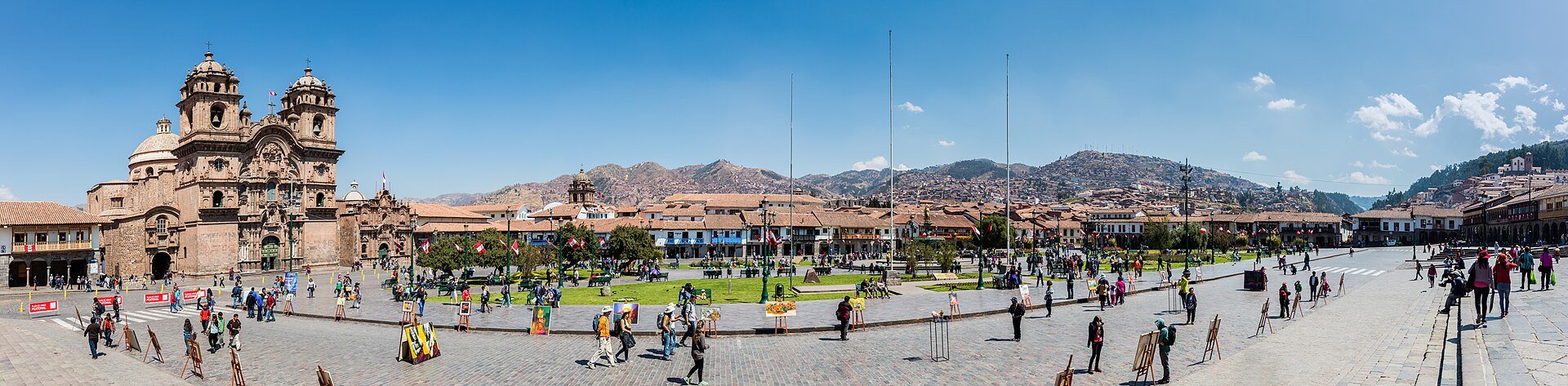
San Sebastián’s Plaza de Armas is where a town shows its soul. The square carries no grand ambitions—just the rhythm of daily life in the Peruvian highlands. Low, earth-toned buildings with wooden balconies and terracotta roofs frame it. Their weathered facades soften with time. At its center, a modest fountain trickles water into a stone basin, a gathering spot for locals in the cooler hours.
Plaza de Armas was laid out during the colonial era. Such spaces served as civic hubs and symbols of Spanish authority. Parades, proclamations, and public sentencing once took place here. Today, those echoes are faint. The square’s symmetry remains—a rectangular grid with evenly spaced buildings. Over time, the plaza has been reclaimed by the people who live around it. The Spanish built it; the locals shaped it.
The buildings around the plaza mix colonial practicality with Andean adaptation. Stone and adobe structures feature carved wooden doors and shutters, once essential for blocking the highland sun and dust. Second-story balconies, a colonial hallmark, also provided shade. Now, many house small cafés, artisan workshops, or family-run guesthouses. The charm is in the details: light catching the rough texture of walls in late afternoon, or the scent of roasting corn drifting from a nearby kitchen.
The fountain at the plaza’s heart is a 19th-century addition. Water cascades from one shallow basin to another. Children dart around its base. Elderly men play cards on nearby benches. It’s a place to pause, to chat, to let time slip by. On hot afternoons, the shade of the trees and the cool mist offer respite from the Andean sun.
Evenings bring life to the plaza. The day’s heat fades. Locals stroll along the perimeter, stopping to greet one another. Sometimes, a guitarist or flutist plays, their music blending with conversation. Tourists are rare. That makes it feel real.
Just off the plaza stands the Church of San Sebastián. Its facade is simple, almost austere. Inside, wooden saints and faded frescoes tell a story of Catholicism intertwined with indigenous beliefs. The church, like the town, exists in two worlds: honoring traditions while adapting to the present.
Plaza de Armas is a starting point for exploring. Narrow streets wind upward, offering glimpses of the valley below or the distant Andes. San Sebastián is small enough to traverse in an hour or two. The pleasure isn’t in checking off sights—it’s in wandering. Duck into a shop selling handwoven textiles. Pause at a family-run eatery where the menu revolves around corn, potatoes, and guinea pig.
What makes San Sebastián special is what it doesn’t have. No crowds like Cusco. No tourist traps like Machu Picchu. No sense of being on a stage. Here, life unfolds at a human scale. The plaza isn’t a destination; it’s where people live, where children play, where old friends catch up over coca tea.
If you find yourself here, don’t hurry. Sit on a bench. Watch the light change over the rooftops. Let the town reveal itself.