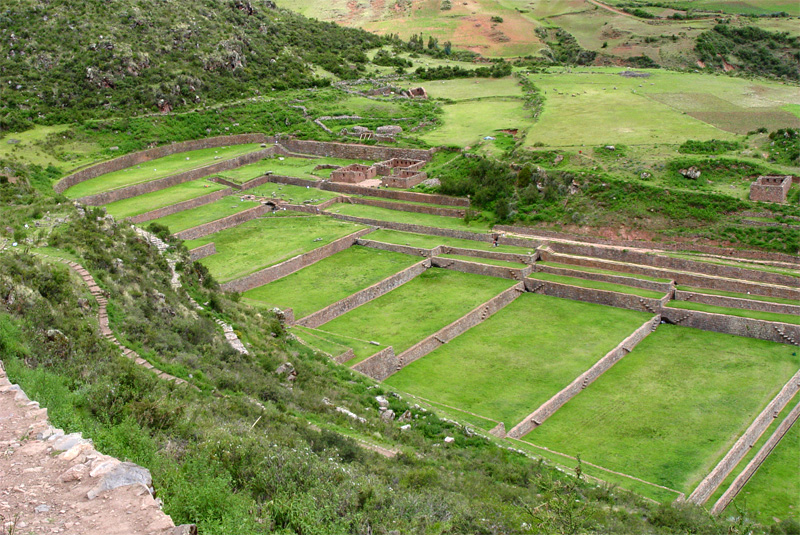
Tipón sits quietly in the Peruvian highlands, a place where the past feels almost tangible. Tucked away in a valley near Cusco, it rarely draws the same crowds as Machu Picchu or Sacsayhuamán, yet its significance is just as profound. The site is a testament to the Inca’s mastery of engineering and their deep connection to the land. Unlike more famous ruins, Tipón remains largely untouched by modern tourism—no souvenir stalls, no guided tours shouting over one another, just the sound of wind rustling through the grass and the steady murmur of water flowing through ancient channels.
Built in the 15th century, Tipón served as both a ceremonial and agricultural hub. Its most striking feature is the intricate water system, still functioning today. Stone aqueducts and precisely carved fountains guide water across terraced fields, showcasing the Inca’s advanced understanding of hydraulics. The water flows with purpose, nourishing the land just as it did centuries ago. Some scholars suggest the site may have also had astronomical significance, with structures aligned to track the sun’s movements, though much of its purpose remains open to interpretation.
The architecture here is unmistakably Inca: massive stone walls fitted together without mortar, standing firm against time. The terraces cascading down the hillside weren’t just for farming—they prevented soil erosion and created microclimates, allowing crops to thrive at different elevations. At the heart of the complex lies a cluster of buildings, likely used by nobility or priests. Their walls feature niches that may have held ritual objects or served as altars, though their exact use is still debated.
The landscape around Tipón is as striking as the ruins themselves. Rolling green hills stretch toward the distant peaks, while the Urubamba River winds through the valley below. The isolation of the site makes it easy to imagine Inca ceremonies unfolding here, timed to the solstices or the movement of the stars. Unlike many other Inca sites, Tipón escaped destruction by the Spanish, perhaps because it lay off their main routes. This has allowed it to remain remarkably well-preserved, a rare glimpse into the past without layers of later intervention.
Visiting Tipón feels like stepping into a different era. There are no cafes, no gift shops, no signs pointing the way—just the quiet presence of history. The best time to explore is early morning or late afternoon, when the light softens the stone and the heat of the day has eased. From Cusco, the journey takes about an hour by bus or taxi, winding through the highlands before arriving at this peaceful corner of the past. Local guides sometimes mention that traditional rituals tied to water and earth still take place here, though these practices are kept low-key, blending into the rhythm of the land.
Despite its importance, Tipón remains one of the lesser-studied Inca sites. Archaeologists continue to uncover new details, each discovery adding another piece to the puzzle of how the Inca lived. There are no grand revelations here, just the slow, careful work of understanding a civilization that shaped an empire. The site doesn’t demand attention—it invites it, offering a space to reflect on the ingenuity and reverence of the people who built it.
For travelers who seek more than just postcard views of Peru, Tipón is a revelation. It’s a place where the past isn’t just observed but felt. The absence of modern distractions makes it easier to connect with the land and the people who once called it home. Here, history isn’t confined to plaques or guided narratives—it’s in the stones, the water, the wind, waiting to be noticed by those who take the time to look.