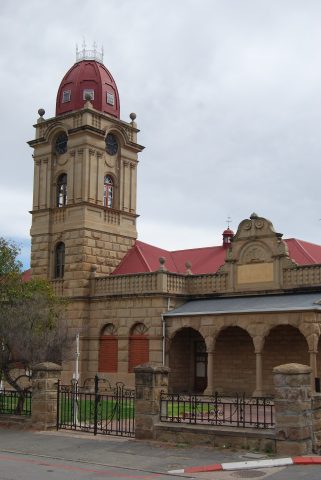
Oudtshoorn sits at the edge of the Little Karoo, a place where the land stretches dry and vast under the African sky. Yet in the heart of this town, the arid quiet gives way to something far livelier—the Oudtshoorn Market. More than just a place to buy and sell, it’s where the pulse of the community still beats strongest, where the past lingers in the air like the scent of spices and fresh bread. For over a century, it has been a gathering point, a crossroads where farmers, traders, and townsfolk come together, not just for goods, but for the simple act of being together.
The market’s location tells its own story. It stands where the old trade routes once converged, the same paths that carried wool, ostrich feathers, and leather from the interior to the coast in the late 1800s. Back then, Oudtshoorn thrived on these goods, and the market was little more than an open square under makeshift awnings, where deals were struck in Afrikaans, English, and the click languages of the Khoisan. Over time, walls and a roof were added, but the essence of those early days remains. The low ceilings and sturdy wooden beams might feel unassuming, but they hold the weight of generations—of farmers haggling over prices, of women bartering for vegetables, of children darting between stalls with sticky fingers.
What makes the market special isn’t just what’s sold here, though that’s certainly part of it. The stalls overflow with produce from the Little Karoo’s farms—figs, pomegranates, and melons so sweet they taste like sunshine. But the real draw is the ostrich products, a nod to Oudtshoorn’s reputation as the ostrich capital of the world. You’ll find more than just meat and eggs; the leather goods, in particular, are something to behold. Soft yet durable, the hides are turned into wallets, belts, and bags, each piece stamped with the rough elegance of local craftsmanship. Nearby, jars of preserved fruit, bottles of honey, and bundles of dried herbs hint at the region’s slower pace of life, where food is still made the way it was a hundred years ago.
Yet the market isn’t just about shopping. It’s about eating, too. In one corner, a small kitchen serves up dishes that have fed this town for generations. There’s bobotie, a fragrant minced-meat bake spiced with curry and topped with a golden egg custard, a dish that carries the flavors of the Cape’s colonial past. Then there’s biltong, the cured meat that’s a staple across South Africa, though here it’s made with a local twist—dried slower, spiced differently, chewier than you might expect. For something sweeter, there’s melktert, a creamy milk tart with a cinnamon-dusted crust, a recipe brought over by Dutch settlers and perfected over time. The food is simple, but it’s the kind that sticks with you, the kind that tastes like home.
The market changes with the hours. Early mornings belong to the farmers, who arrive with trucks full of produce, their voices rough from the cold air. By midday, the place fills with office workers grabbing a quick lunch, their plates piled high with stew or a slice of pie. On weekends, it becomes something else entirely—a social hub where families wander between stalls, where tourists snap photos of the colorful displays, where old men sit at the long central tables, nursing cups of strong coffee and debating everything from politics to the weather. There’s no rush here. People linger, chat, laugh. Even if you’re a stranger, it doesn’t take long to feel like you’ve been coming here for years.
The best time to visit might be during one of the town’s festivals, like the annual Ostrich Festival, when the market spills over with extra stalls and demonstrations. Artisans show how ostrich leather is tanned, how baskets are woven, how traditional dishes are prepared. The place buzzes with energy, but even on ordinary days, there’s always something worth seeing. A new vendor might appear with handmade jewelry, or a farmer could bring in an unusual fruit you’ve never tried before. The market has a way of surprising you, not with grand gestures, but with small, quiet moments—the way the light falls through the windows in the afternoon, the sound of a child’s laughter echoing off the stone walls, the taste of something unfamiliar that suddenly feels like it’s always been part of your life.
What makes the Oudtshoorn Market endure isn’t just its history or its goods, but the way it feels alive. It’s a place where time moves differently, where the hours stretch out like the shadows in the late afternoon. There’s no urgency here, no need to hurry. The Little Karoo is a land of patience, and the market reflects that—unhurried, unpretentious, but rich in the things that matter. If you find yourself in Oudtshoorn, it’s worth stopping by, not because it’s a must-see attraction, but because it’s where you’ll catch a glimpse of what makes this place real. You might leave with a leather wallet or a jar of jam, but what you’ll really take with you is something less tangible: the sense of a town that still knows how to slow down and savor the moment.