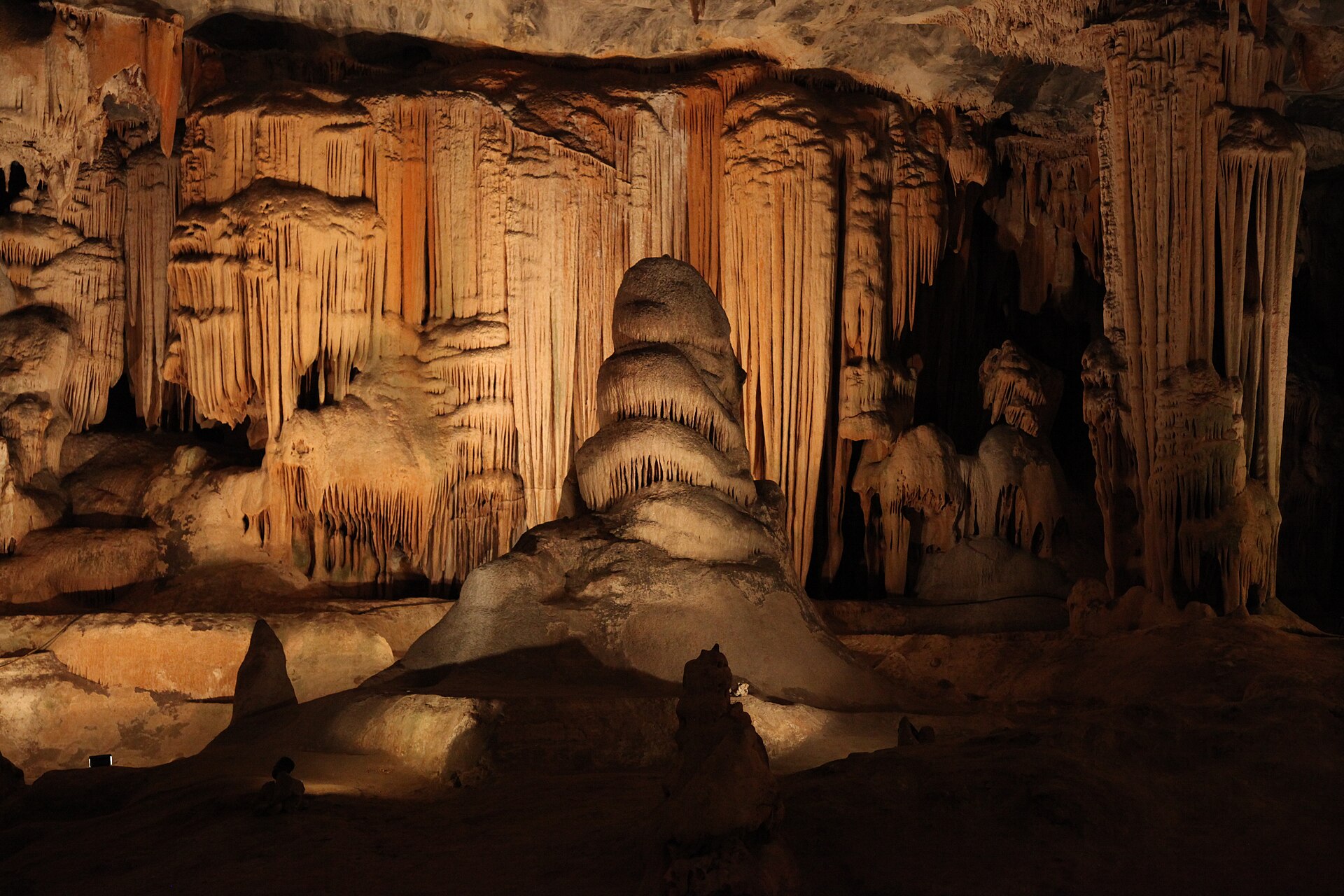
The Cango Caves lie hidden in the foothills of the Swartberg Mountains, a short drive from the quiet town of Oudtshoorn in South Africa’s Western Cape. This is a place where time moves differently, where the slow drip of water over millennia has carved out a subterranean world of chambers, tunnels, and delicate formations. The caves formed in ancient limestone, once the bed of a long-vanished sea, and today they offer a glimpse into the patient work of geology—each stalactite and stalagmite a record of countless years.
Long before European settlers stumbled upon them in the early 1700s, the caves were known to the indigenous San people, who sought shelter within their cool, shadowed depths. For generations, the San may have used these spaces not just for refuge but as sacred sites, though little remains of their presence beyond faint traces in the rock. It wasn’t until the 19th century that outsiders began to take notice, drawn by curiosity and the allure of the unknown. By the 1930s, the caves were officially opened to the public, though they never achieved the same fame as South Africa’s more iconic landmarks. That relative obscurity is part of their charm—here, there are no crowds, no hype, just the quiet persistence of stone and water.
Visitors can explore the caves along different routes, depending on their appetite for adventure. The standard tour lasts about an hour, guiding you through the most accessible chambers, like Van Zyl’s Hall, named after one of the early explorers, and the Cleopatra’s Needle passage, where the ceiling presses so low that you have to duck. For those willing to crawl through tight spaces and climb steep ladders, the adventure tour offers a more intimate encounter with the caves’ raw beauty. Inside, the air is cool and damp, a reminder that even in the heat of the African sun, the earth holds its own climate.
What makes the Cango Caves remarkable isn’t just their size but the way nature has shaped them into something almost artistic. The formations aren’t just random accumulations of rock—they twist and flow like frozen waterfalls, or stand in clusters resembling organ pipes. In some chambers, stalactites and stalagmites have fused into columns, creating the illusion of pillars holding up the cave’s ceiling. The most striking is the Hall of the Madonna, where the play of light and shadow gives the rock the appearance of a draped figure, though the effect is entirely natural. It’s easy to see why early visitors imagined mythical creatures or divine presences in these shapes.
Beyond their beauty, the caves are a window into the Earth’s distant past. Scientists have studied the layers of rock and mineral deposits here to uncover clues about ancient climate shifts—droughts, floods, and the slow rhythms of geological time. The caves also hold traces of human history, from primitive tools to faint rock art left by the San. These fragments tell a story not just of the land but of the people who once moved through it, long before the caves became a tourist destination. In that sense, the Cango Caves are more than a natural wonder; they’re an underground archive, preserving layers of time in their silent depths.
The landscape around the caves is just as compelling. The Swartberg Mountains rise dramatically above the arid plains, their rugged peaks a stark contrast to the cultivated farmland below. The drive to the caves winds through valleys where ostriches—Oudtshoorn’s most famous residents—graze in the dust. Nearby, the Swartberg Pass cuts through the mountains, offering one of the most breathtaking road trips in South Africa. The pass is a feat of engineering, built in the late 1800s without modern machinery, and its switchbacks reveal sweeping views of deep gorges and sheer cliffs.
A visit to the Cango Caves is less about ticking off a tourist attraction and more about stepping into a different kind of space. There’s a stillness here that makes the outside world feel distant. The only sounds are the occasional drip of water and the echo of footsteps, a reminder of how little we truly know about the planet beneath our feet. The caves don’t demand attention—they simply exist, waiting for those who are willing to look.
That quiet presence comes with a responsibility. The caves are a fragile ecosystem, and every visitor plays a part in their preservation. Touching the formations or leaving behind litter can damage what took centuries to form. Guides emphasize the importance of respecting the space, ensuring that future generations can experience the caves as they are today. In that way, the Cango Caves become a test not just of curiosity but of stewardship.
If you find yourself in South Africa and want to see something beyond the usual tourist trail, the Cango Caves are worth the detour. They’re not as famous as Table Mountain or Kruger National Park, but that’s precisely why they feel special. There are no souvenir stalls or crowded viewpoints here, just the raw, unfiltered beauty of the earth’s hidden work. It’s a place that lingers in the memory, not because it’s loud or flashy, but because it reminds you that some of the most extraordinary things are the ones that have been here all along, quietly waiting to be found.