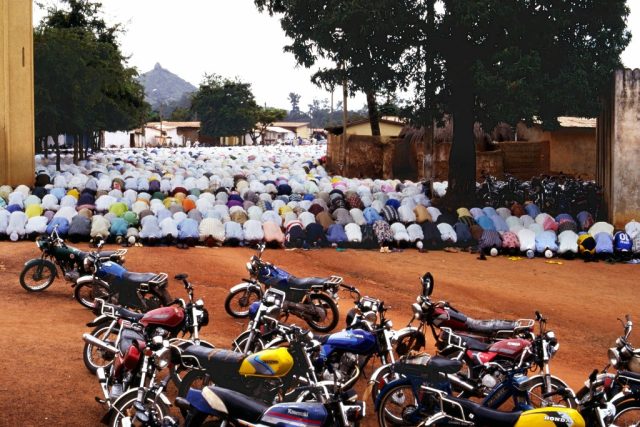
Ngaoundéré sits where the Adamawa Mountains soften into the savanna, a place where trade routes and cultures have long intersected. At the heart of this crossroads lies Mfundi Market, far more than just a place to buy and sell. It’s a living pulse of northern Cameroon, where the rhythms of daily life unfold in plain sight. The market has existed for generations, and if you listen closely, you can hear the layers of history in its sounds—the voices of Fulani herders mingling with those of traders who’ve traveled from neighboring countries, the clatter of metal, the lowing of cattle. This is where the past and present coexist without pretense.
Sprawling across several blocks near the city center, Mfundi doesn’t have clear boundaries. Its edges blur into the flow of people, handcarts, and motorbikes, dissolving into the fabric of the neighborhood. There are no orderly rows or polished stalls like you might find elsewhere. Instead, narrow pathways wind between makeshift awnings of corrugated iron, stacks of goods piled directly on the ground, and vendors calling out from every direction. In the dry season, dust swirls underfoot; during the rains, the mud clings to shoes. Neither slows the market down. It operates on its own logic, indifferent to discomfort.
What draws people here is the sheer variety. Mfundi offers everything imaginable—fresh meat and fish hauled in from Lake Chad, spices brought across the border from Nigeria and Chad, bolts of fabric in bold Fulani patterns or more subdued Cameroonian designs. One corner might be piled high with yams, cassava, and bananas, while another overflows with watermelons the size of a person’s head when they’re in season. Livestock stalls sell goats, sheep, and occasionally cattle, herded in from nearby villages. The market doesn’t just sell goods; it tells the story of what the region produces, consumes, and values.
Then there are the artisans. Blacksmiths work in open-air forges, hammering out knives, machetes, and farming tools from scrap metal. Their workshops are little more than a few anvils, leather bellows, and piles of raw material, yet the items they create are essential to daily life. Nearby, women weave baskets from palm leaves or embroider traditional garments, their hands moving with practiced ease. Potters still shape clay into bowls and cooking pots, though their craft is less in demand than it once was. These skills have been passed down for generations, and while the market evolves, some traditions remain stubbornly alive.
But Mfundi is as much about people as it is about goods. Many vendors have known each other for decades, and the market functions like an extended family. In the early morning, before the heat sets in, groups gather to sip tiny glasses of tea, sharing news—gossip about grain prices, political shifts in Yaoundé, or rumors of rain. Customers don’t rush either. They pick through produce, haggle over prices, or simply stand and watch the ebb and flow of activity. There’s no such thing as a quick transaction here. The market is a place for conversation, negotiation, and even the occasional heated debate.
The atmosphere shifts throughout the day. By dawn, when the rest of Ngaoundéré is still quiet, Mfundi is already stirring. Trucks and donkeys arrive with fresh goods, sacks of grain are unloaded, and vendors arrange their wares. By midday, the market is at its liveliest—shouts of sellers, laughter of children, the bleating of goats, and the roar of motorbikes blend into a constant hum. As evening approaches and the temperature drops, the energy wanes. Vendors pack up, sweep the ground, and the last stragglers hurry home before dark.
For outsiders, Mfundi can feel overwhelming. There are no tourist trinkets, no designated areas for foreigners, no concessions to comfort. What you see is what you get: the scent of spices and raw meat, the cacophony of local languages mixed with French, the unfiltered reality of life in northern Cameroon. It’s not without its risks—pickpockets are common, and some food stalls may not meet familiar hygiene standards. But those who take the time to observe, rather than just pass through, will find something far more interesting than a typical market. It’s a place where the region’s identity is on full display, unpolished and unapologetic.
Mfundi has endured colonial rule, political upheaval, and economic instability, yet it remains largely unchanged. That resilience is part of its charm. There’s no telling how long it will last—modern shopping centers may one day replace it—but for now, it operates on its own terms. It’s a reminder that progress doesn’t always mean improvement, and that some places thrive precisely because they refuse to conform. For anyone trying to understand the real northern Cameroon, there’s no better place to start.