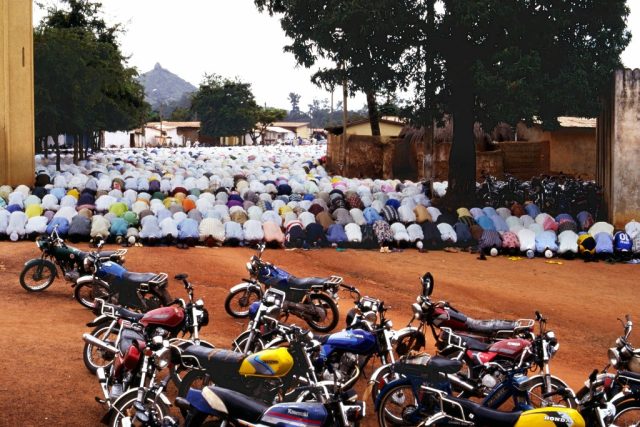
Ngaoundéré is the kind of place most travelers overlook, yet it’s here, in northern Cameroon, where the true rhythm of the region reveals itself. The city sits where the savanna begins to give way to the foothills of the Adamawa Plateau, a landscape shaped by shifting cultures, languages, and traditions. At its heart stands the Grand Mosque of Ngaoundéré, not just a place of worship but a living symbol of the area’s layered history—one shaped by Islam, local communities, and the echoes of colonial change.
Perched on a slight rise in the center of town, the mosque overlooks the sprawling neighborhoods below. Its slender minaret is visible from afar, especially at dusk, when the setting sun casts a warm glow over its walls. The architecture here isn’t what you’d expect from a traditional Middle Eastern mosque. Instead, it reflects the practical ingenuity of West African design, built to withstand the climate and make use of local materials. The structure is made of clay and wood, reinforced with sturdy buttresses that lend it both strength and character. This style of construction has been passed down through generations, a testament to the region’s ability to adapt and endure.
The mosque’s story is inseparable from that of Ngaoundéré itself. The city emerged in the 19th century as a hub of trade and faith, founded by the Fulani, a nomadic people who brought Islam with them as they settled in the region. They established an emirate here, part of the larger Adamawa state, and the mosque was built as a symbol of both spiritual authority and political power. Over time, it became a gathering place not just for locals but for worshippers from across the region, hosting ceremonies and decisions that shaped the life of the emirate.
Inside, the mosque is simple but striking. The floors are covered with woven mats, the walls adorned with subtle geometric patterns, and soft light filters through small windows, creating a quiet, contemplative atmosphere. Unlike the ornate mosques of the Middle East, there are no gilded domes or marble columns—just a space designed for prayer and reflection. The main hall serves its purpose without pretense, while the courtyard often fills with people chatting under the shade of trees. On Fridays, when the call to prayer draws the largest crowds, the mosque hums with life, and the city itself seems to pulse with energy.
Beyond its religious role, the mosque is woven into the fabric of daily life in Ngaoundéré. It stands at the crossroads of cultures, where Islamic traditions meet the customs of local communities. The surrounding market buzzes with activity, selling everything from spices to vibrant fabrics, and in the evenings, musicians gather to play the balafon and drums, their rhythms blending with the sounds of the city. For the people here, the mosque isn’t just a sacred site—it’s a place to pray, meet friends, or escape the midday heat.
In recent years, Ngaoundéré has begun to attract travelers drawn to Africa’s cultural and historical depth. The mosque remains one of its most compelling sights, not because it’s famous, but because it offers a glimpse into a living past. Unlike a museum, where artifacts are preserved behind glass, here history is tangible—the walls carry the weight of centuries of prayer, and the people who visit each day bring the place to life. Those who make the journey often leave with the sense that they’ve experienced something authentic, something rare in a world where so much is staged for tourists.
Ngaoundéré isn’t a city that caters to visitors. There are no luxury hotels or flashy attractions, and that’s precisely what makes it special. The mosque, like the city itself, moves to its own rhythm, untouched by the expectations of outsiders. It doesn’t try to impress—it simply exists, as much a part of the landscape as the hills that surround it. For those willing to venture here, it offers a window into a world where time flows differently, where history isn’t confined to books but lives in the streets, in the people, and in the quiet dignity of a place that has stood the test of time.