Bamenda’s Mbengwi Market is one of those places where the pulse of everyday life beats strongest in Cameroon’s Northwest Region. Unlike the polished tourist markets in bigger cities, this one feels unfiltered—raw, lively, and deeply rooted in the rhythms of the local community. It’s not just a place to buy and sell; it’s where trade, culture, and tradition intersect in a way that’s both ordinary and extraordinary.
The market sprawls across a large open space, its stalls arranged in no particular order, as if organically grown over decades. Here, you’ll find everything from fresh produce to handwoven fabrics, from spices that fill the air with sharp, earthy scents to secondhand clothes piled high in colorful heaps. The vendors, mostly women, sit behind their goods with a quiet patience, calling out to passersby in Pidgin English or the local languages of the Grassfields. There’s no pressure to buy, just the easy back-and-forth of bargaining, a dance that’s as much about conversation as it is about commerce.
What makes Mbengwi Market stand out is its role as a hub for the region’s agricultural wealth. The Northwest is known as Cameroon’s breadbasket, and the market reflects that abundance. Hillsides around Bamenda are covered in farms growing maize, beans, potatoes, and vegetables, and much of that harvest ends up here. In the early mornings, trucks and taxis arrive loaded with sacks of produce, unloading them in a flurry of activity before the sun climbs too high. By midday, the market is in full swing, with buyers from nearby villages and towns haggling over prices, filling baskets with ingredients for the day’s meals.
Beyond food, the market is a showcase of local craftsmanship. The Grassfields region has a long tradition of weaving, and you’ll find bolts of indigo-dyed cloth, intricately patterned with geometric designs that tell stories of lineage and identity. Some stalls sell handmade baskets, their tight weaves perfect for carrying goods or storing grains. Others offer wooden carvings—masks, figurines, and utensils—though these are less common than in markets closer to tourist routes. The artisans here aren’t performing for visitors; they’re selling to people who understand the value of what they make.
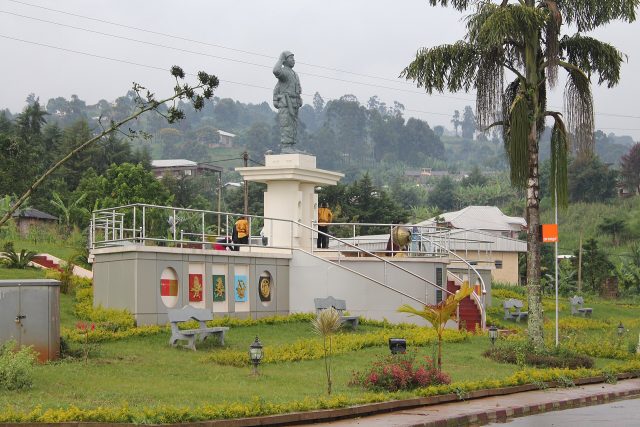
The market’s layout is chaotic in the best way, with narrow paths winding between stalls and sudden clearings where groups of people gather to chat or share a meal. There’s no grand architecture here, no carefully curated displays—just the practical, lived-in feel of a place that’s been shaped by necessity. The buildings around the market are a mix of concrete and corrugated metal, some painted in bright colors, others weathered by time. In the background, the hills of Bamenda rise up, green and misty, a constant reminder of the landscape that sustains this community.
For outsiders, Mbengwi Market can feel overwhelming at first. The noise, the crowds, the sheer volume of goods can be a lot to take in. But if you slow down and let the rhythm of the place guide you, it becomes easier to appreciate the small details—the way a vendor wraps a bundle of herbs in newspaper, the laughter of children weaving between stalls, the smell of roasting plantains mixing with the earthy scent of fresh cassava. There’s no script here, no guided tour. It’s just life unfolding in real time.
The market also offers a glimpse into the social fabric of the region. It’s where news travels fast, where disputes are settled over shared cups of palm wine, where friendships are reinforced with every transaction. In a place where formal institutions can feel distant, markets like this one serve as informal gathering spaces, binding communities together. You might see a group of elders sitting on wooden benches, debating politics or the latest football match, while younger traders scroll through their phones between customers.
Seasonal changes shape the market’s character. During the dry season, when the roads are passable and harvests are plentiful, it’s at its busiest. But even in the rainy months, when mud makes the paths slick and some vendors stay home, the market doesn’t shut down. It adapts, shrinking in size but not in spirit. The rains bring their own kind of beauty, with the hills turning a deeper shade of green and the air feeling heavier, more alive.
Visiting Mbengwi Market isn’t about checking off a list of sights or snapping the perfect photo. It’s about stepping into a space that’s been alive for generations, where the past and present coexist without fanfare. You won’t find glossy brochures or souvenir shops here. What you will find is the unvarnished reality of life in Bamenda—a place where trade is more than just an exchange of goods, but a way of keeping traditions, relationships, and a sense of belonging alive.