Copacabana sits on the shores of Lake Titicaca, where the Andes meet the water and the sky feels close enough to touch. The town is a cluster of whitewashed houses with red-tiled roofs, their narrow streets winding down to the lake’s edge. At the heart of this place, where daily life unfolds in its most unfiltered form, is the market—a space that feels far removed from the polished tourist stalls found in other parts of the world. Here, trade isn’t just about commerce; it’s a tradition passed down through generations, woven into the fabric of the community.
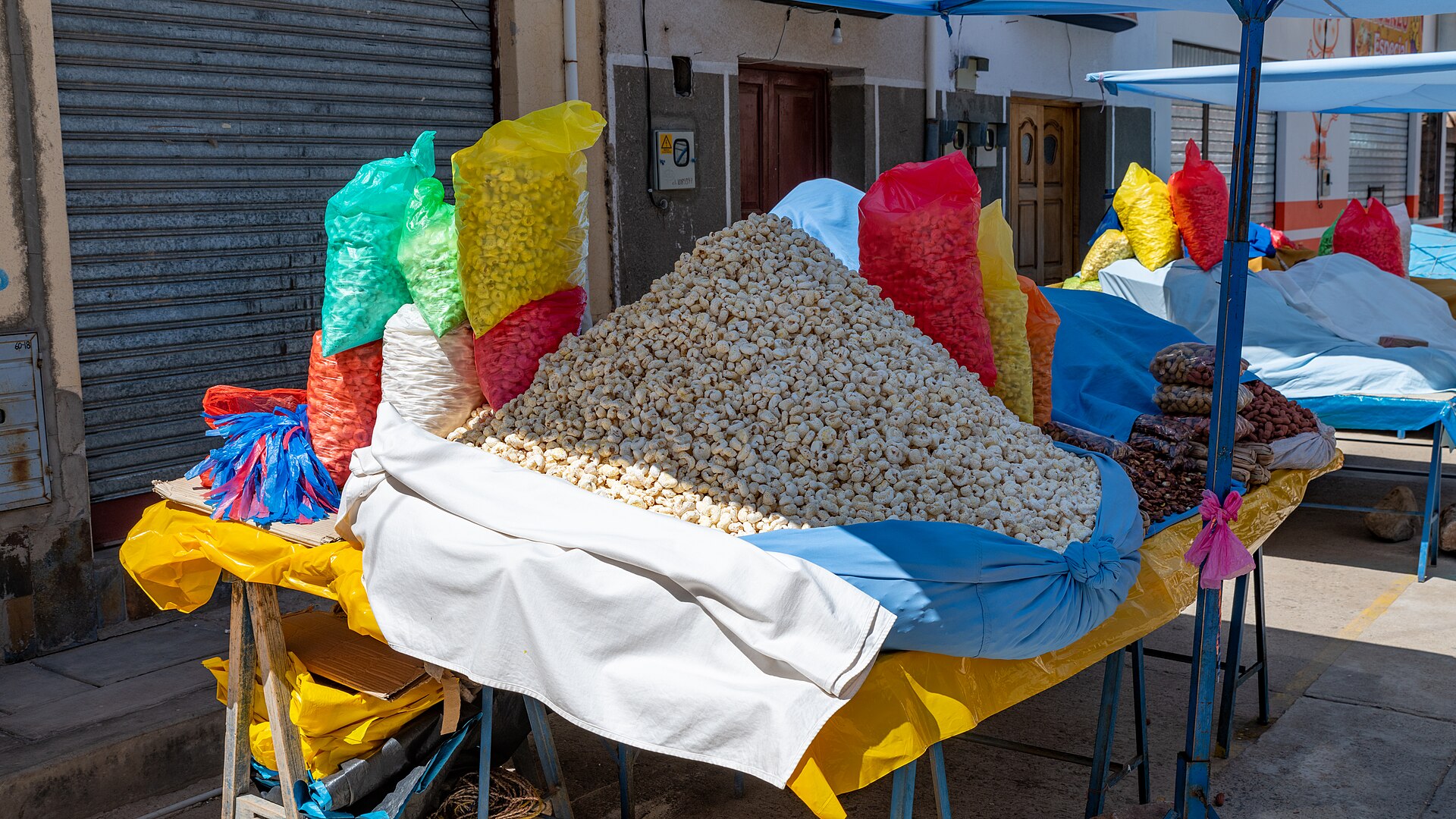
The market sprawls near the central square, a place where the sounds of bargaining, laughter, and the rustle of dried coca leaves fill the air from dawn until dusk. There’s no rigid layout or orderly arrangement—vendors set up where they please, some under makeshift awnings, others directly on the ground, their goods spread out as if they’ve just arrived and might pack up at any moment. But this is no temporary setup. The market operates every day, shifting slightly with the seasons, the weather, and the flow of people, yet always retaining its unhurried, organic rhythm.
What you’ll find here are the staples of Andean life. Dried llama meat, salted fish from the lake, potatoes in more varieties than you knew existed, and quinoa, a grain cultivated in these highlands for centuries. And then there’s coca—more than just a product, it’s a cultural cornerstone for the Aymara and Quechua people. The leaves are chewed, brewed into tea, or used in rituals, a connection to the land and ancestors. Elderly women in wide skirts and broad-brimmed hats measure out handfuls of leaves, their hands moving with practiced ease. Prices aren’t fixed; bargaining is part of the exchange, less about getting the best deal and more about the interaction itself, a small ritual that turns a simple purchase into something personal.
Beyond food, the market is a showcase of Andean craftsmanship. Handwoven ponchos, brightly colored hats with pompoms, and sturdy bags embroidered with intricate patterns tell stories of the people who made them. Many of these items come from nearby villages, each piece carrying a bit of its maker’s home. Alpaca wool is especially prized—soft, warm, and remarkably durable. Some vendors will demonstrate their weaving or knitting, and if you’re lucky, you might see the entire process, from raw wool to finished product. There’s no pressure to buy; the focus is on the craft, not the sale.
This is also a place where different worlds intersect. Tourists who come to see Lake Titicaca or hike up Calvary Hill often stop by the market for souvenirs or a quick bite. For them, it’s a glimpse into local life. But for the people who live here, it’s just part of the day. You’ll see women in traditional dress doing their weekly shopping, children darting between stalls, and elders sitting on benches, catching up on news. The pace feels slower here, as if time moves differently, but that’s only on the surface. Beneath the quiet routine, there’s a constant hum of activity, a community going about its business.
The market’s architecture is as straightforward as its purpose. Wooden awnings provide shade from the sun and shelter from the rain, while the earthen floor absorbs moisture when it’s wet and kicks up dust when it’s dry. There are no marble floors or glass display cases—just what’s necessary to get the job done. This simplicity is what makes the market feel so alive. It doesn’t try to impress; it just exists, and in that, it has a kind of authenticity that’s hard to find elsewhere.
Copacabana moves to the rhythm of its market. In the early morning, as the sun rises over the mountains, vendors begin setting up, and the scent of fresh bread and roasted corn fills the air. By midday, the market is at its busiest—crowded, noisy, and rich with the smells of herbs, spices, and sizzling food. As evening approaches and the shadows grow long, the activity slows, and the town prepares for night. But even after the stalls close, the market’s presence lingers—in the conversations on the streets, in the aromas drifting through the air, in the memories of those who’ve wandered its aisles.
For many travelers, the market isn’t just a place to pick up a souvenir or grab a snack. It’s a window into a way of life that’s vastly different from their own. There are no tourist traps here, no pushy vendors trying to sell things you don’t need. Just people going about their day, and the chance to step into that world, even if only for a little while. You can sit on a bench with a cup of coca tea, listen to the cadence of Aymara or Spanish, watch as two women haggle over the price of potatoes, and feel, for a moment, like you’re not just a visitor but part of something bigger.
This isn’t a museum or an attraction. The market is a living thing, changing every day yet staying true to itself. It doesn’t cater to tourists or pretend to be something it’s not. It simply is, and that’s what makes it special. When you visit, you realize that the real Bolivia isn’t in glossy brochures or well-trodden tourist paths. It’s here, among the stalls of dried fish and handwoven textiles, where every item, every conversation, every scent has a story to tell.